

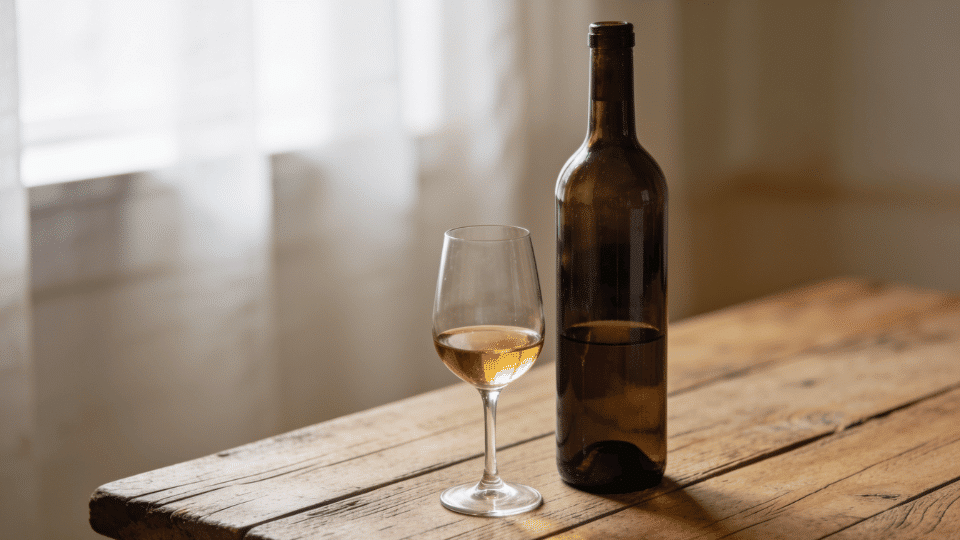
One standard bottle size holds 750 ml, equivalent to about 25.4 fl oz.
It will help you when scaling up or down your drink recipe, determining the number of drinks to be served at an event, or comparing the bottle sizes when shopping for drinks.
We found this information handy while replenishing my drinks at my bar cabinet, wondering how many drinks one bottle will serve at a party.
Below is the list of all bottle sizes, ounce equivalents, and number of servings in each bottle.
Standard Wine Bottle Size in Ounces
A standard wine bottle holds 750 ml, which equals approximately 25.4 fluid ounces (fl oz).
Although the vast majority of wine labels display the volume in milliliters, many individuals tend to use fluid ounces to measure their servings.
U.S. wine regulations recognize 750 mL as an authorized wine container size, equivalent to [25.4 fluid ounces].
The size developed through trade practices and international standards introduced gradually, giving everyone involved a standardized bottle size.
Ounces by Wine Bottle Size
Different-sized wine bottles serve different purposes. It helps to know the fluid ounce equivalencies of different types of wine bottles.
Piccolo/Split (187 ml – ~6.3 oz)
The Piccolo, which is also known as a Split, comes in a volume of 187 ml or 6.3 fl. oz. This type of bottle is perfect for a single drink or even two small servings.
It is often used for sparkling wines in flights, hotels, and events where people prefer individual servings. It is also useful for when one wants to avoid opening a full-sized bottle.
Half Bottle/Demi (375 ml – ~12.7 oz)
The Half Bottle, also known as a demi, contains 375 ml of wine or 12.7 fl. oz. It usually serves two or three glasses of wine, making it useful for couples, wine tasting, or smaller dinner parties.
Half bottles are also useful when experimenting with a new kind of wine without committing to buying the full-sized bottle. Premium wineries often produce some of their best-selling products in half bottles.
Standard (750 ml — ~25.4 oz)
The 750 ml standard wine bottle equals 25.4 fluid ounces. It is the most widely offered bottle size for wine customers globally.
Usually, it contains enough wine for 5 5-ounce glasses. It is a great option for dinner parties, restaurants, and everyday consumption.
As this size is known all over the world, it becomes the measuring unit when comparing the price and nutritional value of different brands of wine.
Magnum (1.5 L — ~50.7 oz)
The Magnum bottle equals 1.5 liters, which is 50.7 fluid ounces; that is exactly double the size of a standard wine bottle.
Usually, it gives 10 glasses of wine. The reason why magnums are preferred is that they serve many more people and can be used for aging some kinds of wine due to their big size.
Double Magnum/Jeroboam (3 L – 101.4 oz)
The Double Magnum is also known as the Jeroboam, depending on the wine being poured into it. It can hold 3 liters of wine, which is equivalent to 101.4 oz.
This amazing wine bottle can serve 20 glasses of wine, making it an appropriate choice for wedding celebrations, banquets, and any festive event.
Other Formats (Rehoboam, Methuselah, Salmanazar and More)
After the Double Magnum, other larger bottle sizes include the Rehoboam, Methuselah, Salmanazar, Balthazar and Nebuchadnezzar.
These bottle sizes are generally in the 4.5-liter to 15-liter range and are not commonly used except for celebratory purposes or in wineries.
Despite not being used often for regular consumption, these larger bottles provide an impressive display and have the capacity to serve many people.
Quick Comparision of Wine Bottle Size
A quick comparison table makes it easy to see how many fluid ounces each common wine bottle size contains.
| Wine Bottle Size | Volume (ml/L) | Fluid Ounces (Approx.) | Typical Servings |
| Piccolo / Split | 187 ml | 6.3 fl oz | 1–1.5 glasses |
| Half Bottle / Demi | 375 ml | 12.7 fl oz | 2-3 glasses |
| Standard | 750 ml | 25.4 fl oz | 5 glasses |
| Magnum | 1.5 L | 50.7 fl oz | 10 glasses |
| Double Magnum | 3 L | 101.4 fl oz | 20 glasses |
| Larger Formats (Rehoboam, Methuselah, Salmanazar, Balthazar, Nebuchadnezzar, and more) | 4.5 L+ | 152.2 fl oz+ | Varies by size |
The standard 750 ml bottle remains the most practical choice, while larger formats are typically reserved for celebrations, restaurants and special events.
How Many Glasses are in a Bottle of Wine?
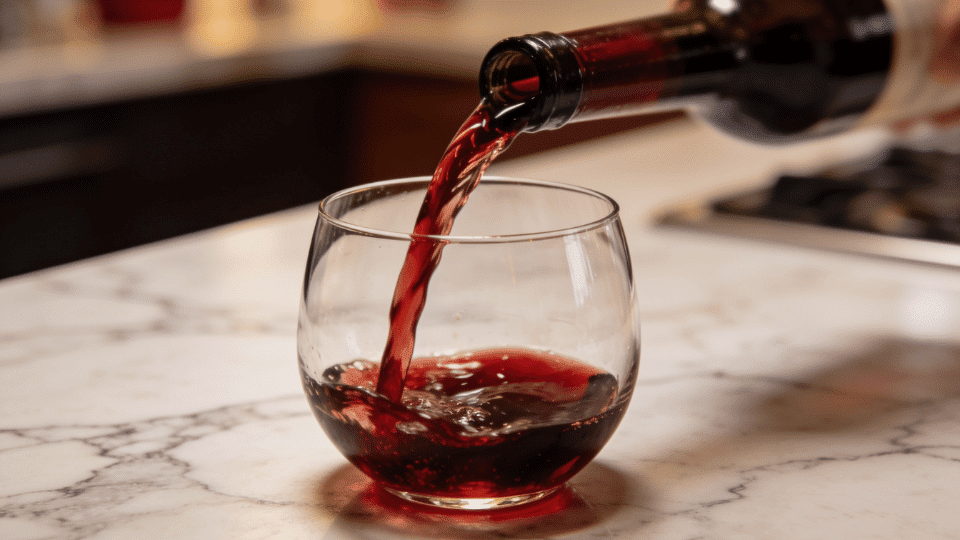
An average 750 ml (25.4 fl oz) bottle yields about five servings of wine when served using the standard 5-ounce portions.
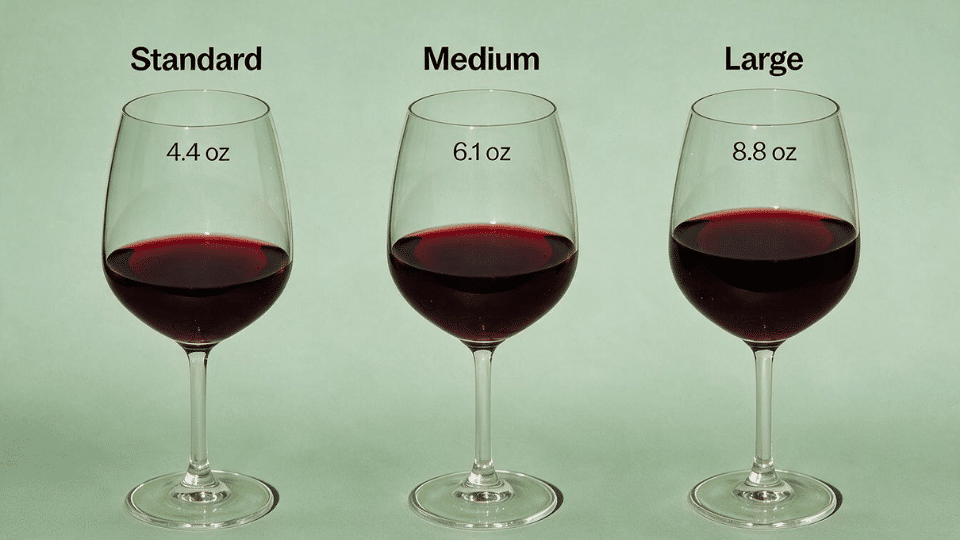
The standard portion size is usually used by many restaurants, wine tasters, and other parties. When using small 4-ounce servings, one can yield up to six people from one bottle of wine.
When using large 6-ounce servings, one bottle yields four servings.
Understanding how many servings can be taken from an average bottle of wine helps you order the right quantity of wine for your dinner parties, weddings, Christmas parties, or any occasion at all.
Ounces in a Bottle of Wine vs. Other Common Drinks
By comparing drink size, you can calculate the number of servings, budget, and select bottles that are suitable for your party.
- Standard Wine Bottle: 25.4 fluid ounces (750 ml), serves approximately 5 servings with 5 ounces each.
- Standard Beer Bottle: 12 fluid ounces, generally represents one serving per bottle.
- Standard Liquor Bottle: 25.4 fluid ounces (750 ml), just like the standard wine bottle, only used for liquor.
Party Planning Tip: Wine and liquor bottles hold the same volume, but serving sizes differ, affecting how many drinks each bottle provides.
Ounces to Know Before You Pour
Before popping open that next bottle, make sure you have these important wine measures in mind.
The regular-size wine bottle measures 750 ml, which is equivalent to 25.4 fluid ounces or 5 glasses of 5 ounces each.
The half bottle has 12.7 ounces, while the magnum has 50.7 ounces, good for about 10 glasses. For a single serving, there is the 187 ml split bottle, which has 6.3 ounces.
With these common measurements in mind, you will find it easy to compare different bottle sizes and select the appropriate one.
Why Bottle Size and Ounces Matter for Buying and Serving
Some considerations regarding the size of the bottle will enable you to purchase the correct amount of wine, budget well and serve effectively.
1. Check the Value Based on the Price Per Ounce: You should avoid relying on the price of the bottle alone. It is more expensive to get several small bottles than one large bottle. The latter is the best choice when entertaining guests.
2. Pick the Right Bottle According to Your Needs: For a small dinner party, it is recommended that you go for a 750 ml (25.4 oz) bottle. For double the number of glasses, consider a 1.5 L magnum (50.7 oz).
3. Cut Down on Waste and Ease the Process of Serving: Getting the right size of bottle will reduce the number of bottles to be opened and the amount of waste material.
Conclusion
The knowledge of the ounces in a bottle of wine will go a long way when purchasing, serving and even planning a party.
If you are looking for a common 750 ml bottle for your dinner, selecting a magnum for the occasion or even calculating the price per ounce, then these conversions should make life a lot easier for you.
Keep these bottle types and serving sizes in mind the next time you plan to purchase and serve wine at an event.
If you enjoyed this piece of knowledge, why not pass it along and drop a comment about your favorite bottle size of wine?
Frequently Asked Questions
How Many Ounces in a Bottle of Red and White Wine?
The bottle sizes of red and white wines are 750 ml or 25.4 fluid ounces. The type of wine does not determine the amount; rather, the size of the bottle determines the content.
Is Every Wine Bottle 750 ML?
Not necessarily. Although 750 ml is the standard, wine can be packaged in 187 ml, 375 ml, 1.5 L, among other volumes.
How Many Ounces of Wine in One Glass of Wine?
Five ounces is considered the standard portion of wine in one glass. Therefore, you will get about five glasses in one 750 ml (25.4 ounces) bottle of wine.