

Ever picked up a wine bottle and wondered why some are tiny, and others are bigger? You are not alone.
Wine bottles come in many sizes, each with a name, a specific volume, and a purpose. Most people recognize the standard bottle but have no idea what the larger or smaller formats are called or when they are used.
Knowing the difference makes it easier to shop, gift, and order with confidence.
This blog covers the names, sizes, serving capacities, and uses of the most popular wine bottle formats. Read on to find the right bottle for every occasion.
Understanding Wine Bottle Sizes
A standard wine bottle holds 750ml, enough for roughly five glasses, making it ideal for two to three people over dinner.
It’s been the global benchmark for still and sparkling wines for well over a century. But bottle size isn’t just a packaging decision.
It affects how wine ages, how much storage space is needed, and how many guests get served. Larger bottles age more slowly because less oxygen reaches the wine.
They also make a statement at events. Knowing the differences helps with everything from casual dinner planning to stocking a serious cellar.
Wine Bottle Sizes
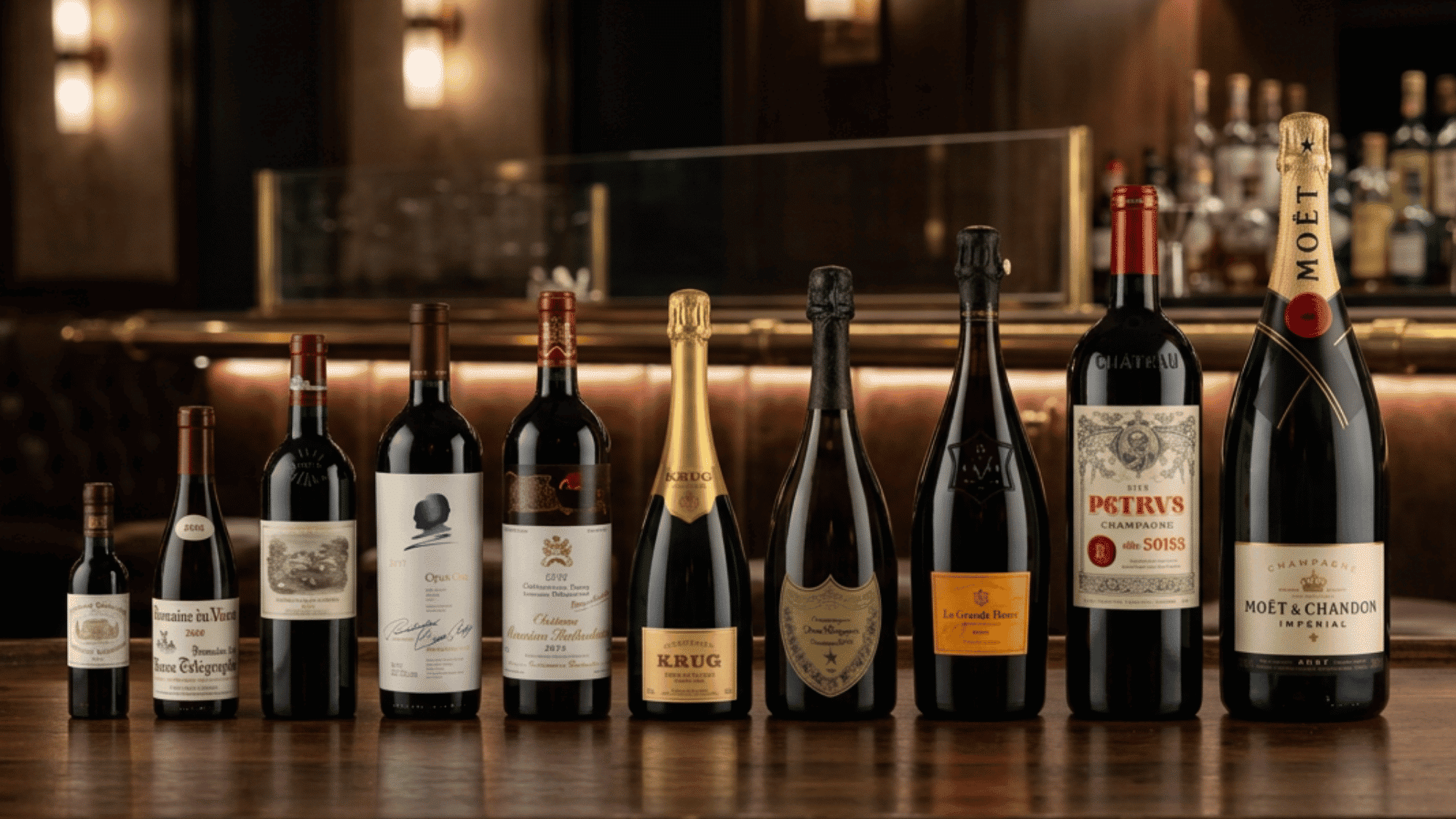
A quick-reference breakdown of every wine bottle size, from the smallest split to the largest format available.
Small Wine Bottle Sizes
Smaller wine bottles are ideal for single servings, dessert wines, and occasions where opening a full bottle isn’t practical.
Split or Piccolo (187ml): Holds one glass of wine, making it perfect for airline service, hotel minibars, or individual servings. It’s most commonly used for Champagne, Prosecco, and Cava and isn’t intended for aging.
Half Bottle or Demi (375ml): Equivalent to half a standard bottle, serving two to three glasses. Commonly used for dessert wines like Sauternes, Port, Tokaji, and Riesling, it’s a practical choice for solo dining.
Half-Liter Bottle (500ml): A less common format that serves three to four glasses. It’s mainly used by European producers for sweet wines such as Eiswein, Trockenbeerenauslese, and late-harvest Riesling.
Standard and Mid-Sized Wine Bottles
These bottle sizes are the most widely available and suit everything from everyday meals to celebrations.
Standard Bottle (750ml): The industry standard is to serve about 5 glasses. Available across every wine style and grape variety, it’s the go-to choice for everyday drinking and small gatherings.
1-Liter Bottle: Slightly larger than the standard bottle, serving six to seven glasses. Often used for casual table wines, especially from Italy, Spain, and France.
Magnum (1.5L): Equal to two standard bottles and serving around ten glasses. Popular for celebrations and cellaring, magnums are often chosen for premium reds and vintage Champagne because they can support longer aging.
Large Wine Bottle Sizes
Large-format bottles are primarily used for celebrations, collector releases, and special events.
Jeroboam (3L): Holds four standard bottles and serves about 20 glasses. Common for Champagne and premium Bordeaux or Burgundy wines. Note that in Bordeaux, a Jeroboam is a 4.5 L bottle.
Rehoboam (4.5L): Equal to six standard bottles and serving around 30 glasses. Mostly reserved for Champagne, with only limited still wine production.
Methuselah or Imperial (6L): Holds eight standard bottles and serves roughly 40 glasses. Often produced in limited quantities for Champagne, Bordeaux, and Napa Cabernet.
Salmanazar (9L): Equivalent to 12 standard bottles and around 60 glasses. Typically seen at grand events, charity auctions, and special Champagne releases.
Balthazar (12L): Holds 16 standard bottles, serving about 80 glasses. Produced mainly for large celebrations, winery displays, and collector editions.
Nebuchadnezzar (15L): Equal to 20 standard bottles and approximately 100 glasses. One of the largest commonly available wine bottle sizes, used almost exclusively for prestige Champagne and limited collector releases.
Why are Large Wine Bottles Named After Biblical Figures?
Large wine bottle names trace back to 19th-century Champagne, where producers needed something more memorable than “very big bottle.”
Biblical kings and patriarchs fit perfectly; their names carried weight across Europe at a time when biblical literacy was near-universal.
The bigger the bottle, the more dramatic the reference: Jeroboam for excess, Methuselah for longevity, Nebuchadnezzar for sheer power.
The pattern holds all the way up to the Melchizedek, named after a mysterious priest-king who blessed Abraham.
Today, these names are embedded in wine culture, appearing on auction catalogs, restaurant menus, and the lips of sommeliers worldwide.
Wine Bottle Sizes Compared
A side-by-side look at wine bottle sizes and which format works best for every occasion and group size.
Wine bottles come in a wide range of sizes, from the tiny Split at a quarter of a standard bottle, to the massive Nabuchadnezzar, which holds the equivalent of 20 standard bottles.


A half-bottle holds 375ml, while the classic bottle holds 750ml.
From there, sizes scale up through the Magnum at two bottles, the Jeroboam at four, the Methuselah at eight, the Salmanazar at twelve, and the Balthazar at sixteen.

Larger formats work well for events and long-term storage, while smaller ones suit intimate dinners where waste is a concern. The right size depends on your group and the occasion.
Do Larger Wine Bottles Age Better?
Large-format bottles age wine better because the oxygen-to-wine ratio is lower; the same amount of air enters the bottle regardless of size, so larger formats oxidize more slowly.
Why collectors prefer magnums:
- More forgiving aging curve, wine develops nuance before tipping into decline
- Insurance against variability, a flawed cork ruins 750ml, not 1.5L
- Prestige at the table, a magnum signals intention and generosity
Best wines for large-format aging:
- Red Bordeaux and Bordeaux-style blends
- Burgundy Pinot Noir
- Barolo and Brunello
- Vintage Champagne
- Napa Cabernet Sauvignon
Lighter whites, rosés, and entry-level reds don’t benefit. Buy those in standard bottles and drink them young.
Choosing the Right Wine Bottle Size
Choose a wine bottle size based on your guest count, occasion, and serving needs, from everyday meals to large celebrations.
1. For personal consumption: A 375ml half bottle is a good option for solo drinking or sharing with one other person. For most everyday situations, a standard 750ml bottle is the easiest and most practical choice.
2. For dinner parties: For a group of six to eight people, plan for about half a bottle per person. One magnum or two standard bottles usually cover the table comfortably.
3. For weddings and events: For larger gatherings, estimate one bottle for every two guests. Magnums and Jeroboams can reduce the number of bottles to open while also making the serving setup feel more special.
4. For wine collectors: Magnums are often preferred for aging because they age more slowly than standard bottles. Larger formats, such as Methuselah and above, are usually collector or auction pieces rather than everyday drinking bottles.
Conclusion
Wine bottle sizes are more than a technical detail. They shape the experience around the glass.
The right format makes a dinner feel more considered and a celebration more memorable. Size affects aging, serving, storage, and occasion.
Smaller formats work well for personal use, while larger ones suit events and collecting. There is a format for every moment.
Now that you know the options, picking the right one gets a lot easier. Next time you shop for wine, you will know exactly which size to reach for.
Frequently Asked Questions
What Wine is Good for Cholesterol?
Red wine, especially varieties rich in polyphenols, may support heart health when consumed moderately as part of a balanced lifestyle.
Is It Bad to Have a Glass of Wine Every Night?
A nightly glass of wine may carry health risks depending on individual factors, overall diet, medications, and drinking habits.
Why Do Wine Drinkers Live Longer?
Some studies link moderate wine consumption with longevity, though lifestyle, diet, and genetics likely play a greater role overall.