

Not all rum is created equal. One bottle may be a smooth 40% ABV mixer, while another packs a fiery 75.5% ABV punch.
From light cocktail rums to high-proof overproof expressions, rum has one of the widest alcohol ranges among major spirits.
That variation affects more than just strength; it influences flavor, mixing, serving size, and how the rum should be enjoyed.
This guide explains rum alcohol content by type, breaks down ABV and proof, compares rum with other spirits, and shows how alcohol strength shapes the drinking experience.
Understanding Rum ABV and Proof
ABV (Alcohol by Volume) measures the percentage of pure alcohol in a drink. For example, a rum labeled 40% ABV contains 40% pure alcohol, with the remaining 60% made up of water and flavor compounds.
The term proof traces back to British naval traditions, where rum was tested with gunpowder to verify its strength. If the gunpowder could still ignite, the spirit was considered strong enough to be “proof.”
This practice also inspired terms such as “gunpowder proof” and “navy strength,” which are still used today. However, rum stands out for its unusually wide range of strengths.
Standard rums typically fall between 35% and 50% ABV, while overproof rums can reach as high as 75.5% ABV, making them among the strongest spirits commonly available.
Typical Rum Alcohol Content
Most standard rums are bottled at 40% ABV (80 proof). Some lighter or flavored varieties dip slightly lower, around 35–37.5%.
While premium-aged rums can sit anywhere from 50%. The wide range comes down to how rum is made. Fresh sugarcane juice or molasses is fermented and then distilled, typically reaching 160–190 proof straight off the still.
Higher ABV directly affects the drinking experience. At 40%, rum has enough bite to hold up in a cocktail without overpowering other ingredients.
Push that to 50% or beyond, and the alcohol warmth becomes more prominent, flavors are more concentrated, and the finish lasts longer.
Rum Alcohol Content by Type
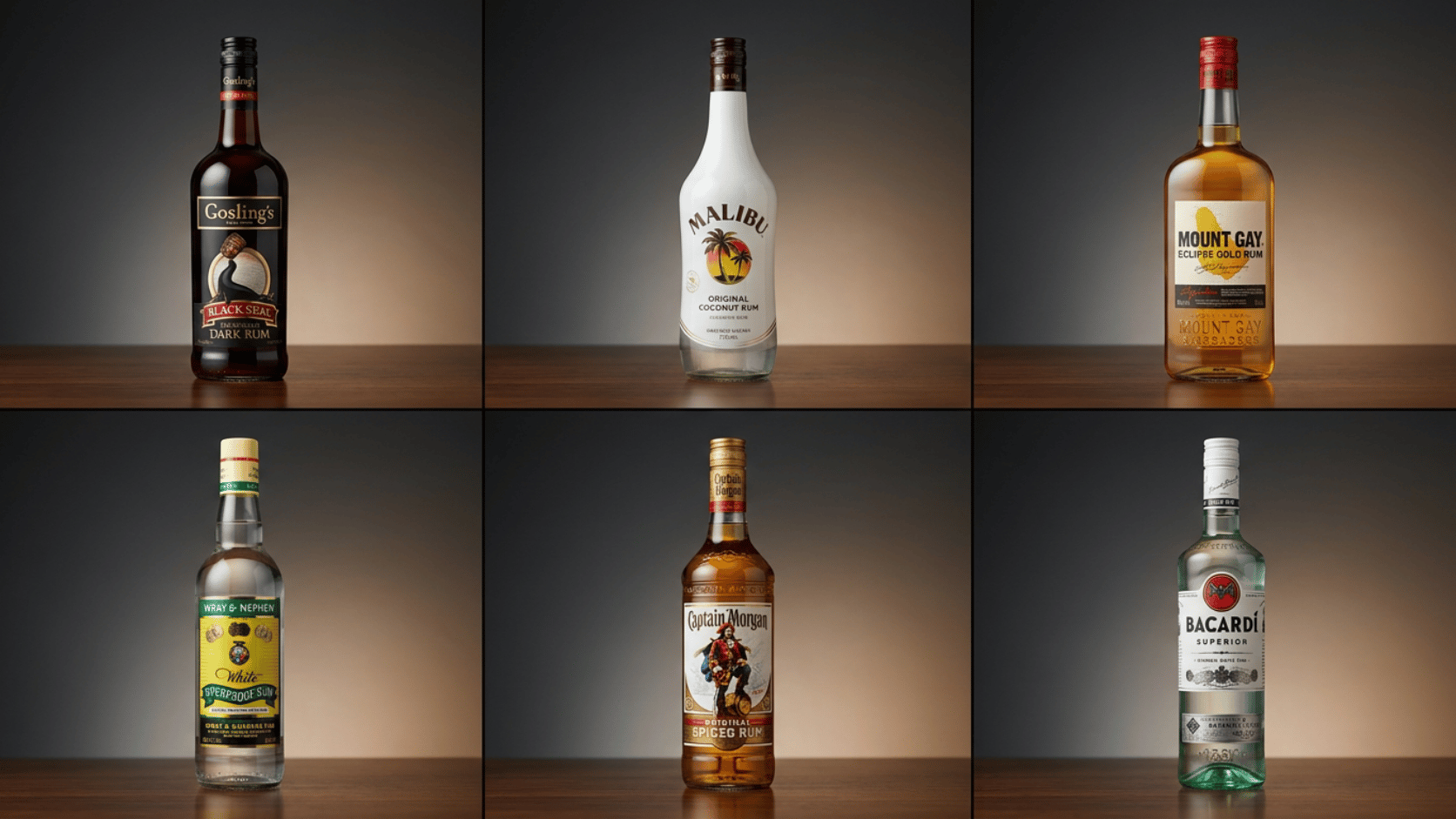
A breakdown of how alcohol content shifts across white, dark, spiced, overproof, and flavored rum varieties.
White / Light Rum
Typical ABV: 37.5%–40%
White rum is filtered and often unaged, giving it a clean, neutral profile. It’s the go-to for cocktails like daiquiris and mojitos precisely because it doesn’t dominate. Bacardi Superior and Havana Club 3 Year are common examples, both sitting at 40% ABV.
Because the flavor is mild, the drinking strength is typically standardized at 40% across most brands.
Gold / Amber Rum
Typical ABV: 40%
Gold rum picks up color and flavor from oak barrel aging or from the addition of caramel coloring. Brands like Mount Gay Eclipse (40% ABV) and Appleton Estate Signature (40% ABV) fall squarely in the standard range.
The aging process mellows the spirit, making 40% a sweet spot, strong enough to carry flavor without harshness.
Dark Rum
Typical ABV: 40%–50%
Dark rum is aged longer and tends to carry heavier molasses notes. ABV varies more here than with lighter styles.
Goslings Black Seal sits at 40%, while some Jamaican and Demerara expressions push toward 46%–50%. The deeper flavor can handle the higher strength without feeling out of balance.
Overproof Rum
Typical ABV: 57.5%–75.5%
Overproof rum is the strongest category of rum, defined as anything above 57.5% ABV. It is made for bold cocktails rather than easy sipping.
Most versions fall between 63% and 75.5% ABV, with examples like Wray & Nephew at 63% and Goslings 151 at 75.5%. Plantation O.F.T.D. sits at 69% ABV.
Its high strength helps it stay present in mixed drinks, delivering a powerful, concentrated flavor in small amounts.
Spiced Rum
Typical ABV: 35%–40%
Spiced rum is infused with vanilla, cinnamon, clove, or similar aromatics after distillation. Captain Morgan Original Spiced Rum is 35% ABV; Sailor Jerry sits at 46%.
The focus on spices generally keeps ABV on the lower end, since the flavor profile is the selling point rather than strength.
Flavored Rum
Typical ABV: 35%–40%
Flavored rums, coconut, mango, pineapple, and similar, typically match spiced rum in strength.
Malibu Coconut Rum is 21% ABV, making it one of the lower-strength options in the category. Most mainstream flavored rums sit at 35%–40%.
Rum vs. Other Spirits: ABV Comparison
| Spirit | Typical ABV Range | Standard Bottling Strength (ABV) |
|---|---|---|
| Rum | 35% – 75.5% | Around 40% |
| Vodka | 40% – 50% | Around 40% |
| Whiskey | 40% – 50% | Around 40% – 46% |
| Tequila | 38% – 55% | Around 40% |
| Gin | 35% – 55% | Around 40% – 47% |
How ABV Affects the Drinking Experience
ABV doesn’t just change how strong a drink is; it changes how it tastes.
- At 35%–40%: Rum is approachable, smooth on the palate, and well-suited to mixing. Flavors come through without aggression. This is the cocktail zone.
- At 40%–50%: Heat becomes more noticeable on the finish. The rum holds up better neat or on the rocks. Sipping a 46% dark rum reveals complexity that would be lost in a cocktail.
- At 57.5% and above: The burn is real and intentional. Overproof rum used neat requires respect, small sips, time, and ideally a drop of water to open up the aromatics. Some drinkers add a small amount of water to high-proof rum to reduce perceived alcohol intensity.
In cocktails, a small amount goes a long way; a half-ounce of 63% ABV rum can carry the whole drink. For mixing, sticking within the 40%–50% range gives cocktails the intended balance.
Swapping a 40% white rum for a 63% overproof in a daiquiri won’t just make the drink stronger; it will throw off the entire flavor structure.
How to Read Rum Labels for Alcohol %
Rum bottles display ABV as a percentage, typically on the front or back label. A few label terms worth knowing:
- ABV / Alc. Vol.: The standard measure used worldwide. Shows the percentage of alcohol by volume.
- Proof: Used in the US. Double the ABV. An 80-proof rum is 40% ABV.
- Navy Strength: Traditionally 54.5% ABV, sometimes higher. Not a legal standard, but widely used in the industry.
- Overproof: Any rum above 57.5% ABV.
- Cask Strength / Barrel Proof: Bottled without dilution after aging. ABV varies by batch.
In the UK and EU, spirits must be at least 37.5% ABV to be legally sold as rum.
In the US, the minimum is 40% ABV (80 proof) for the spirit to be labeled rum, though some lower-ABV flavored rums may be classified differently.
Responsible Drinking: What Rum Strength Means for Serving Size
The NIAAA (National Institute on Alcohol Abuse and Alcoholism) defines one standard US drink as 0.6 fluid ounces of pure alcohol, the equivalent of a 1.5 oz shot of 40% ABV spirit.
That definition shifts based on what you’re drinking. With overproof rum at 63% ABV, a standard 1.5 oz pour contains roughly 1.5 standard drinks’ worth of alcohol.
At 75.5% ABV, closer to 2. A few practical points:
- Pour Smaller with Higher ABV Rum: A 1 oz pour of overproof rum in a cocktail is typically enough; no need for the standard 1.5 oz used with 40% rum.
- Mixed Drinks Can Mislead: A cocktail with 2 oz of 40% rum already contains more than one standard drink before anything else is added.
- Pace by Alcohol Content, Not by Glass Count: Three cocktails made with overproof rum are not the same as three cocktails made with standard rum.
If in doubt, check the label, do the math, and drink less of it.
If in doubt, check the label, do the math, factor in the calories, and drink less of it.
Final Word
Rum alcohol content varies more than most people expect. Standard bottles sit at 40% ABV, but the full range runs from 21% ABV in flavored rums to 75.5% ABV in overproof expressions.
The type of rum in the glass and how much is poured make a real difference to the drinking experience.
Understanding ABV helps make better choices, whether mixing cocktails or sipping straight. It also keeps serving sizes in check.
For anyone looking to go deeper, check out the related guide on rum types and how distillation affects flavor from the first pour to the last.
Frequently Asked Questions
Can Rum Help Lower Cholesterol?
Moderate rum consumption may slightly affect cholesterol levels, but excessive drinking increases risks. Always prioritize heart-healthy habits over alcohol for benefits.
Does Aged Rum Contain More Alcohol?
Not necessarily. Aging affects flavor and character, while the final ABV depends mainly on how the rum is bottled.
Is Rum Stronger Than Vodka?
Not always. Most rum and vodka are around 40% ABV, although overproof rum can contain significantly more alcohol.
What Is the Strongest Type of Rum?
Overproof rum is generally the strongest type, with some commercially available expressions reaching around 75% ABV or higher.
Is Rum the Healthiest Alcohol?
Rum contains fewer congeners than some spirits, but no alcohol is truly “healthy.” Moderation is key for any choice.
What Alcohol Can Type 2 Diabetics Drink?
People with type 2 diabetes can drink certain low-sugar spirits in moderation, but should monitor blood sugar and consult healthcare providers.