

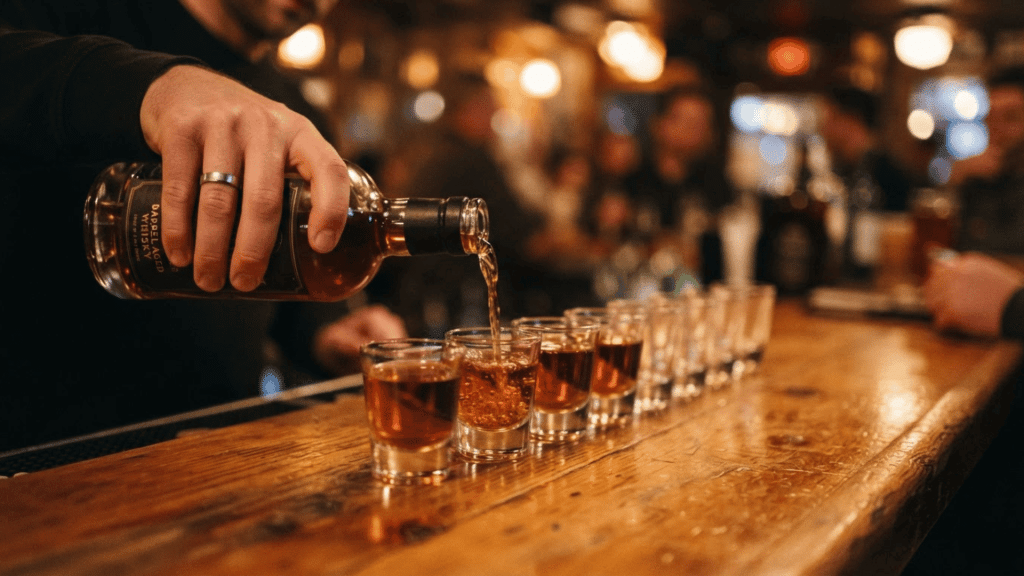
A one-liter bottle can stretch further than it looks, but the number of pours depends heavily on shot size.
That simple number becomes much more useful when planning drinks, checking bottle yield, or keeping pours consistent.
This blog breaks down how many shots in a liter, compares common serving sizes, and explains what can change the final count.
Keep reading for quick calculations and practical tips that make bottle planning much easier.
How Many Shots in a Liter?
A liter contains about 33.8 US fluid ounces. If each shot is 1.5 ounces, one liter can provide about 22 full shots.
There may be a small amount left after those pours, but not enough for another complete 1.5-ounce serving.
The total changes when a different shot size is used. A 1-ounce pour gives about 33 full shots, while a 2-ounce pour gives about 16 full shots.
This is why the total number of servings should be calculated using the exact amount poured into each glass.
Bottle shape, pouring style, and serving method can also affect how many drinks are actually served from a liter.
How Many Shots are in a Liter by Shot Size?
Different pour sizes can change the serving count quite a bit. The table below shows how many full shots can come from one liter.
| Shot Size | Approx. Volume | Full Shots in 1 Liter |
|---|---|---|
| 1 oz | 29.6 ml | 33 |
| 1.25 oz | 37 ml | 27 |
| 1.5 oz | 44.4 ml | 22 |
| 2 oz | 59.1 ml | 16 |
| 25 ml | 25 ml | 40 |
| 30 ml | 30 ml | 33 |
| 50 ml | 50 ml | 20 |
How to Calculate How Many Shots are in a Liter
Calculating bottle yield is simple once the bottle volume and serving size are known. One liter contains 1,000 ml, so the basic method is to divide 1,000 by the size of each shot.
For example, a 44.4 ml shot gives about 22.5 servings, based on what actually counts as one standard shot. Since the final half serving is not a full shot, the practical count is 22.
Use these steps:
- Write down the bottle volume in milliliters.
- Check the size of one shot.
- Divide bottle volume by shot volume.
- Count only complete servings when planning pours.
For example, 1,000 ÷ 30 equals about 33.3, so a liter provides 33 full 30 ml shots.
What Changes The Number of Shots You Get from a Liter?
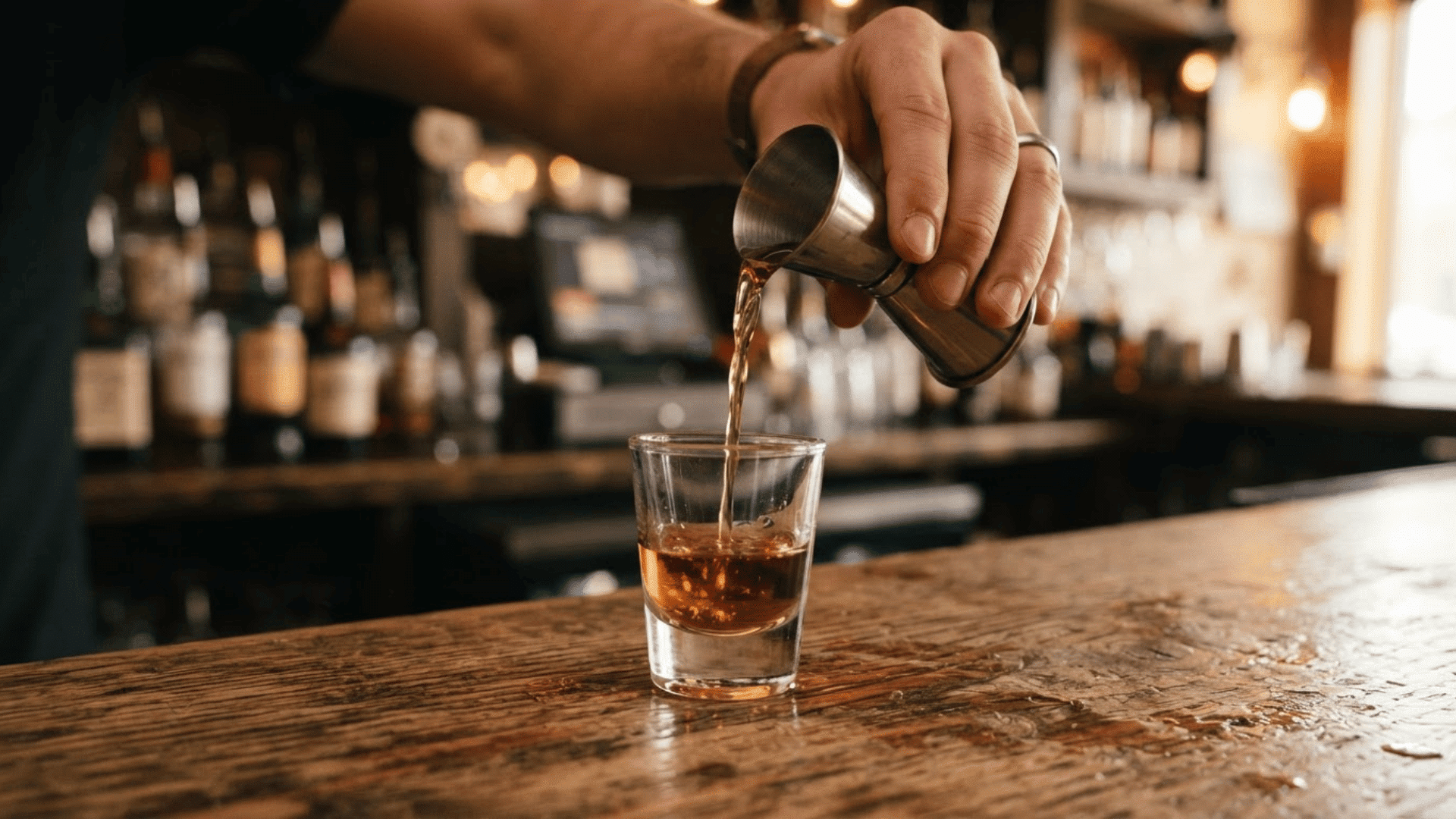
Bottle size stays the same, but serving habits can change the final shot count. Glass size, pouring method, and local serving standards all play a part.
Shot Glass Size
Shot glasses do not all hold the same amount. A 1-ounce glass uses about 29.6 ml, giving roughly 33 full servings from a liter.
A 1.5-ounce glass holds about 44.4 ml, bringing the count down to about 22. A 2-ounce glass uses close to 59 ml, leaving room for about 16 full servings.
This difference matters when planning drinks for a party, bar setup, or event. Checking the glass capacity first makes bottle estimates more accurate and helps prevent unexpected shortages.
Measured Pour vs. Free Pour
A measured pour uses a jigger or marked tool to keep each serving close to the intended size. This makes bottle yield much easier to predict. If every pour is 1.5 ounces, the total should stay close to 22 full shots per liter.
Free pouring relies more on timing and experience. Some pours may end up slightly larger than others. Even small differences can add up over a full bottle.
Bars often use measured tools when portion control matters because consistent serving sizes support better stock tracking and reduce unnecessary waste.
Regional Shot Standards
Shot sizes can vary from one country or region to another. Some places commonly serve 25 ml or 30 ml shots, while others may use 40 ml, 50 ml, or ounce-based pours.
That means one liter may provide 40 servings at 25 ml, 33 servings at 30 ml, or 20 servings at 50 ml. There is no single serving size that applies everywhere.
Checking the local measure or the bar’s standard pour is the safest way to estimate how many complete shots a bottle can provide.
Shots in a Liter vs. Other Common Bottle Sizes
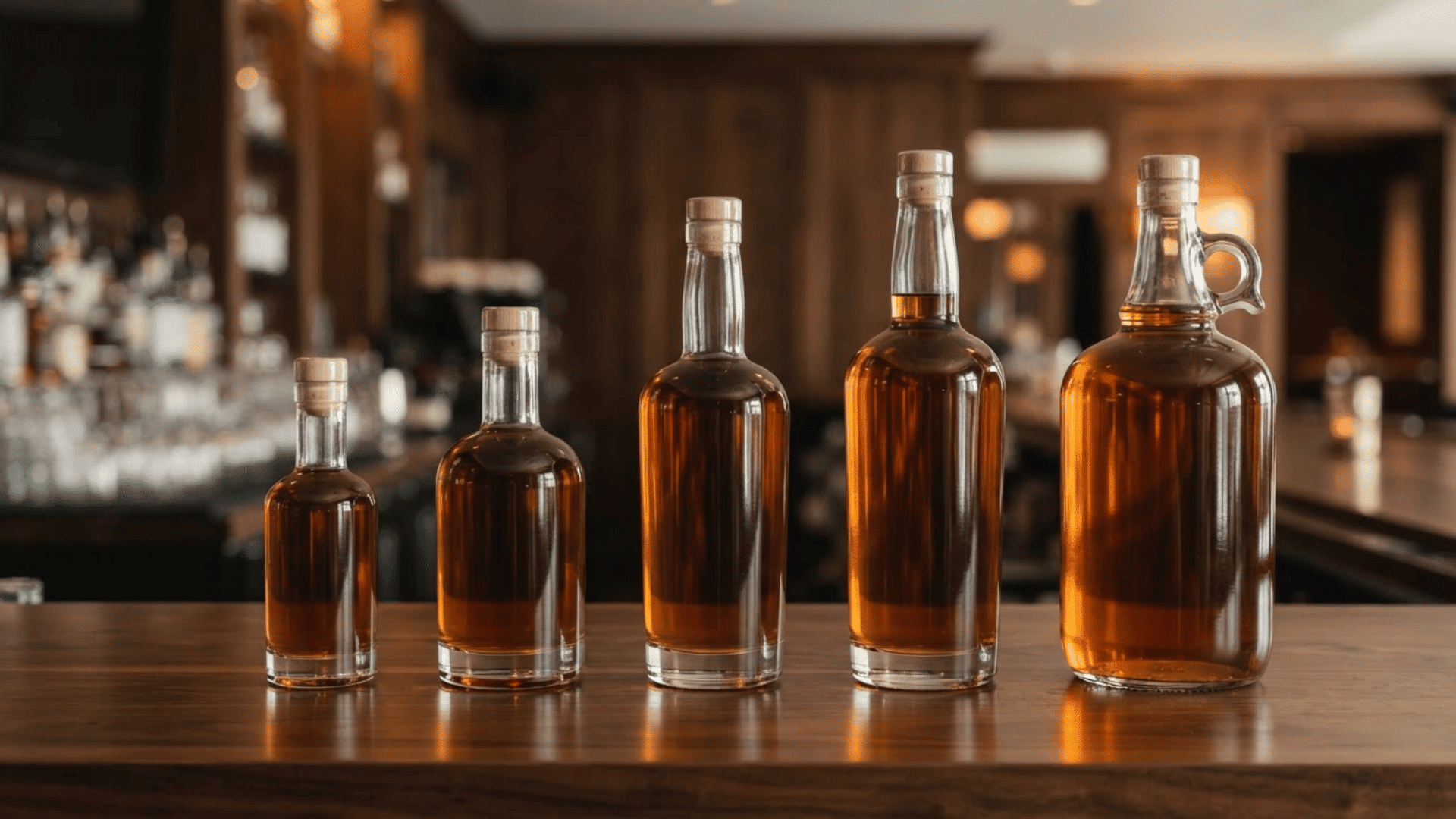
Liquor bottles come in several common sizes within the wider range of standard liquor bottle sizes , and each one produces a different number of servings. These comparisons use a 1.5-ounce shot.
- 375 ml Bottle: This smaller bottle provides about 8 full shots, and it’s worth checking the full shot breakdown for that pint-style bottle , which works well for limited servings and tastings.
- 500 ml Bottle: A 500 ml bottle gives about 11 full 1.5-ounce shots, making it slightly more useful than a half-size bottle.
- 750 ml Bottle: Often called a standard liquor bottle , which is where the standard bottle name actually comes from, 750 ml provides about 16 full shots when each serving measures 1.5 ounces.
- 1 Liter Bottle: A liter gives about 22 full shots, offering roughly six more servings than a 750 ml bottle at the same pour size.
- 1.75-Liter Bottle: This larger format provides about 39 full 1.5-ounce shots, and if you’re planning a bigger event, the full shot count for that larger handle bottle is worth checking too.
Why Accurate Shot Pouring Matters for Bars and Home Bartenders
Accurate pouring keeps drink portions consistent and makes bottle planning far easier. For bars, even a small extra amount in each pour can reduce the number of drinks produced from a bottle.
Over time, that can affect stock counts, cost control, and drink consistency. Even a small overpour on each serving can add up across dozens of drinks.
At home, measured pours help guests get similar serving sizes and make it easier to estimate how much liquor you need before an event.
A jigger or measured pour spout can help keep servings steady. This is especially useful when making mixed drinks that depend on balanced ratios.
Consistent measuring also cuts down on waste and makes each bottle last closer to its expected serving count.
Conclusion
A single liter can go a long way when each pour stays consistent. Knowing the serving size before you open the bottle makes drink planning simpler and helps prevent last-minute shortages.
Understanding these measurements also helps make smarter choices when buying bottles for different occasions.
The biggest difference usually comes down to how much goes into each glass. A small change in pour size can remove several servings from the bottle.
Keep a jigger nearby, use the chart as a quick reference, and plan bottles around the serving size that will actually be used. Save this page for the next party, bar shift, or drink setup.
Frequently Asked Questions
Does The Shape of a Liquor Bottle Affect The Shot Count?
No. Bottle shape does not change the liquid volume as long as the stated capacity is one liter.
Does Alcohol Type Change The Number of Shots in a Liter?
No. The shot count depends on the bottle volume and pour size. Alcohol type only changes the drink’s strength and flavor.
Should Leftover Liquor be Counted as Another Shot?
Only if the remaining amount meets the full serving size being used. Smaller leftovers should not be counted as a complete shot.