

You have probably seen IPA on a tap list, a beer menu, or a grocery store shelf and wondered what the fuss is about.
It sits next to lagers and stouts with bold label art and bold claims: “aggressively hopped,” “West Coast style,” “hazy and tropical.”
India Pale Ale is one of the most popular beer styles in the world, with more variety and character than almost any other. With a style that has been evolving over 200 years.
This blog covers what an IPA is, its history, flavor, and major types, so anyone can order, taste, or talk about IPA with confidence.
What is an IPA?
IPA stands for India Pale Ale, a style of ale brewed with top-fermenting yeast at warmer temperatures, giving it a richer and more complex profile than most lagers.
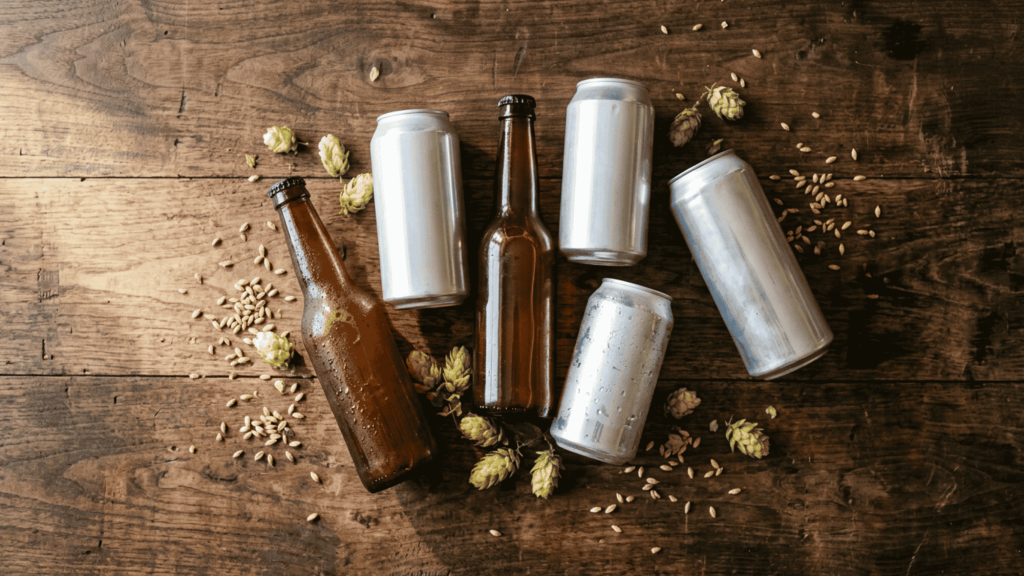
Its key feature is hops, the cone-shaped flowers of the Humulus lupulus plant, which add bitterness, aroma, and flavor.
In IPAs, hops dominate while malt mainly provides balance. Standard IPAs usually range from 5.5% to 7.5% ABV, with bitterness measured in IBUs.
While lagers sit around 8–20 IBUs, American IPAs reach 40–70 IBUs, and Double IPAs can exceed 100 IBUs, though perceived bitterness depends on brewing methods and the balance of sweetness.
How IPA Evolved From British Export Beer to Global Craft Favorite
IPA started in 18th-century Britain as a strong pale ale made for export to India. Brewers added extra hops and alcohol so the beer could last long sea trips.
Over time, it became a common style in England. After World War II, its popularity dropped due to changing beer tastes and higher taxes.
In the late 1900s, American craft brewers brought it back with stronger hop flavors and new styles.
This shift made IPA one of the most popular beer styles in the world, with many versions now enjoyed in countries and brewing cultures around the world.
Types Of IPA Everyone Should Know
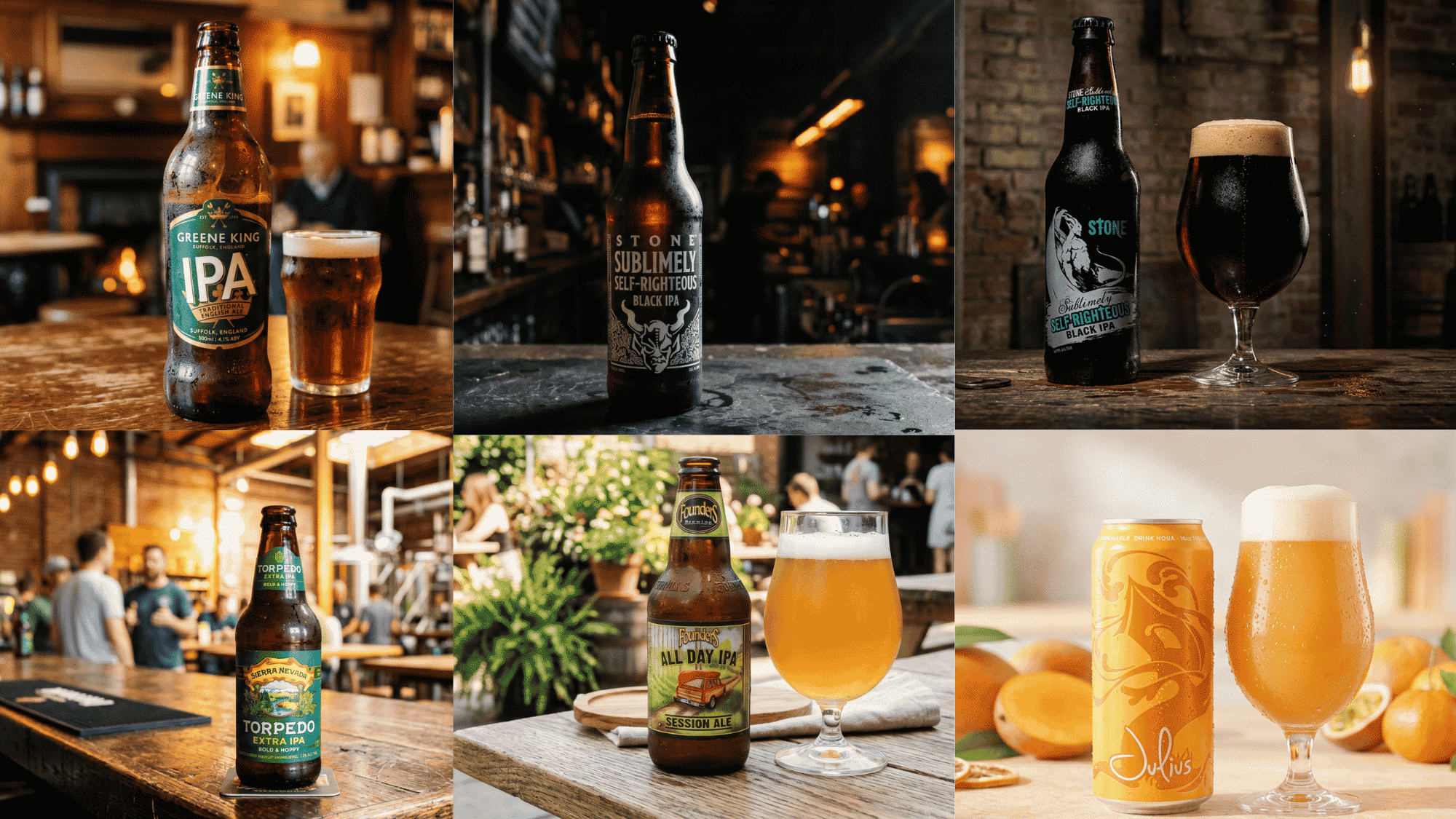
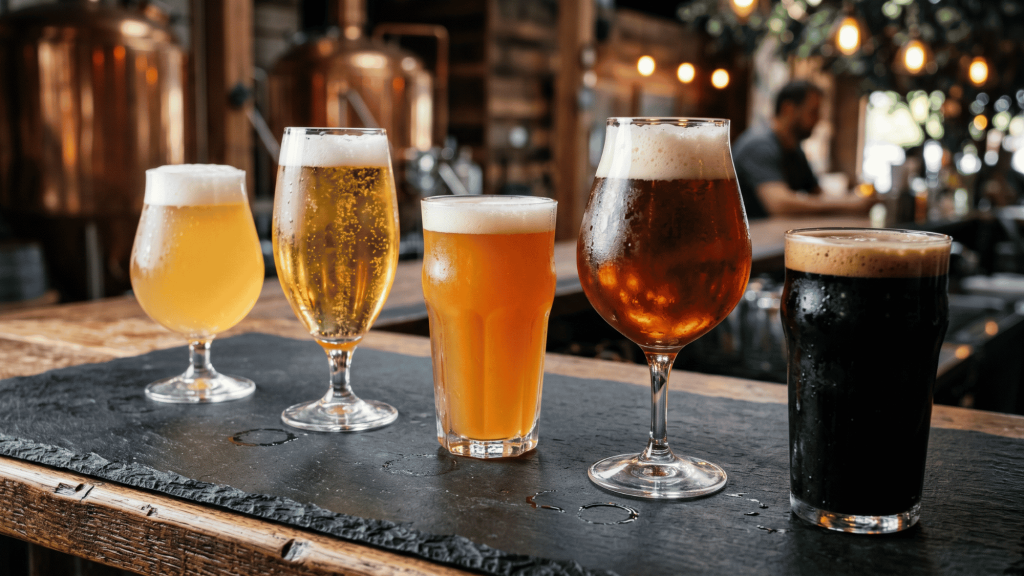
Six main IPA styles, each with a distinct hop profile, bitterness level, and flavor, from juicy and soft to bold and resinous.
1. English IPA
The original IPA that started it all. English IPAs focus on balance rather than intensity, making them smooth, classic, and highly drinkable.
- Origin Story: England, brewed in the 18th century for long sea voyages to India
- ABV Range: 5% – 7%
- Color Profile: Amber to copper tones
- Taste Profile: Earthy hops, herbal notes, firm bitterness, and a strong malt backbone
- Mouthfeel: Medium-bodied, smooth, slightly dry finish
- Known Brands: Fuller’s IPA, Greene King IPA, Meantime IPA
Special Tip: Best enjoyed slightly warmer than lagers to bring out malt depth and herbal hop notes.
2. American IPA
The style that put IPA on the global craft beer map. American IPAs are louder, sharper, and packed with bold hop character.
- Origin Story: United States, born from the craft beer boom of the 1980s
- ABV Range: 6% – 7.5%
- Color Profile: Golden to light amber, usually clear
- Taste Profile: Citrus-forward hops, pine resin, crisp bitterness, light malt support
- Mouthfeel: Dry, crisp, and refreshing with a clean finish
- Known Brands: Sierra Nevada Torpedo, Stone IPA, Bell’s Two Hearted
Special Tip: Best paired with spicy foods or grilled meats to balance bitterness.
3. Double / Imperial IPA
A high-impact version of IPA made for serious hop lovers. Everything is amplified: flavor, bitterness, and alcohol.
- Origin Story: The United States developed in the late 1990s with the craft beer movement
- ABV Range: 7.5% – 12%
- Color Profile: Golden to deep amber
- Taste Profile: Intense hop resin, tropical fruit, strong bitterness, heavy malt body
- Mouthfeel: Full-bodied, bold, warming finish
- Known Brands: Pliny the Elder, Dogfish Head 90 Minute IPA, Wicked Weed Freak of Nature
Special Tip: Best served in smaller pours to fully appreciate complexity without overwhelming the palate.
4. New England IPA (Hazy IPA)
The modern IPA revolution. Juicy, soft, and aromatic, this style removes harsh bitterness and replaces it with fruit-forward smoothness.
- Origin Story: New England, USA, popularized in the early 2010s
- ABV Range: 6% – 8%
- Color Profile: Hazy, opaque golden to orange
- Taste Profile: Mango, pineapple, citrus juice, low bitterness
- Mouthfeel: Soft, creamy, and almost smoothie-like
- Known Brands: Heady Topper (The Alchemist), Trillium Congress Street, Tree House Julius
Special Tip: Drink fresh; flavor drops quickly as hops fade.
5. Session IPA
A lighter, easier-drinking IPA designed for long sessions without alcohol fatigue.
- Origin Story: The United States emerged around 2010 with the session beer trend
- ABV Range: 3% – 5%
- Color Profile: Pale gold to light amber
- Taste Profile: Light citrus, mild bitterness, subtle malt base
- Mouthfeel: Light-bodied, crisp, highly refreshing
- Known Brands: Founders All Day IPA, Dogfish Head Slightly Mighty, Stone Go To IPA
Special Tip: Ideal for daytime drinking, BBQs, and long social gatherings.
6. Black IPA
A bold contradiction, dark like a stout but hopped like a classic IPA. Complex, roasty, and surprising.
- Origin Story: Pacific Northwest, USA (also called Cascadian Dark Ale)
- ABV Range: 6% – 8%
- Color Profile: Deep brown to near black
- Taste Profile: Roasted malt, coffee-like notes, pine, citrus hops
- Mouthfeel: Medium-bodied with a dry roasted finish
- Known Brands: Stone Sublimely Self-Righteous, 21st Amendment Back in Black, Deschutes Hop in the Dark
Special Tip: Best paired with smoked foods or dark chocolate desserts.
How an IPA is Brewed
Every beer starts with four ingredients: water, malted barley, yeast, and hops. In an IPA, hops do most of the work, added at three key stages:
1. Bittering additions go in at the start of the boil and cook for 60–90 minutes. Most aroma compounds burn off, leaving behind bitter alpha acids that set the beer’s IBU base.
2. Flavor and aroma additions go in during the last 10–15 minutes. Less heat means more volatile aroma compounds survive, delivering citrus, floral, and fruity character.
3. Dry hopping happens after fermentation. Hops are added without heat, so no bitterness is extracted, only pure aroma oils. This technique drives the intense fresh-hop smell in NEIPAs and West Coast IPAs.
Modern brewers now have access to hundreds of hop varieties, each with distinct profiles, and new ones enter the market every few years.
How to Taste IPA Properly
Tasting an IPA the right way helps bring out its full aroma, flavor, and balance in just a few simple steps.
- Smell first: Hold the glass close and inhale slowly. Most IPA flavors, like citrus, pine, and tropical fruit, come from the aroma.
- Take the first sip: Notice where the bitterness sits on your tongue and whether it feels sharp, dry, or smooth.
- Let it linger: After swallowing, wait a few seconds to understand the finish and balance of the beer.
- Check the style cue: A dry, lingering bitterness often signals a West Coast IPA, while a soft, fruity finish points to NEIPA.
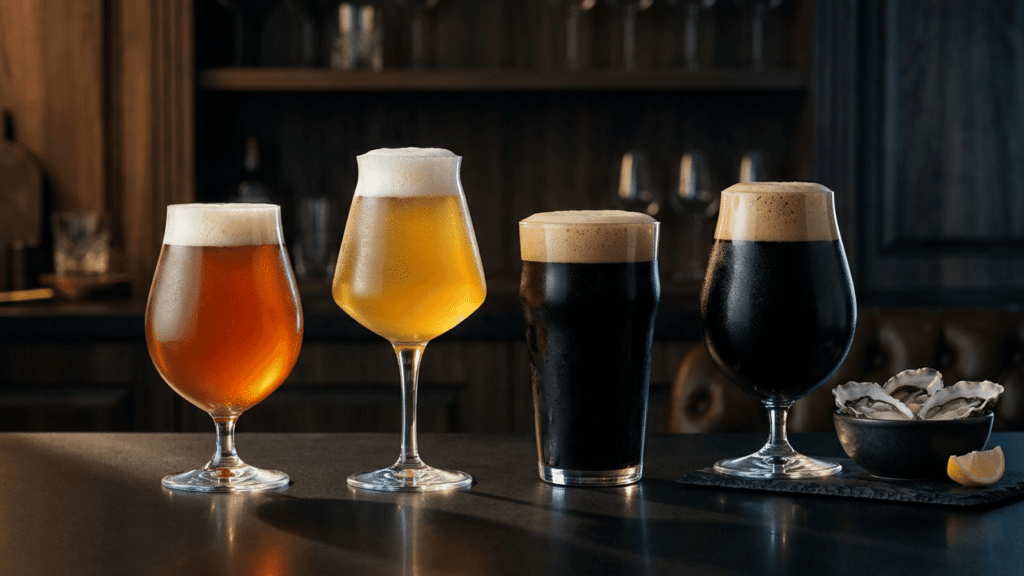
- Use the right glass: A tulip or wide-mouthed glass helps capture hop aroma better than a straight glass.
- Serve at the right temperature: The best range is 45°F to 50°F (7°C to 10°C) for full aroma and flavor.
Foods That Pair Well With IPA
IPA’s bold bitterness and hop flavors make it versatile with food, enhancing spicy, savory, and fresh dishes alike.
| Food Category | Examples | Why It Works With IPA |
|---|---|---|
| Spicy Food | Thai, Indian, Mexican | Citrus hops cut through heat and carbonation, refreshing the palate |
| Grilled or Smoked Meats | BBQ, smoked chicken, grilled ribs | West Coast and Double IPAs balance char with bold hop bitterness |
| Sharp Cheeses | Aged cheddar, blue cheese, parmesan | Fat content softens bitterness and creates balance |
| Burgers & Fried Foods | Burgers, fries, fried chicken | Hops and carbonation reset the palate after each bite |
| Lighter IPAs | NEIPAs, Session IPAs, sushi, fish tacos, salads | Soft, juicy profiles match lighter, fresh flavors |
Popular IPA Brands You Should Try
IPA beers come in many styles, and different brands have helped shape how people enjoy them today. Here are some well-known IPA brands worth trying.
- Sierra Nevada Torpedo Extra IPA: Known for its strong hop flavor with a balanced bitter finish and smooth drinkability.
- Stone IPA: A bold West Coast IPA with sharp bitterness and a clean citrus and pine profile.
- Dogfish Head 90 Minute IPA: A rich, full-bodied IPA with high alcohol content and continuous hopping for depth.
- Lagunitas IPA: A smooth and easy-drinking IPA with fruity notes and a mild bitter edge.
- Founders All Day IPA: A light session IPA made for long drinking, with low ABV and crisp flavor.
- Tree House Julius IPA: A hazy, juicy IPA known for tropical fruit flavors and soft mouthfeel.
IPA Myths Worth Clearing Up
Common misconceptions about IPA, from bitterness levels to brewing history, are cleared up with straight facts.
“IPA is always extremely bitter.”
Not true. New England IPAs are specifically brewed to minimize bitterness while maximizing hop aroma. Many modern IPAs are far more approachable than their reputation suggests.
“The higher the IBU, the more bitter it tastes.”
IBU measures the concentration of bittering compounds in the liquid, but perceived bitterness is different.
Residual sweetness, malt body, and late hop additions all affect how bitter a beer actually tastes in the glass. A NEIPA with 60 IBU can taste softer than a West Coast IPA at 45 IBU.
“IPA was invented specifically to survive the trip to India.”
As covered in the history section, this is an oversimplification. The style evolved from existing October Ales, and the name “India Pale Ale” did not appear until 1829.
The voyage-as-maturation-process theory has more historical backing than the “hops as preservative” narrative.
“Dark beers and IPAs are opposites.”
Black IPA exists, and it works. Dark malts and aggressive hopping are not mutually exclusive.
If anything, the roasty, bitter combination makes for one of the more complex styles in craft beer.
Conclusion
IPA is a hop-forward beer style known for bold bitterness, strong aroma, and a wide range of flavors.
From the balanced, earthy notes of an English IPA to the juicy, tropical taste of a New England IPA, every version feels different.
Its history is more layered than common myths, and not all IPAs are highly bitter. Trying different styles helps reveal its full range.
Start your IPA journey today by choosing a style and tasting it fresh at a nearby taproom or bottle shop.
Frequently Asked Questions
What Beer is Good for Celiac Disease?
Safe options for people with Celiac disease include beers brewed entirely from naturally gluten-free grains such as sorghum, millet, rice, buckwheat, or corn. Avoid traditional barley-based beers, including those labeled “gluten-removed”.
Is IPA More Alcoholic than Beer?
IPAs often have higher alcohol content than standard lagers or ales, but ABV varies by style, from session to imperial versions.
How Many IPA’s Will Get You Drunk?
The number depends on ABV, body weight, metabolism, and tolerance; higher-ABV IPAs cause intoxication faster than lighter beers.