

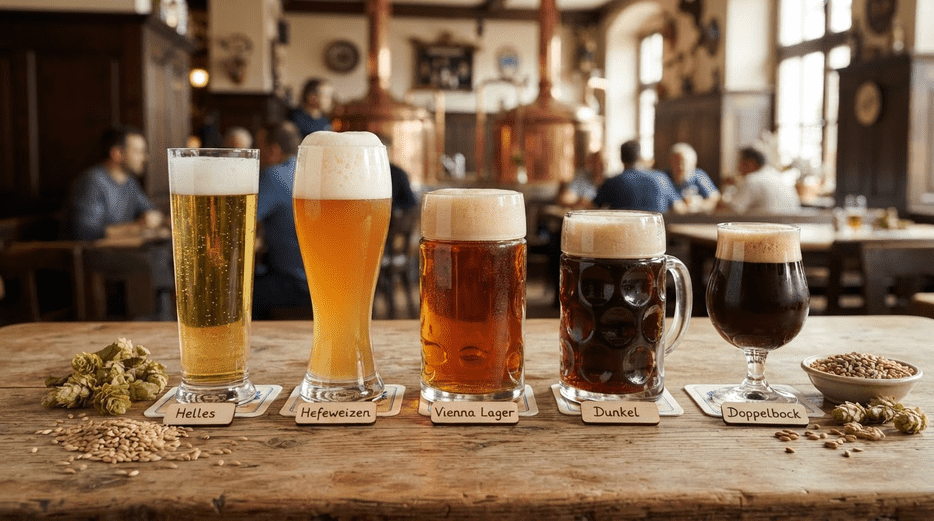
A German beer menu can feel like a journey through history, where unfamiliar names reveal stories of regions, traditions, and generations of brewing expertise.
Exploring German beers beyond familiar Oktoberfest options reveals how much variety exists behind these traditional names.
German beer styles include a surprising range of flavors, techniques, and regional identities, making each style worth exploring.
This guide breaks down what separates these beers, how classic varieties developed, and what makes each family unique.
Before choosing a style, it helps to understand the brewing traditions that built Germany’s legendary beer culture.
What Makes German Beer Styles Different?
German beer styles reflect centuries of brewing tradition, regional character, and careful attention to balance.
Although Germany is strongly associated with crisp lagers, its brewing culture also includes wheat beers, dark lagers, specialty ales, and seasonal styles.
Many new beer drinkers assume German beer means only light lagers, but the country’s brewing culture includes wheat beers, specialty ales, dark lagers, and seasonal varieties.
The Reinheitsgebot, also known as the German Purity Law, was introduced in Bavaria in 1516 and restricted the ingredients permitted in beer, later becoming strongly associated with German brewing tradition.
This combination of heritage, regional diversity, and brewing techniques is what makes exploring German beers such an interesting experience.
German Beer Styles You Should Know
Germany’s classic beer styles range from refreshing pale lagers to rich seasonal brews with stronger malt flavors.
1. German Pilsner
German Pilsner is one of the country’s most recognized beer styles, known for its pale golden appearance. Understanding the difference between lager and Pilsner can also help clarify where this style fits within German brewing.
It follows the traditional lager approach but emphasizes hops more than many softer German styles.
Unlike Czech Pilsner, which often has a rounder malt character and stronger hop aroma, German Pilsner usually finishes drier with a sharper bitterness.
Its clean profile makes it a common starting point for people exploring German beers, offering a familiar yet distinctly traditional experience.
Sweetness: Low | Bitterness: High | Body: Light | Flavor Notes: Herbs, hops
2. Helles Lager
Helles originated in Munich as a response to the growing popularity of pale Pilsner-style beers in the region.
Rather than emphasizing strong bitterness, the style focuses on smooth malt flavors, gentle sweetness, and a balanced finish.
The name “Helles” means light or pale, referring mainly to its color rather than its alcohol strength or intensity.
Its bread-like malt character and softer profile make it a popular, refreshing German lager for everyday drinking.
Sweetness: Medium | Bitterness: Low | Body:Medium | Flavor Notes: Bread, malt
3. Hefeweizen
Hefeweizen is a cloudy German wheat beer known for its distinctive yeast character. Understanding what wheat beer is can also help explain how Hefeweizen differs from other German styles.
The name refers to an unfiltered wheat beer, allowing yeast particles to remain suspended and create its signature look.
This style is famous for fruity banana-like notes and spicy clove aromas created by the specific yeast used during fermentation.
Because of its refreshing character and lighter feel, Hefeweizen is especially popular during warmer months. It represents one of Germany’s most recognizable alternatives to classic lager styles.
Sweetness: Medium | Bitterness: Low | Body: Medium | Flavor Notes: Banana, clove
4. Dunkel
Dunkel is a classic Munich dark lager built around rich malt flavors rather than intense roasted bitterness.
Its deep brown color comes from darker malts that create notes of toasted bread, caramel, and chocolate.
Despite its darker appearance, Dunkel remains smooth and approachable compared with many heavier dark beer styles.
The style shows how malt selection can add depth while preserving the clean character associated with lager fermentation.
Sweetness: Medium | Bitterness: Low | Body:Medium | Flavor Notes: Toast, caramel
5. Märzen And Oktoberfest Beer
Märzen has a strong connection with traditional Oktoberfest celebrations and represents one of Germany’s most famous seasonal beer styles.
Traditionally brewed in March and stored until autumn festivals, it developed a rich amber color and malt-forward character.
Modern Oktoberfest celebrations often feature Festbier, a lighter and more golden version that has replaced Märzen at many large festivals.
Both styles connect to German beer traditions and seasonal celebrations, though their profiles differ slightly. Märzen remains a classic example of how German brewing developed around yearly cycles.
Sweetness: Medium | Bitterness: Low | Body: Medium | Flavor Notes: Toasted malt, bread
6. Kölsch
Kölsch is a distinctive German beer style associated specifically with Cologne and its local brewing traditions.
Unlike most well-known German beers, Kölsch is a top-fermented ale rather than a lager, yet its clean character can seem lager-like.
This light-colored beer has a refreshing, delicate profile and is traditionally served in narrow glasses called Stangen to help maintain freshness.
Its regional identity is central to the style, with the name Kölsch reserved for beer brewed according to specific Cologne traditions.
Sweetness: Low | Bitterness: Low | Body: Light | Flavor Notes: Grain, delicate hops
7. Altbier
Altbier is a traditional beer style from Düsseldorf that combines ale fermentation with lager-style conditioning.
The name means “old beer,” referring to the older brewing method used before bottom-fermented lagers became dominant.
It usually has a copper color with a balanced profile that combines nutty malt character with noticeable bitterness.
Unlike many ales that emphasize fruity yeast flavors, Altbier has a clean, refined character. Its regional connection makes it one of Germany’s most distinctive traditional beers.
Sweetness: Medium | Bitterness: Medium | Body: Medium | Flavor Notes: Nutty malt, hops
8. Bock
Bock is a strong lager category known for its rich malt profile, fuller body, and deeper flavor than lighter German lagers.
Originally associated with northern Germany, Bock later became closely connected with Bavaria and developed as a stronger beer for seasonal traditions.
Traditional Bocks are often enjoyed during colder months, although different variations can be available throughout the year.
Compared with lighter German lagers, Bock emphasizes malt depth while maintaining the clean character associated with lager fermentation.
Sweetness: Medium | Bitterness: Low | Body: Full | Flavor Notes: Rich malt, caramel
9. Doppelbock
Doppelbock is a stronger and richer variation of traditional Bock, historically associated with Bavarian monks and periods of fasting.
The style was developed as a more substantial beer, with deeper malt flavors and a fuller, heavier character than regular Bock.
It is typically darker and sweeter than Bock, creating a rich profile that emphasizes malt depth and a stronger overall body.
The name means “double bock,” reflecting its more intense interpretation of the original style and its place in German brewing tradition.
Sweetness: High | Bitterness: Low | Body: Full | Flavor Notes: Dark fruit, malt
10. Rauchbier
Rauchbier is a specialty German lager most closely associated with Bamberg, a city known for preserving this unusual brewing tradition.
Its defining feature comes from smoked malt, which is dried using methods that expose the grain to smoke.
This process creates a distinctive smoky character that can remind drinkers of wood fire or smoked foods.
Rauchbier offers a completely different experience from most German styles because the smoking technique becomes the central part of its identity.
Sweetness: Low | Bitterness: Medium | Body: Medium | Flavor Notes: Smoke, toasted malt
11. Schwarzbier
Schwarzbier is a traditional German dark lager with a nearly black appearance, smooth body, and balanced malt character.
Despite its dark color, Schwarzbier is generally lighter and cleaner in character than many dark ales.
Originating in regions such as Thuringia and Saxony, it uses roasted malts that bring subtle coffee, chocolate, and toasted grain notes.
Its approachable body makes it a useful introduction to darker German beer styles for those exploring beyond pale lagers.
Sweetness: Medium | Bitterness: Low | Body: Light-Medium | Flavor Notes: Coffee, chocolate, toast
Which German Beer Style Should You Try First?
Choosing a German beer is easier when the style matches familiar preferences for bitterness, malt, fruitiness, or roasted flavors.
- For Light and Refreshing Beers: German Pilsner offers crisp bitterness and a clean, dry finish. Helles is smoother and maltier, while Kölsch has a delicate, refreshing character.
- For Fruity and Aromatic Beers: Hefeweizen offers fruity banana notes with spicy clove-like aromas. Its cloudy wheat-beer character sets it apart from the lager styles above.
- For Darker and Richer Beers: Dunkel provides toasted malt and caramel-like flavors with a smooth profile. Schwarzbier adds subtle roasted notes, while Doppelbock offers deeper malt richness and a fuller body.
- For Something Unique: Rauchbier stands apart with its distinctive smoky malt character. Its traditional smoking process creates a flavor profile unlike the other German styles listed above.
Popular German Beer Styles For Oktoberfest
Oktoberfest highlights Germany’s beer traditions, with seasonal lagers playing a central role in the celebration. Märzen has historic ties to the festival, while modern Oktoberfest events commonly feature Festbier.
1. Festbier: Festbier is a pale, golden lager with smooth malt character and a lighter profile than traditional Märzen, commonly associated with modern Oktoberfest celebrations.
2. Märzen: Märzen is the traditional amber Oktoberfest style, known for richer malt character and deeper color, with its name referring to March brewing traditions.
3. Hefeweizen: Hefeweizen is a cloudy wheat beer with banana and clove-like yeast notes, offering a familiar German style at beer halls and festivals.
4. Helles: Helles is a pale Munich lager with gentle malt sweetness and lower bitterness than German Pilsner, making it a smooth festival option.
5. Traditional Oktoberfest Connection: Oktoberfest began in Munich in 1810, and the beers served there have changed over time, helping explain the distinction between Märzen and Festbier.
German Beer Styles Available in American Breweries
American craft breweries have helped bring traditional German beer styles closer by recreating classic recipes with local brewing influences. Common German styles include:
- Hefeweizen: Popular wheat beer choice recognized for its cloudy appearance and distinctive yeast character.
- Kölsch: Light and refreshing German-style ale often brewed as a seasonal summer release.
- Pilsner: Common choice among breweries producing crisp lagers with a clean and balanced profile.
- Dunkel: Darker lager option for breweries exploring traditional malt-focused German styles.
- Märzen: Seasonal favorite often released during autumn and Oktoberfest celebrations.
Final Thoughts
German beer culture shows how geography, craftsmanship, and generations of brewing traditions can shape something as simple as a glass of beer.
The biggest takeaway is that German beers aren’t defined by one flavor or category, but by the stories and traditions behind each style.
Understanding German beer styles becomes easier when looking beyond unfamiliar names and focusing on the techniques, regions, and brewing ideas that created them.
Whether someone prefers a crisp lager, refreshing wheat beer, or richer seasonal brew, there is a style worth exploring.
Which German beer style caught your attention the most? Share your choice and start your next tasting adventure.
Frequently Asked Questions
Which German Beer Styles Have Long Regional Traditions?
Altbier, Kölsch, and traditional wheat beers have long brewing histories connected to specific German cities and regions.
Are German Beers Available Outside Germany?
Yes, many German beer styles are exported worldwide, and several American craft breweries also create German-inspired versions.
Why are German Beer Glasses Different for Each Style?
Traditional glass shapes are designed around serving customs and help preserve the appearance, aroma, and drinking experience of specific beer styles.