

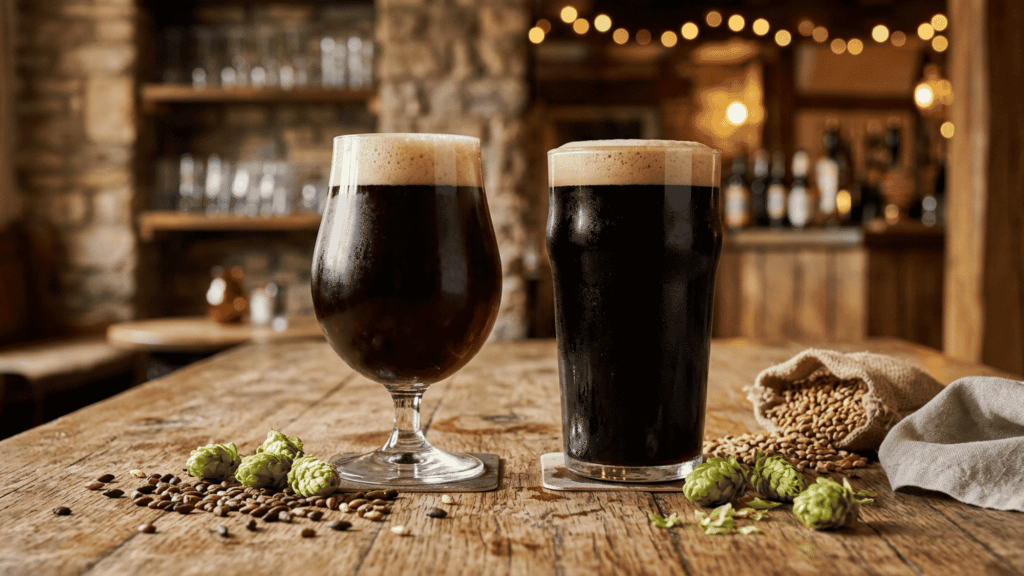
Ever wondered what really sets Porter and Stout apart when it comes to dark beers? Both are rich, bold, and packed with flavor, but they are not the same.
Porters are usually smooth and a bit sweet, with notes of chocolate and caramel that make them easy to drink. Stouts are stronger in taste, often with roasted, coffee-like flavors that feel deeper and heavier.
Their brewing styles and history also shape their character, giving each one a different personality in the glass.
In this article, let’s look at their differences and find out which dark beer suits your taste.
What is a Porter Beer?
Porter is a dark beer that first started in London in the early 1700s. It became popular with working-class people, especially street and dock workers called porters, which is how it got its name.
It is known for a smooth and rich taste with flavors of chocolate, caramel, and light roasted malt. This makes it easy to drink but still full of flavor.
Unlike lighter beers like lagers, which are crisp, Porter has a deeper roasted taste. It was first made by blending different beers for a steady flavor, and over time brewers improved it. Today, it is enjoyed worldwide for its balance.
What is a Stout Beer?
Stout is a dark and strong beer known for its roasted flavors. It often tastes like coffee, cocoa, or dark chocolate, which gives it a bold profile.
It started in Ireland in the early 1700s as a stronger version of Porter and was sometimes called “stout Porter.”
Unlike lighter beers such as lagers, stouts use unmalted roasted barley (virtually required for the style) and rich malts to create a heavier body and deeper, drier taste.
There are many types of stouts, including dry Irish, milk, and imperial stouts, each with its own strength and flavor.
Porter vs Stout: Key Differences
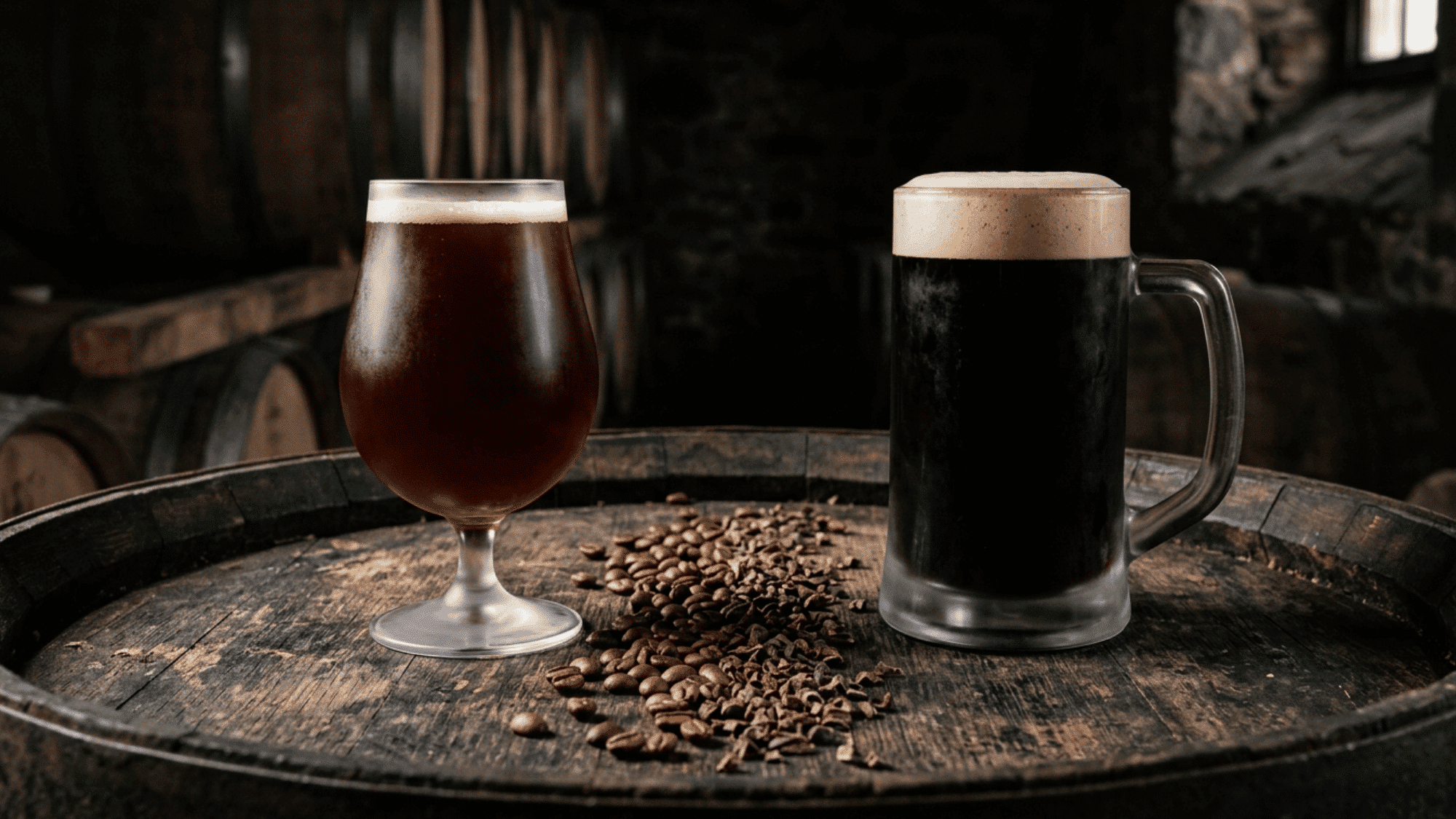
Though both are dark, flavorful beers, Porter and Stout each bring their own personality to the glass. Understanding their key differences helps you pick the perfect pour for any occasion.
Sweetness Levels
Porters are slightly sweeter and smoother in taste. They often carry chocolate and caramel notes, which make them easy to drink.
Their lighter body and softer roast flavor make them more approachable. Porters also pair well with lighter foods like grilled chicken, roasted vegetables, and mild cheeses.
Stouts are drier and more intense. Irish dry stouts have stronger roasted bitterness and lower sweetness.
Even milk or oatmeal stouts add creaminess, but stouts stay bolder. They pair best with rich desserts and heavy meals.
Regional Influence
Porters originated in London and reflect a traditional English ale style. They are lighter in roast and offer a smoother, more balanced taste.
Early brewers focused on drinkability, shaping Porters into mild, easy-drinking dark beers with softer bitterness.
Stouts developed later, especially in Ireland, using roasted barley for a deeper and stronger flavor.
This created a darker color, fuller body, and bolder taste. These regional roots still shape both styles, and modern craft brewers continue to follow these classic differences.
Food Pairing
Porters have a mild sweetness and smooth texture that make them easy to pair with food. They work well with roasted meats, grilled vegetables, and light chocolate desserts.
Their softer profile keeps the flavors balanced without overpowering the dish.
Stouts are stronger in taste with roasted, bitter notes. They pair better with rich stews, smoked dishes, and heavy desserts like dark chocolate or coffee-based treats.
The contrast between stout and food is more intense, which gives a bolder eating experience. Both styles pair well, but stouts usually handle stronger flavors more easily.
Serving Style & Glassware
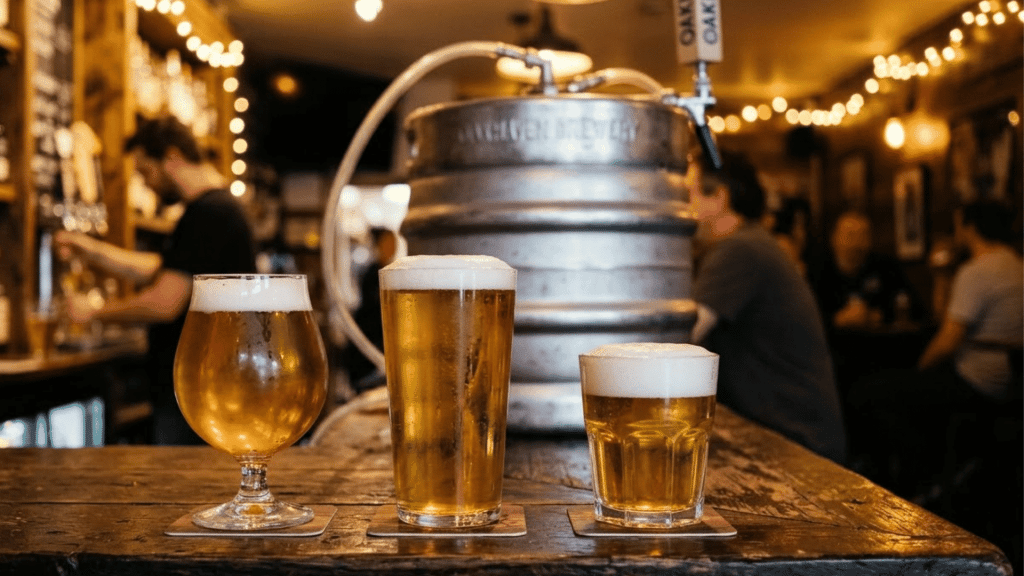
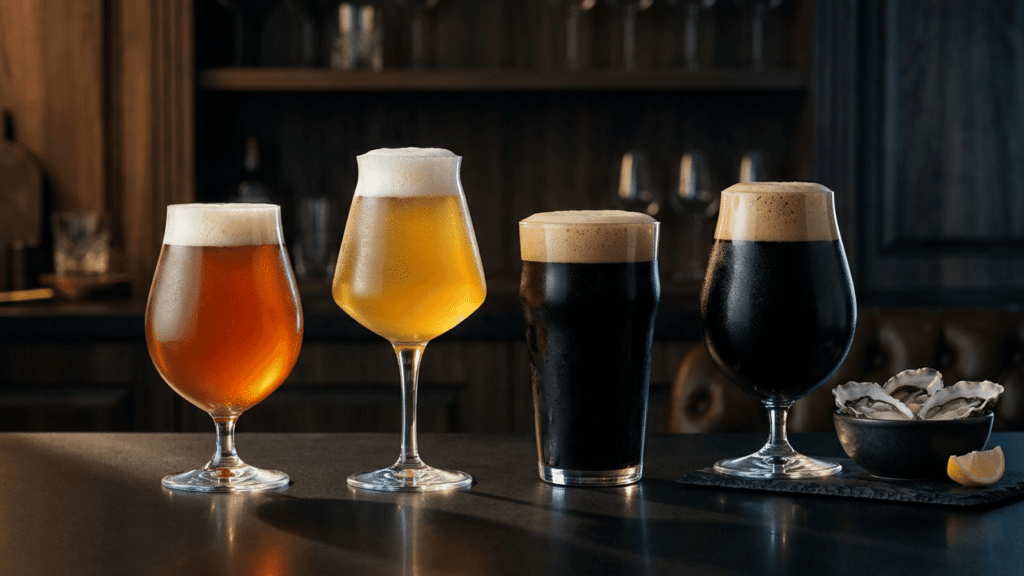
Porters are typically served slightly chilled 45–50°F (slightly chilled) in standard pint glasses or tulip glasses. This helps highlight their smooth aroma and balanced malt profile.
The cooler temperature keeps the flavors soft and easy to enjoy.
Stouts are often served at 50–55°F (a bit warmer), especially imperial or heavier versions. Wider, rounded glasses help bring out roasted notes and a creamy feel.
Many stouts also use a gentle nitrogen pour, which creates a thick, velvety head and smooth texture. Porters, on the other hand, are usually poured more relaxed, keeping things simple and light.
Types of Porters and Stouts
Both Porters and Stouts come in a variety of styles, each with its own flavor, color, and character. Knowing the different types can help you choose the right dark beer for any occasion or meal.
Porters
Porters are dark ales known for their smooth malt character and subtle sweetness. Some popular types include:
- English Porter: The classic Porter from London. Medium-dark, with notes of chocolate, caramel, and mild roasted malt. Smooth, balanced, and highly drinkable.
- Baltic Porter: Stronger, often brewed with lager yeast. Dark brown to almost black, with rich maltiness, toffee, and slight alcohol warmth. Popular in Eastern Europe.
- Robust Porter: Full-bodied and more intensely roasted than standard Porters. Deep chocolate and coffee flavors with moderate bitterness.
- Brown Porter: Lighter than robust versions, medium-bodied with mild roasted notes, caramel sweetness, and easy drinkability.
- American Porter: Crafted with bold flavors, often emphasizing hop aroma alongside traditional malt sweetness. Smooth but slightly more assertive.
Stouts
Stouts are dark, bold beers with roasted flavors and complex character. Some common types are:
- Dry Irish Stout: Classic style, dark black with roasted malt, coffee, and subtle bitterness. Light- to medium-bodied, highly popular worldwide.
- Milk (Sweet) Stout: Contains lactose for added sweetness and creaminess. Smooth, chocolatey, and approachable for new dark beer drinkers.
- Oatmeal Stout: Brewed with oats for a silky, rich mouthfeel. Medium-bodied with roasted malt and subtle sweetness.
- Imperial (Russian) Stout: Very strong, high ABV, full-bodied, and intensely roasted. Often with notes of dark chocolate, espresso, and dark fruit.
- Chocolate/Coffee Stout: Flavored stouts highlighting chocolate, coffee, or other roasted notes. Rich, aromatic, and indulgent, perfect for dessert pairings.
Calorie Comparison: Porter vs Stout
Dark beers are often seen as heavy, and their calorie content reflects that to some extent. Porters usually contain about 150 to 200 calories in a 12-ounce serving.
They use malted barley, which gives a smooth flavor without adding too much weight. This keeps them lighter compared to many other dark beers.
Stouts are higher in calories, usually around 180 to 250 per 12 ounces. They use roasted barley, which adds more body and depth.
Imperial and milk stouts can exceed 300 calories due to higher alcohol content and added ingredients like lactose. The difference is small per glass, but it adds up over time.




Conclusion
Porters and Stouts each bring their own story, flavor, and feel to the glass. Both turn dark beer into more than just a drink. They create a full experience in every sip.
Porters feel smooth and easygoing, perfect for relaxed moments. Stouts are richer and more intense, better for deeper flavors and bold tastes.
Next time you choose a pint, think about what you want. Something light and simple or something strong and full-bodied.
Try both side by side and see which one you enjoy more.
Frequently Asked Questions
Are Porter and Stout Seasonal Beers?
Not strictly, but darker beers are popular in colder months, though many are enjoyed year-round.
How Long Can You Store Porter or Stout?
Most last several months unopened; stronger stouts like Imperial Stouts can even age for years like wine.
Are Porters and Stouts Gluten-Free?
Traditional versions are not gluten-free, but some breweries offer gluten-free options made with alternative grains.