

Ever picked up a bottle of rum and a bottle of whiskey and wondered what actually makes them different?
They’re both brown, both aged in barrels, and both pack a serious punch. Yet they taste nothing alike.
Most people have a favorite but can’t explain why beyond “I just like it better.” That’s fair, but there’s a lot more to the story.
This post breaks down the real differences between rum and whiskey: base ingredients, flavor, aging, alcohol content, and health effects. Read on to find out which one deserves a spot in your glass.
What is Rum?
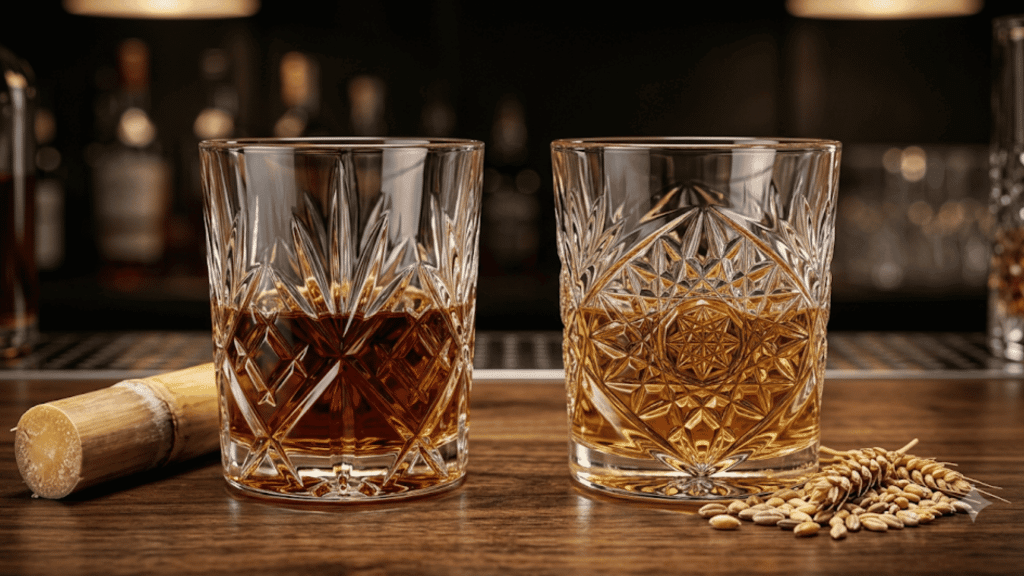
Rum is a distilled spirit made from sugarcane byproducts, mainly molasses or fresh sugarcane juice. Molasses is the dark, thick syrup left behind after sugarcane is boiled and the sugar crystals are removed.
For every two pounds of sugar produced, refineries were left with roughly one pound of molasses.
Rum developed in the Caribbean in the 17th century from sugarcane byproducts such as molasses.
Today, rum is produced across the Caribbean, Latin America, and other regions worldwide, and it is commonly described by styles such as white, gold, dark, aged, spiced, and agricole.
What is Whiskey?
Whiskey is a distilled spirit made from fermented grain mash. Distillers use grains like wheat, rye, barley, or corn, sometimes malted, depending on the recipe and style they’re going for.
You’ll notice two spellings out in the world: “whiskey” and “whisky.” Irish and American producers use “whiskey,” while Scottish and Canadian producers drop the “e” and go with “whisky.”
Common whiskey styles include Scotch, Irish whiskey, bourbon, rye, and blended whiskey.
Rum vs Whiskey: Side-by-Side Comparison
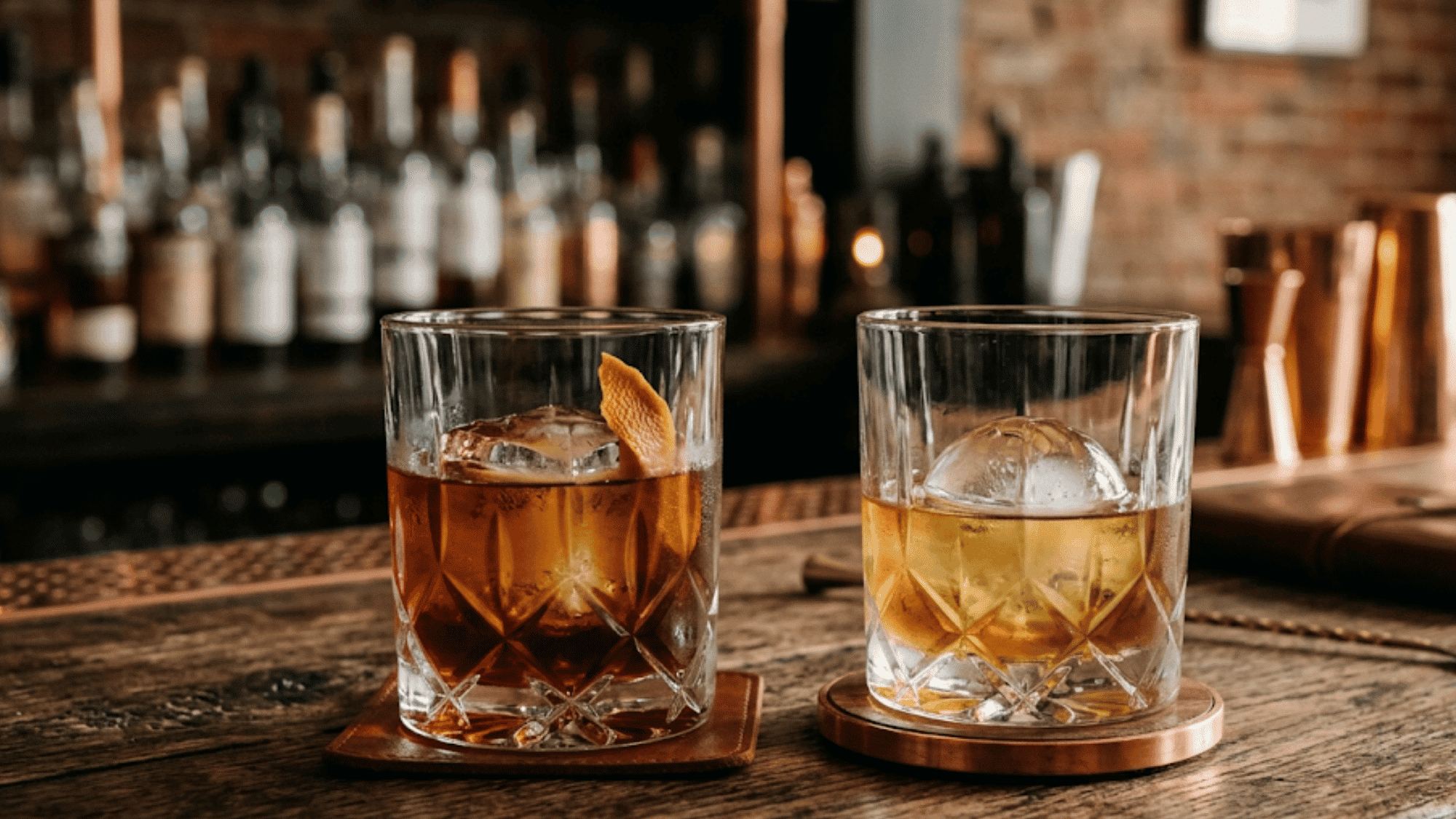
Both are brown spirits aged in barrels, but that’s where the similarities end. This is how rum and whiskey stack up across five key characteristics.
Base Ingredients
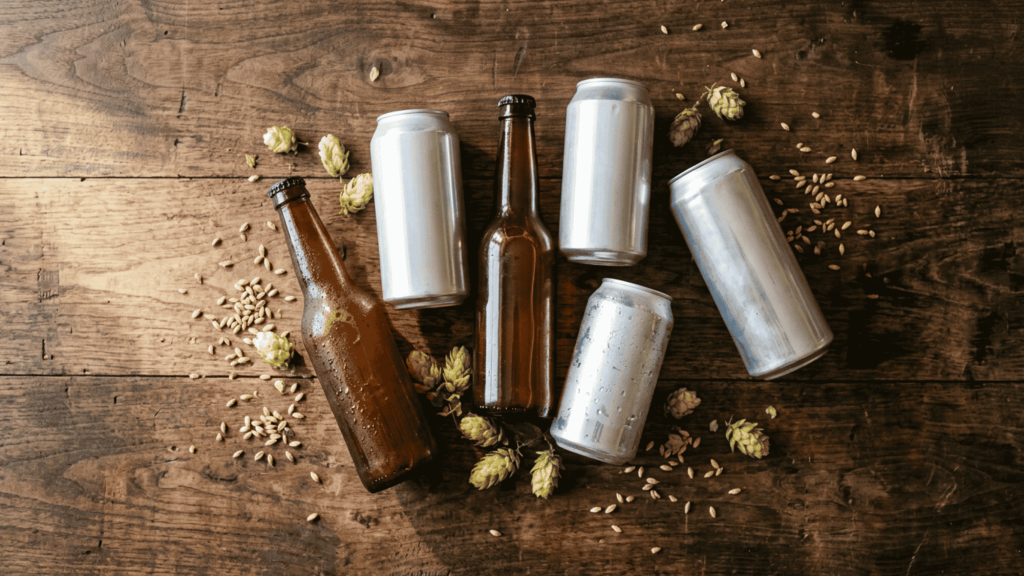
Whiskey starts with fermented grain mash. Distillers use grains like corn, rye, barley, or wheat.
The type of grain used directly shapes the flavor: corn makes bourbon sweeter, rye makes it spicier, and barley gives Scotch its signature depth.
Rum starts with sugarcane byproducts, either molasses or fresh sugarcane juice. The natural sugars in these ingredients give rum its signature sweetness right from the start, before it even touches a barrel.
Flavor Profile
Whiskey tends to be dry, complex, and oak-forward. Depending on the style, you’ll pick up notes of vanilla, caramel, dried fruit, or smoke.
Bourbon leans sweet, Scotch can go smoky, and Irish whiskey tends to stay smooth and light.
Rum is noticeably sweeter. White rum is light with hints of citrus and fresh cane. Dark and aged rums bring molasses, tropical fruit, warm spice, and toasted wood. Spiced rum adds cinnamon, nutmeg, and pepper to the mix.
Aging Process
Many whiskeys are aged in wooden barrels, often in charred oak, though rules vary by style and region. Bourbon law requires brand-new charred American oak barrels.
The extreme temperature swings in places like Kentucky push the liquid in and out of the wood, building layers of vanilla, caramel, and spice over time.
Rum aging rules vary widely by style and country. Most rum is aged in used barrels, often ex-bourbon or sherry casks.
Tropical climates speed up the process, so a three-year Caribbean rum can taste as developed as a much older whiskey aged in cooler conditions.
Alcohol Content
Whiskey is typically bottled at 40% ABV (alcohol by volume). Some styles go higher; cask strength whiskeys can reach 55–65% ABV.
Most everyday whiskeys you’ll find on a shelf sit right around the 40–46% range.
Rum also starts at 40% ABV for standard bottles. The big difference is that overproof rum can reach up to 75.5% ABV.
That makes certain rums significantly stronger than most whiskeys you’d find at the same price point.
Calories in Rum vs Whiskey
Calories in both spirits come mostly from alcohol, not sugar, since both are distilled and contain little to no carbs in their plain form.
A standard 1.5 oz shot of whiskey at 40% ABV runs around 105 calories. Rum at the same proof and serving size lands close behind at about 97 calories.
The real difference shows up once mixers enter the picture. Rum often gets paired with Coke, fruit juice, or coconut cream, which can push the total well past 200 calories per drink.
Whiskey is more commonly sipped neat, on the rocks, or with soda water, keeping most pours lighter and closer to their base calorie count.

Which is Better: Rum or Whiskey?
There’s no clear winner here; it comes down to what you like and how you drink.
Rum is the better pick for tropical cocktails, sweeter palates, and tighter budgets. Most bottles fall between $10 and $30, making it easy to start.
Whiskey works better for straight sipping, food pairings, and those who prefer drier, more complex flavors. Premium bottles do tend to run higher than comparable-aged rums.
At the end of the day, the better spirit is the one you actually enjoy drinking.
Why Did Sailors Drink Rum Instead of Whiskey?
It wasn’t a preference; it was practical.
Rum became useful at sea because it was easier to store than beer or water and remained stable during long voyages. Beer spoils in warm latitudes. Rum didn’t rot, took up less space, and stayed stable for months.
Sugarcane was introduced to the Caribbean in the late 15th century, and rum later became a common local spirit.
In 1740, Vice Admiral Edward Vernon ordered rum to be mixed with water to curb drunkenness. Sailors called it “grog” after Vernon’s nickname, “Old Grog.”
The British Royal Navy ended its daily rum ration on July 31, 1970, a date now known as Black Tot Day.
Best Food Pairings for Rum and Whiskey
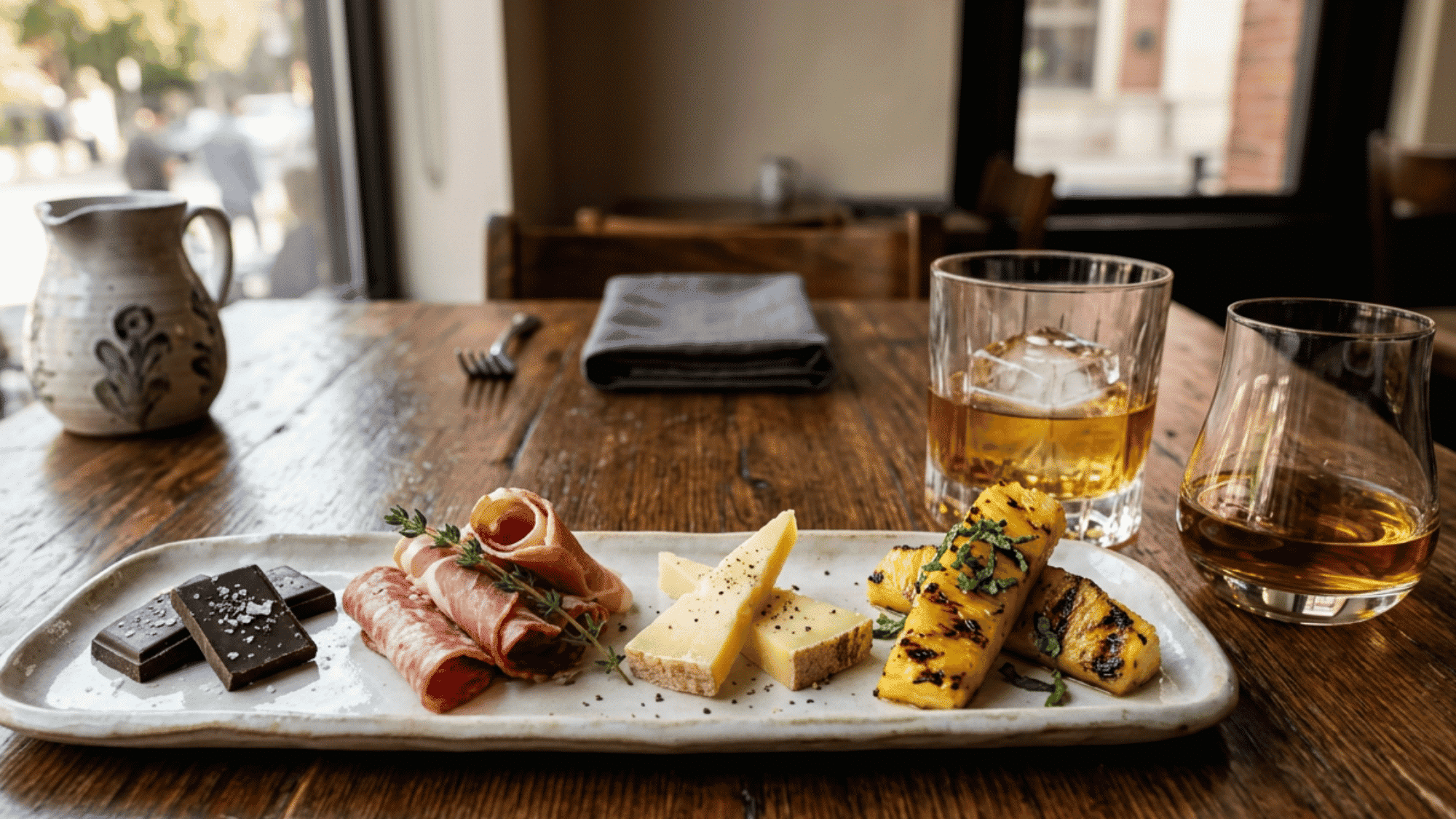
The right food pairing can make your spirit taste even better. Here is how rum and whiskey match up with different flavors on the plate.
Rum
- Dark rum pairs well with chocolate desserts, grilled pineapple, and slow-cooked BBQ. Its natural sweetness complements rich, caramelized flavors.
- Spiced rum works well with coconut-based dishes and spiced nuts.
- Dark rum also adds depth to marinades and slow-cooked sauces.
Whiskey
- Whiskey pairs well with smoked meats, aged cheeses, and dark chocolate.
- Bourbon complements pecan pie and caramelized onion dishes especially well.
- Scotch holds up against strong flavors like blue cheese and cured salmon.
- Whiskey builds a great base for savory sauces when used in cooking.
Final Thoughts
Rum comes from sugarcane. Whiskey comes from grain. That one difference shapes everything from how they taste to how they age to what they cost.
Neither is better than the other. They just suit different people, different occasions, and different glasses.
The best way to figure out which one is yours? Try both neat before you mix anything. Your palate will tell you everything you need to know.
Team rum or team whiskey? Tell us in the comments below.
Frequently Asked Questions
Is Rum the Strongest Alcohol?
Not by default. Standard rum sits at 40% ABV, the same as most spirits. Overproof rum can reach 75.5% ABV, making it one of the strongest commercially available options.
How Much Rum for 1 Can of Coke?
A standard rum and Coke uses 1.5 oz of rum per 12 oz can. Adjust to taste, but that ratio gives you a balanced, easy-drinking mix.
Does Rum Get You Drunk Easily?
It can. At 40% ABV, rum is as strong as vodka or whiskey. Drinking speed, body weight, and food intake all affect how quickly it hits you.