


Opening a bottle of wine should feel simple, but even a small mistake can turn the moment into a messy situation. From stubborn corks to unfamiliar openers, a few details can make the process trickier than expected.
Knowing how to open a wine bottle properly helps you avoid common mistakes and handle different bottle types with ease. But what happens when the cork breaks or your usual opener isn’t available?
Keep reading for practical techniques, helpful alternatives, and simple tips to make your next wine-serving experience much smoother!
Choosing the Best Wine Opener
For a standard cork-sealed bottle, a double-hinged waiter’s corkscrew is hard to beat. Often called a wine key, it combines a small foil knife, a spiral worm, and a two-stage lever in one compact tool.
Those two lever positions matter. Instead of asking you to pull the cork free in one motion, they let you raise it a little at a time with less strain on your hand and the cork.
There are easier options if grip strength is a concern. Winged corkscrews provide plenty of leverage, while lever and electric openers require less pulling. Older bottles are a different case, especially the long-aging types of red wine that spend years under cork.
If the cork looks dry or brittle, an Ah-So, a two-pronged opener, can grip it from the sides without piercing the center.
How to Open a Wine Bottle With a Waiter’s Corkscrew
A waiter’s corkscrew provides excellent control when each part of the tool is positioned correctly. Set the bottle on a stable surface and keep it upright throughout the process so the cork can be pulled in a straight direction.
Step 1: Cut the Foil Below the Lip
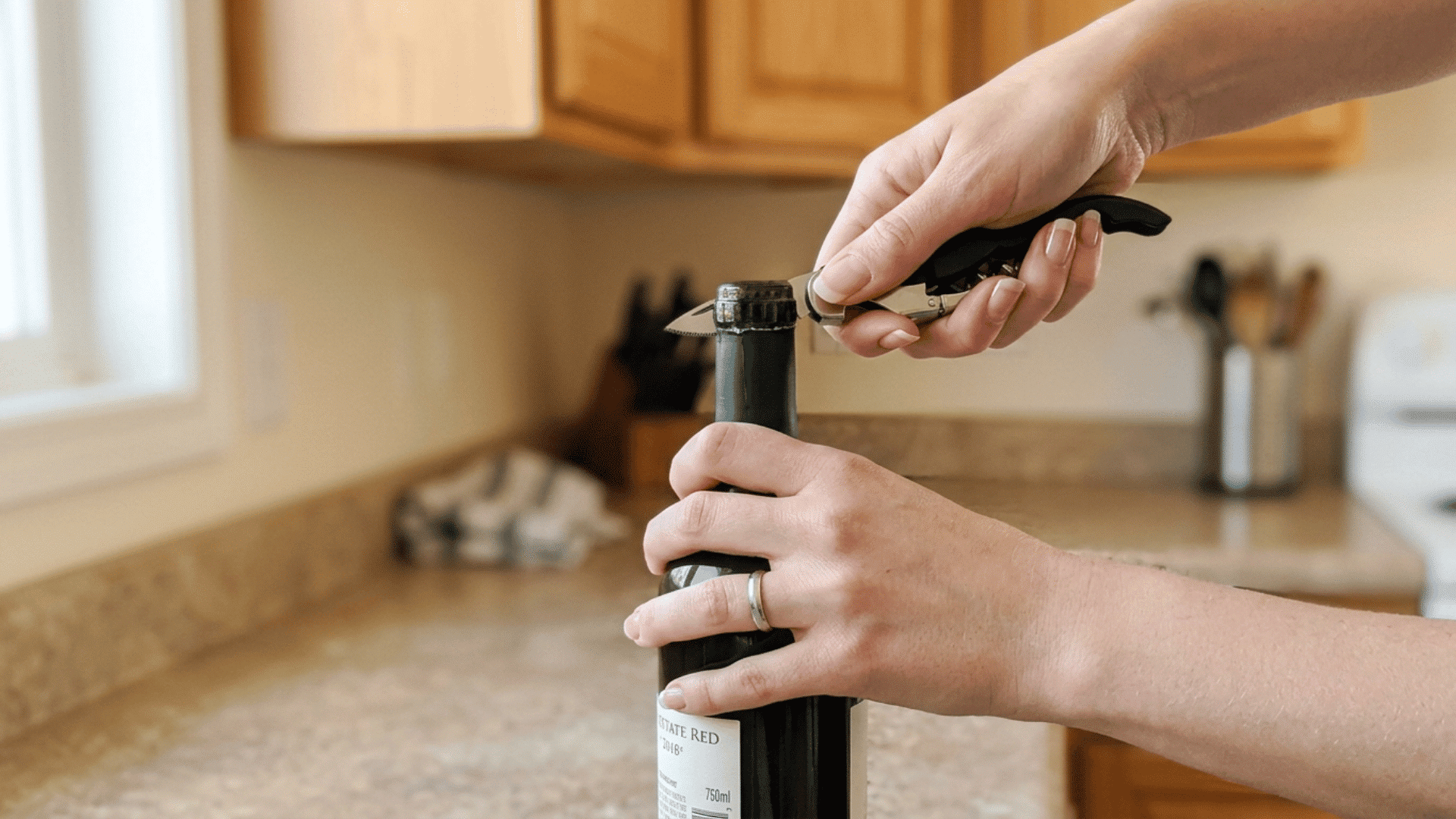
Open the small knife on the wine key and place the blade just below the lower ridge of the bottle lip.
Run it carefully around the neck, keeping the blade pointed away from your supporting hand. Lift off the foil cap and close the knife.
The pouring edge should now be uncovered, with no loose foil hanging around the lip.
Step 2: Position the Worm in the Center
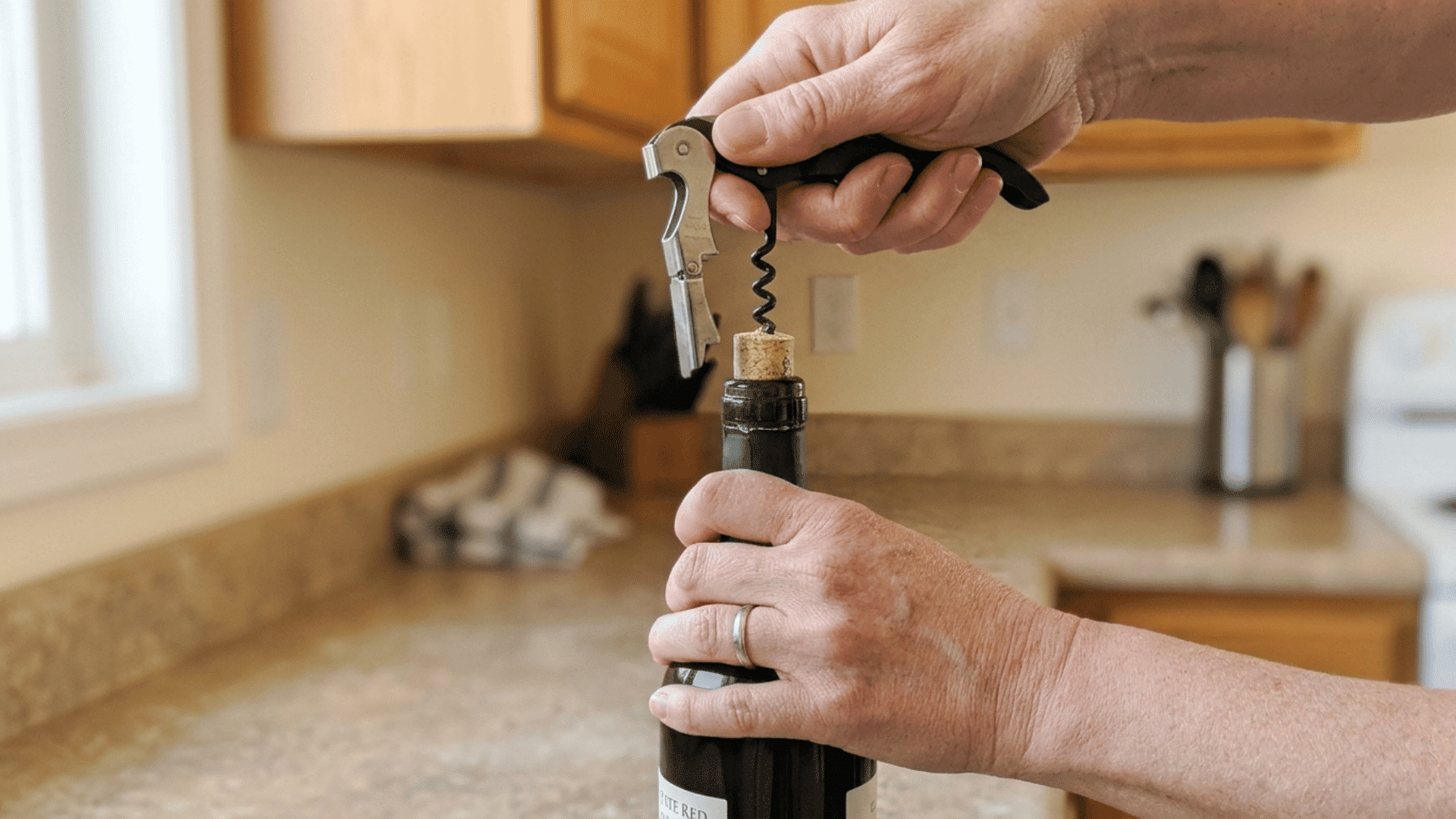
Place the point of the worm near the middle of the cork. Starting slightly off center can help the spiral settle into the center as you begin turning.
Twist the handle clockwise with light downward pressure. Once the worm catches, straighten the corkscrew so it enters vertically.
If it starts leaning toward the glass, correct the angle rather than continuing deeper.
Step 3: Turn Until One Spiral Is Visible
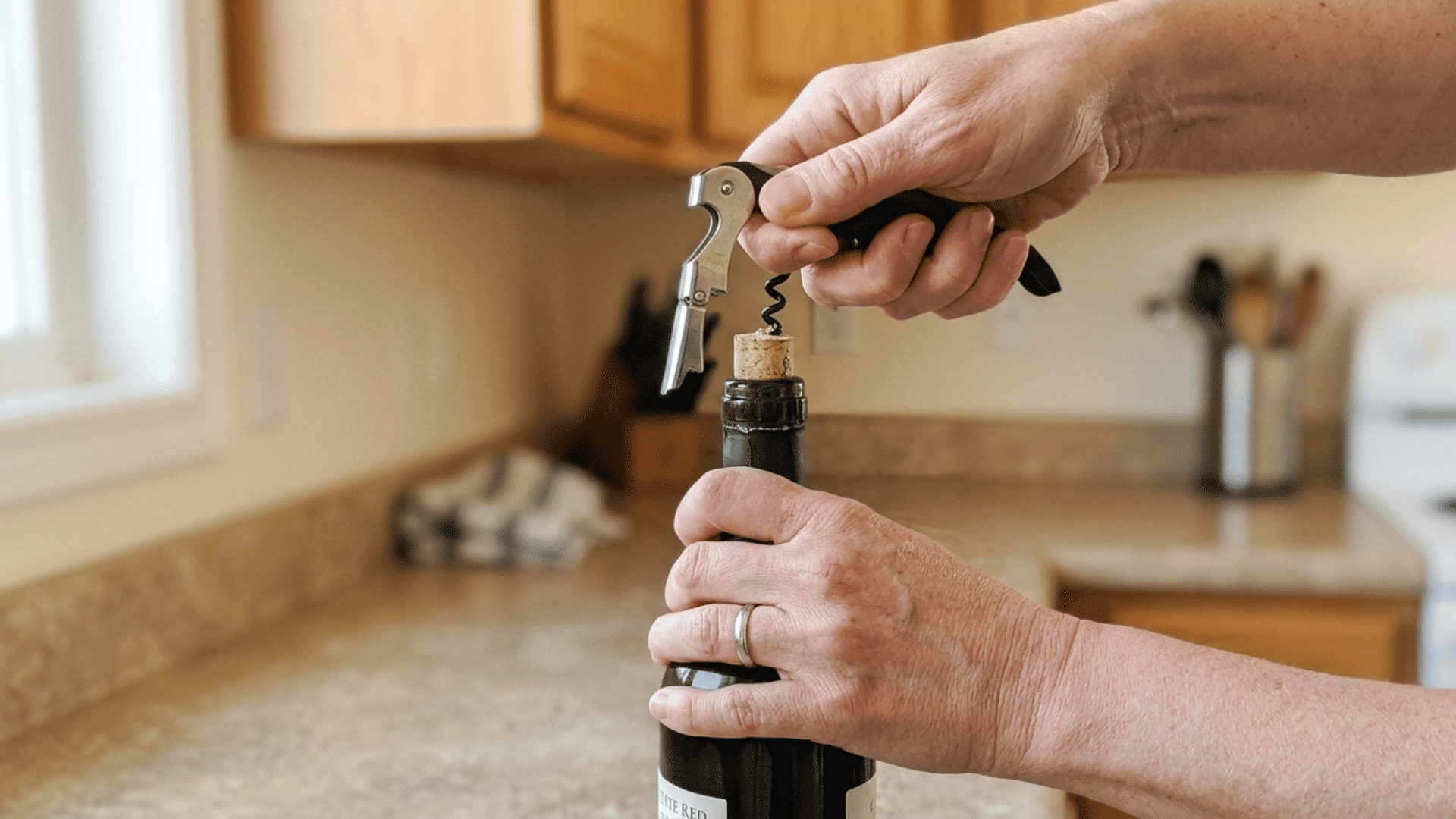
Keep turning until one complete spiral remains visible above the cork. Going much shallower can leave the corkscrew without enough grip.
Driving the worm farther than necessary may push its tip through the bottom of the cork and knock loose small pieces.
You should now have a firm hold without having forced the corkscrew farther than needed.
Step 4: Lift With the First Lever Position
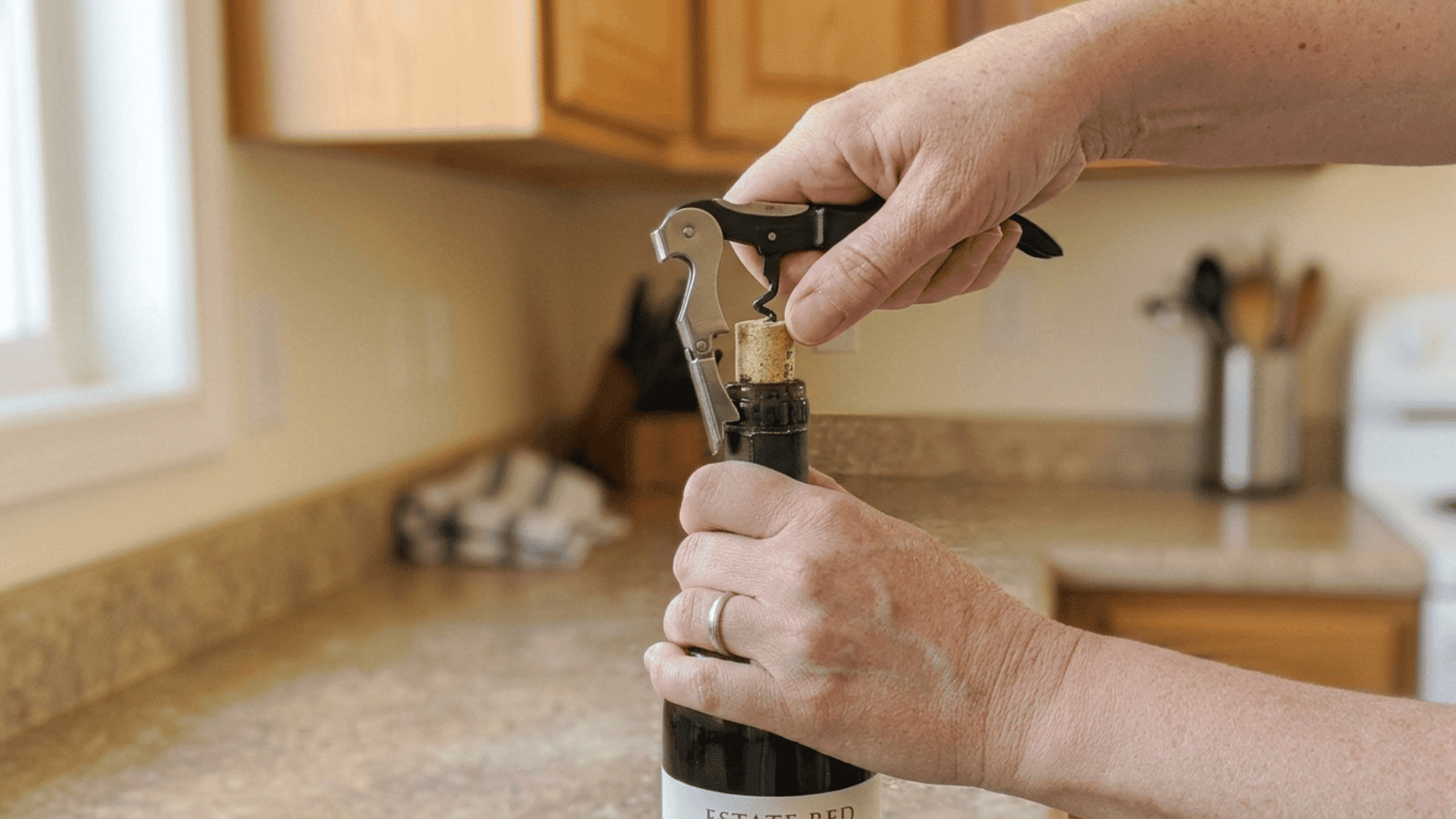
Hook the first ledge of the wine key over the bottle rim. Hold the bottle steady and slowly raise the handle.
The cork should move upward without much force. If the opener slips or the cork begins tilting sharply, lower the handle and reposition it before continuing.
There is no advantage to rushing this part. A slow lift puts less stress on the cork. Keep your fingers pressing the lever against the rim so it stays in place for the whole lift.
Note:If your corkscrew has a second lever, position it on the bottle rim after the first lift. Raise the handle again to pull the remaining cork out smoothly.
Step 5: Complete the Removal by Hand
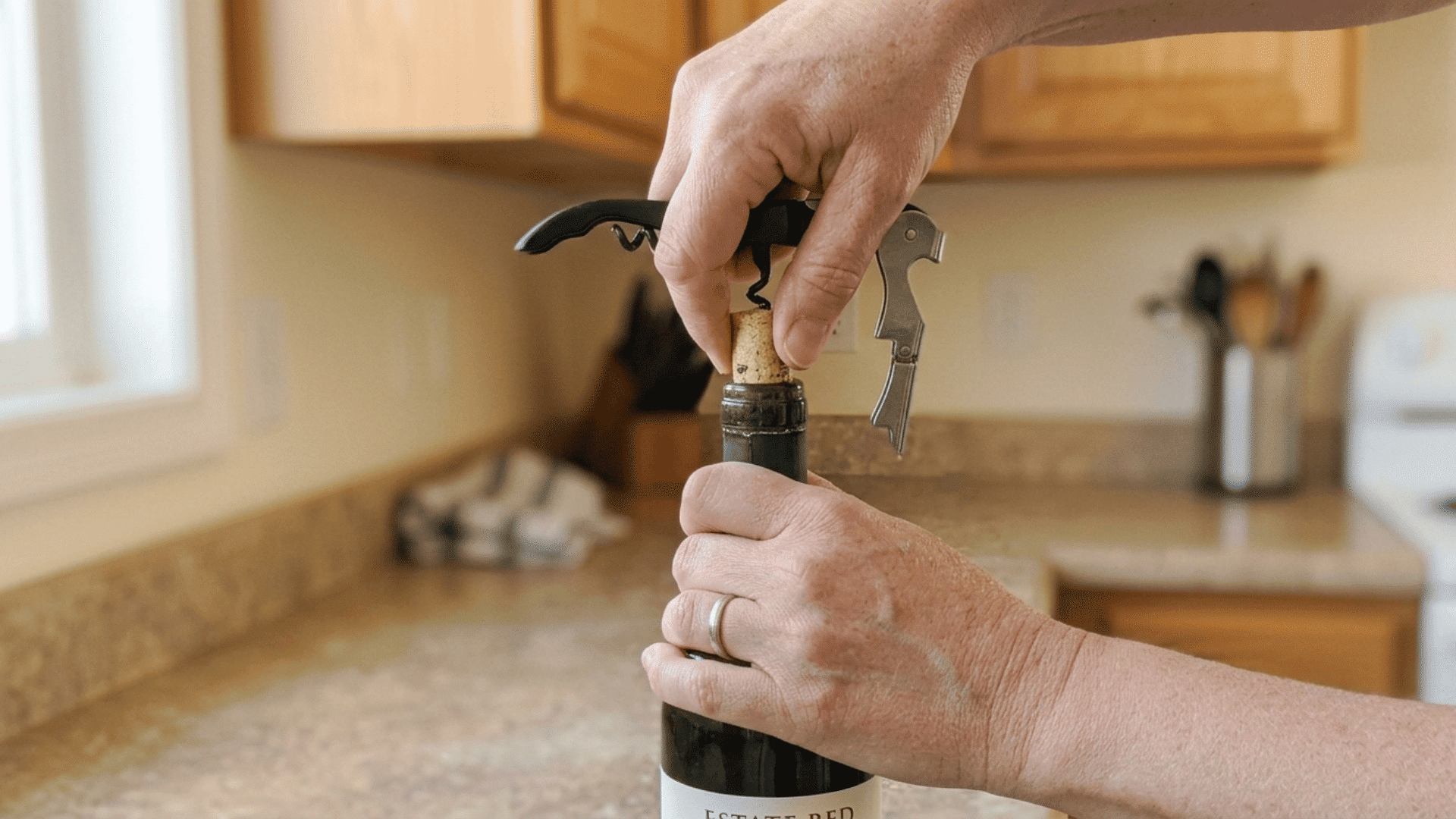
When the cork is almost free, stop using the lever. Grip the exposed cork and ease it out with a small twisting motion. There is no need for a loud pop when opening still wine.
Check that the cork came out intact, remove it from the worm, and give the bottle lip a quick wipe with a clean napkin.
If it still resists, keep twisting gently as you pull rather than tugging harder. A slow finish prevents splashing.
Other Ways to Open a Wine Bottle
Several alternative tools and emergency methods can open a wine bottle when a waiter’s corkscrew is unavailable or difficult to use. Some bottles skip the corkscrew entirely, since many fortified wines, such as port and sherry, use a bar-top cork that lifts out by hand.
1. Use a Winged Corkscrew: Turn the handle until both arms rise, then press them downward together while keeping the spiral centered inside the cork.
2. Try a Lever Opener: Secure the opener around the bottle neck, lower the handle to insert the worm, then raise it to extract the cork.
3. Choose an Electric Opener: Position the electric opener vertically over the cork, press the extraction button, and hold the bottle steady until removal finishes.
4. Use a Screw and Pliers: Drive a long wood screw into the cork, leave its head exposed, and pull upward slowly using sturdy household pliers.
5. Push the Cork Inside: Remove the foil, place a clean wooden spoon handle on the cork, and apply even pressure until it drops inside.
Important:Skip the heat, blade, and impact tricks you see online. They introduce unnecessary hazards when the bottle can simply wait for the right tool.
Opening Screw Cap and Sparkling Wine Bottles
Screw cap bottles need no opener at all. Hold the bottle steady, twist the cap until the seal breaks, and unscrew it.
Sparkling wine is a different job because the bottle is under pressure. Peel off the foil, then keep a thumb pressed on the cork while you loosen the wire cage, since the cork can start moving as soon as the cage comes loose.
Point the bottle away from yourself and anyone nearby, tilted at about 45 degrees. Hold the cork firmly, turn the bottle instead of the cork, and let it ease out with a soft hiss rather than a pop. The same care applies whether you’re pouring Champagne or Prosecco.
Handling Broken or Fragile Corks
A cork that snaps halfway down does not necessarily need to be pushed into the bottle. If enough remains in the neck, angle the corkscrew slightly into the remaining piece and turn it slowly until the worm has a solid hold.
Pull with steady upward pressure. Trying to pry the cork against the rim can break it again and puts unnecessary force on the glass.
Older wine deserves a little more patience. Cork loses resilience over time and may crumble when an ordinary corkscrew passes through it.
The Ah-So approaches the problem differently. Slide the longer prong between the cork and glass first, work the shorter prong down the other side, then gently twist and lift.
If a few crumbs end up in the wine, they can be caught with a clean, fine strainer when pouring. Cork fragments alone are not proof that the wine has gone bad.
How to Pour and Serve Wine Cleanly
Once the cork is out, look around the bottle opening and wipe away any loose cork or residue. Pour a small amount first if you want to check the wine before serving everyone else.
Hold the bottle around its lower half rather than by the neck. Bring it over the glass without resting the bottle lip against the rim, then pour at a comfortable pace. There is no need to fill the glass close to the top.
The part that often creates a drip comes at the end. As you finish pouring, bring the bottle upright with a slight turn of the wrist. Keep a napkin nearby if a drop catches on the lip.
Keep pours moderate as well. A 5-ounce glass of wine at 12% ABV holds about 14 grams of pure alcohol, which is one U.S. standard drink under the National Institute on Alcohol Abuse and Alcoholism definition
The strength printed on the bottle matters because wines with different alcohol levels will not contain the same amount of alcohol at an identical serving volume.
Final Thoughts
Learning how to open a wine bottle is a useful skill that makes serving wine at home much easier. The right opener, a little patience, and careful handling can make all the difference between a smooth opening and a messy one.
Different bottles may need different approaches, from a standard wine key to special tools for older corks. Knowing which method to use also helps protect the wine and avoid unnecessary spills.
One helpful habit is to check your opener before guests arrive, so you’re not searching for a working tool at the last minute.
Ready to give it a try? Open your next bottle using these tips, and share your experience in the comments!
Frequently Asked Questions
What Should You Do if The Cork Falls Into the Wine?
The wine can still be poured. If the cork has broken apart, pass the wine through a clean, fine strainer to catch loose pieces before serving.
Can You Put the Original Cork Back Into an Open Wine Bottle?
An intact cork can be used for temporary resealing if it still fits securely. A reusable wine stopper is often easier to insert and remove.
How Do You Open a Wine Bottle With a Plastic Cap?
Twist and pull a plastic stopper straight out by hand. If the plastic is just a capsule over a cork, peel it away, then use a corkscrew as usual.
How Do You Open a Wine Bottle With a Corkscrew Without a Lever?
Twist the worm into the cork’s center until a single spiral shows. Brace the bottle on a counter, grip the neck, and pull straight up, twisting as the cork loosens.