

Most people grab a Bud Light without giving the label a second thought. It’s cold, it’s familiar, and it gets the job done.
But at some point, maybe at a barbecue, maybe mid-pack, the question comes up: how strong is this thing, really?
“Light” is one of those words that sound like they mean something specific but are rarely explained. Does it mean less alcohol? Fewer calories? A different brewing process? All three?
This blog breaks down exactly what Bud Light’s alcohol percentage is, what it actually means, and how it compares to everything else in the cooler.
What ABV Actually Means
ABV(Alcohol by Volume) is the standard industry measurement for how much of a drink is pure ethanol.
A beer labeled 4.2% ABV means 4.2% of the liquid is alcohol; the rest is water, malt, hops, and other ingredients.
It is different from proof, which is used for spirits and calculated by doubling the ABV; for example, 40% ABV equals 80 proof. Beer packaging almost never uses proof.
ABV is the number that matters. It determines how much alcohol enters the bloodstream per serving, which makes it the most reliable way to compare drinks and track intake accurately.
Why Bud Light is a Light Beer
Light beer isn’t just a marketing term; it has a specific nutritional meaning.
Light beers are brewed to contain fewer calories and carbs and typically have lower alcohol content than standard lagers.
This is achieved by reducing residual sugars during brewing, which also thins out the body and softens the flavor.
Bud Light, for example, comes in at 4.2% ABV, lower than Budweiser’s 5.0% but not dramatically so.
Light doesn’t mean alcohol-free. It simply means the beer has been adjusted to have fewer calories and carbs, with a cleaner, less malt-forward taste as a natural side effect.
What’s Actually in Bud Light and How It’s Brewed
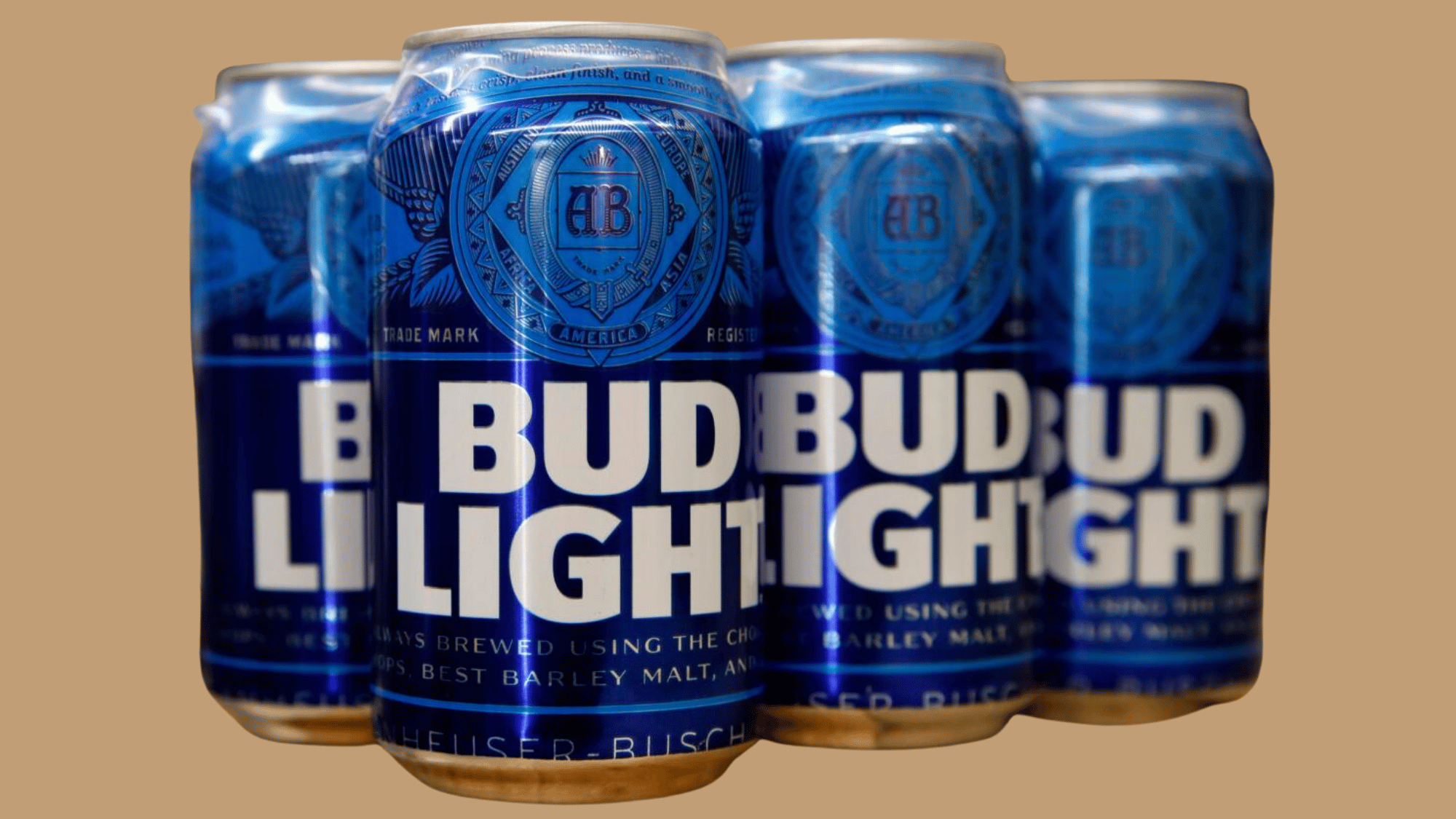
Bud Light is a 4.2% ABV light lager brewed with rice and barley; here’s what that means nutritionally.
Ingredients
Bud Light is brewed by Anheuser-Busch using water, barley malt, rice, and hops. The addition of rice, common in American lagers, contributes to its dry, crisp finish and lighter body compared to all-malt beers.
Alcohol Content
Bud Light has an ABV of 4.2%, achieved through controlled fermentation. Anheuser-Busch manages yeast activity and fermentable sugar ratios to hit a consistent alcohol yield across all packaging formats.
Calories and Carbs
Bud Light contains 110 calories and 6.6 grams of carbohydrates per 12 oz. Both figures are directly tied to the lower ABV; less alcohol means fewer calories from ethanol, the primary calorie source in beer.
Brewing Style and Flavor
Bud Light is classified as a light American lager, designed to be light-bodied, low in bitterness, and easy to drink in casual settings.
The lower ABV supports longer drinking sessions without the rapid accumulation of alcohol that comes with stronger beers.
Bud Light Percentage vs Other Popular Beers
Bud Light’s 4.2% ABV sits in the lower range of mainstream American beers. Here is how it compares to its closest competitors. A closer look at Michelob ULTRA’s alcohol shows how the two light beers compare in strength.
| Beer | ABV | Category |
|---|---|---|
| Bud Light | 4.2% | Light American Lager |
| Coors Light | 4.2% | Light American Lager |
| Miller Lite | 4.2% | Light American Lager |
| Budweiser | 5.0% | American Lager |
| Heineken | 5.0% | European Pale Lager |
| Corona Extra | 4.6% | Mexican Lager |
| Sierra Nevada Pale Ale | 5.6% | American Pale Ale |
| Guinness Draught | 4.2% | Irish Dry Stout |
Bud Light vs Wine and Spirits
Beer and wineare not comparable on a per-serving basis. They differ in ABV, which changes how much alcohol is consumed per glass.
Beer vs Wine
A standard glass of wine (5 oz) typically contains 12–14% ABV. That single pour delivers roughly the same amount of alcohol as 1.5 standard 12-oz beers at Bud Light’s 4.2% ABV.
Wine drinkers who pour generously, a common 6–7 oz pour, are often consuming the equivalent of two light beers per glass without realizing it.
Beer vs Spirits
A standard shot of spirits (1.5 oz) at 40% ABV contains approximately 0.6 oz of pure alcohol. A 12 oz Bud Light at 4.2% contains 0.504 oz.
They are close: a single shot and a single Bud Light are roughly equivalent in alcohol content, which is why health guidelines treat them as one “standard drink.”
What Bud Light’s ABV Means for Taste and Strength
Bud Light’s 4.2% ABV shapes everything from its taste to how it fits into a night out. Let’s learn what that alcohol level actually means in practice.
- Cleaner finish: Less ethanol means no burn or warmth on the way down, giving Bud Light its signature crisp, light taste compared to fuller-strength lagers.
- Lighter body: Lower malt content and softer carbonation follow the reduced ABV, a profile drinkers either enjoy for its drinkability or find too thin.
- Built for long sessions: The moderate alcohol level makes it a natural fit for outdoor events, backyard gatherings, and situations where pacing matters.
- Still a real beer: “Light” refers to calories and body, not alcohol content. At 4.2% ABV, Bud Light sits just 0.8 points below a standard lager.
- Adds up faster than expected: Because it tastes mild, it’s easy to underestimate intake. Each can still deliver a meaningful alcohol dose over multiple drinks.
How Bud Light Percentage is Displayed on Labels
In the U.S., beer ABV labeling is regulated by the Alcohol and Tobacco Tax and Trade Bureau (TTB).
Most states require brands to display ABV on packaging, and Bud Light does this across all formats: cans, bottles, and outer packaging.
Bud Light’s 4.2% ABV is consistent across every U.S. market with no regional formula differences.
International versions may vary slightly due to local brewing rules, but the domestic product stays the same.
Anheuser-Busch also voluntarily lists calorie and carbohydrate content per serving, a move driven by growing demand from health-conscious consumers.
Even beers within the same brand family can differ significantly. Bud Light Platinum’s alcohol content is 6% ABV, compared with 4.2% for regular Bud Light.
Common Myths About Bud Light Percentage
Not everything people believe about Bud Light’s alcohol content is accurate. Here are three myths, set straight.
1. Bud Light has no alcohol.
Reality: False. Bud Light contains 4.2% ABV. It has alcohol. It is not a non-alcoholic beer, a low-alcohol beer, or a near-beer. It is a standard light lager with real, measurable alcohol content.
2. Light beer means diet beer.
Reality: Not exactly. Light beer contains fewer calories than regular beer: 110 calories per 12 oz for Bud Light vs. 145 calories per 12 oz for Budweiser.
But “light” primarily refers to the beer’s body and alcohol content, not a diet classification. Bud Light is not marketed as a diet product.
3. All beers have similar ABV.
Reality: Not true. Beer ABV ranges from below 1% (non-alcoholic beers) to above 15% for strong ales and barleywines. Even within the lager category, ABV can range from 3.5% to 7%.
Bud Light’s 4.2% is on the lower end of the mainstream range, but it is far from universal.Corona Light’s alcohol content, which sits at 4.0% ABV, is slightly below Bud Light’s 4.2%.
Final Takeaway
Bud Light is one of the most recognizable beers in the country, but most people never stop to think about what is actually in the can.
Now that the alcohol percentage is clear, along with what it means and how it compares, there are no more guesses at the cooler.
Understanding ABV does not require a brewing degree. It just takes a second to check the label, and knowing what to look for makes all the difference.
Found this helpful? Share it with someone who always has questions about what they’re drinking.
Frequently Asked Questions
Is Bud Light a Healthy Beer?
Bud Light is lower in calories and alcohol than regular beers, but it is not considered a health or diet beverage overall.
Which Beer Has 75% Alcohol?
No beer naturally contains 75 percent alcohol; such strength exists only in distilled spirits or specially processed alcohol products, not beer.
How Many Drinks is a 0.08 Limit?
A 0.08 blood alcohol level typically equals about three to four standard drinks within two hours, depending on body weight and metabolism.