



Whiskey covers a lot of ground, more than most people realize until they’re standing in front of a shelf trying to pick something.
Every style gets made a little differently, and that shows up in the glass.
Blended whiskey happens to be one of the most popular categories out there, yet a lot of buyers can’t really explain what makes it different from everything else nearby.
Once the basics click, comparing bottles stops being a guessing game and labels make more sense too. A bit of background knowledge goes a long way here. Stick around if you want to land on something that actually fits what you drink.
What is Blended Whiskey?
Pretty simple at its core: two or more matured whiskeys, combined into one final product.
Depending on where it’s bottled and what the regulations there allow, that might mean malt whiskey, grain whiskey, sometimes both, occasionally pulled from more than one distillery.
The goal underneath all of it is the same though, a balanced flavor that doesn’t shift much from bottle to bottle.
Master blenders pick whiskeys with different characteristics long before mixing anything, then combine them in specific, deliberate proportions to land on the flavor they’re chasing.
After that, the whiskey usually sits for a while so everything settles and blends together properly. Water gets added if the batch needs to hit a certain bottling strength, then it’s filtered and packaged up.
Blended Whiskey vs Other Whiskey
Production, flavor, consistency, cost, and blended lines up differently against nearly everything else on the shelf. Here’s the breakdown.
Single Malt Whiskey
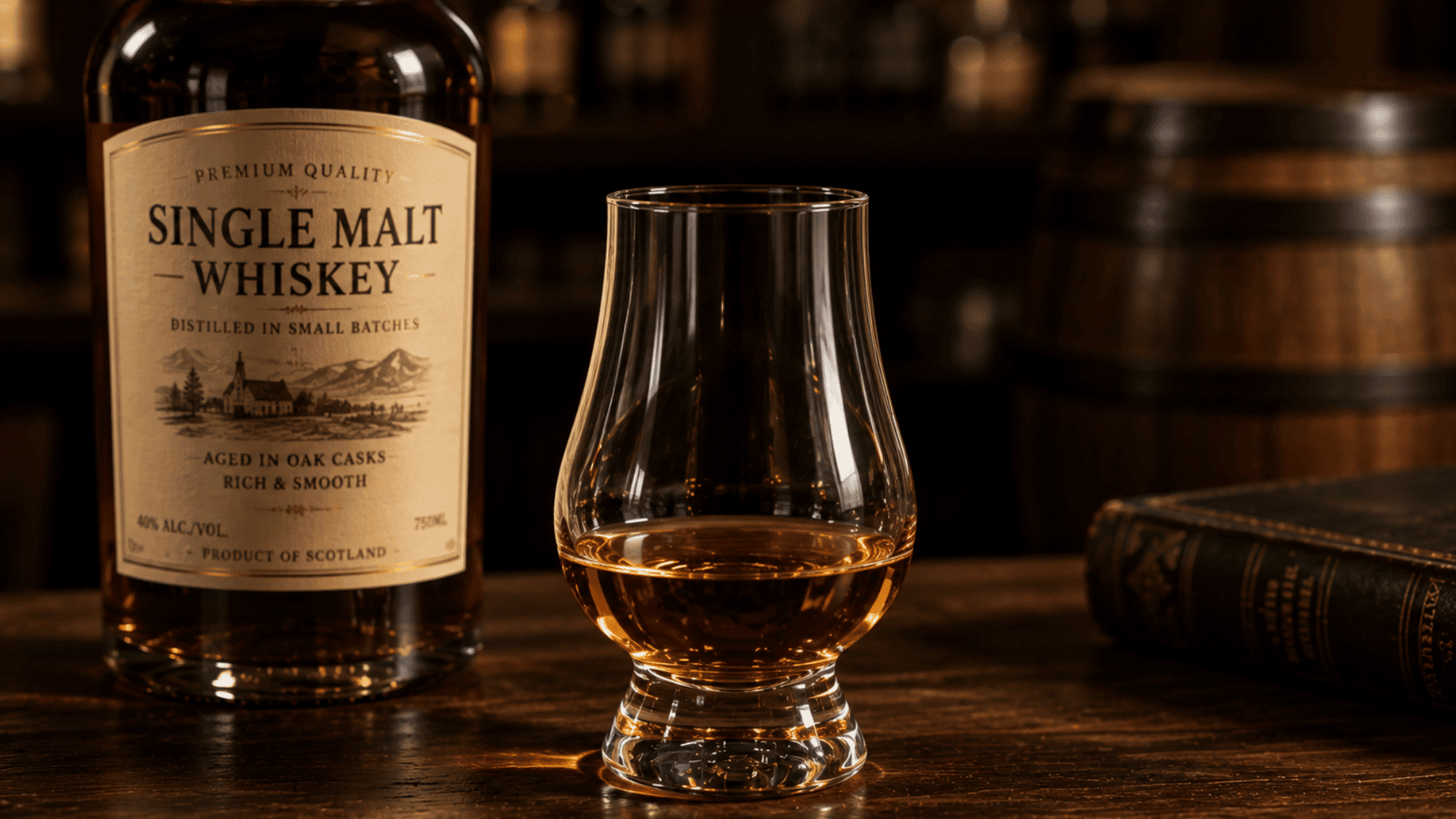

Blended and single malt differ in their ingredients, production, flavor, price, and common serving styles.
Key Differences:
- Ingredients: It combines two or more whiskeys, while single malt sticks to just malted barley.
- Production: Blends can pull from multiple distilleries, whereas single malt never leaves one distillery, start to finish.
- Flavor: Blends chase consistency batch after batch, while single malt leans hard into whatever makes that one distillery distinct.
- Best For: Blends handle everyday sipping and cocktails well; single malt usually gets poured neat since there’s more going on to notice.
Single Barrel Whiskey

Comes down mostly to selection and bottling, and that changes everything about consistency and uniqueness.
Key Differences:
- Source: Blends pull from multiple barrels; single barrel comes from exactly one and nothing else.
- Consistency: Blends taste similar bottle to bottle. Single-barrel releases vary naturally since barrels never age identically.
- Availability: Blends are easy to find anywhere. Single-barrel runs tend to be limited.
- Best For: Blends suit everyday drinking; single-barrel appeals more to people chasing something one-of-a-kind.
Small Batch Whiskey

Both draw from multiple barrels, but the intent behind each is different.
Key Differences:
- Production: Blends combine different whiskeys together; small-batch draws from a deliberately limited barrel selection.
- Flavor: Blends are built for consistency; small-batch can shift slightly from release to release.
- Availability: Blends are produced at scale; small-batch stays more limited.
- Best For: Blends work for everyday drinking and cocktails; small-batch tends to get chosen for slower sipping.
Types of Blended Whiskey
Not just one thing; it actually splits into a handful of distinct styles.
1. Blended Scotch Whiskey mixes single malt with grain whiskey. Balanced and smooth, it ranges anywhere from light and fruity to rich and smoky depending on the blend.
2. Blended Malt Whiskey skips grain whiskey entirely, just single malts from different distilleries mixed together. Keeps the malt character front and center while staying consistent.
3. Blended Grain Whiskey mixes grain whiskeys from different sources, usually landing lighter, softer, and easier to drink.
4. Blended Irish Whiskey combines different Irish styles, often grain and malt together, and tends to come out smooth with a gentle finish.
5. Blended American whiskey mixes different American styles- bourbon, rye, whatever fits- while sticking to U.S. labeling rules.
How To Choose the Right One
Comes down to taste, budget, and what you’re actually planning to do with it. Worth thinking through:
| Factor | What to Consider |
|---|---|
| Purpose | Decide whether the drink will be used for sipping, cocktails, or both. |
| Flavor Profile | Choose flavors that match personal preferences, such as sweet, spicy, smoky, or fruity. |
| Budget | Set a budget before comparing different bottles and brands. |
| Alcohol Content | Check the ABV, especially when trying a higher-proof whiskey for the first time. |
| Tasting Notes | Read tasting notes to understand the expected aroma and flavor profile. |
| Bottle Size | Try smaller bottles or tasting flights before purchasing a premium bottle. |
Does Blended Mean Lower Quality?
Common assumption, but not really true. Building a consistent blend takes real planning and a ton of tasting.
Master blenders are picking whiskeys that complement each other while still nailing a target flavor; that’s not easy work. Plenty of premium blends have picked up serious international recognition.
Quality comes down to ingredients, aging, production, and blending skill, not whatever word happens to be printed on the label.
A well-made blend delivers a genuinely great drinking experience, and that holds true across a wide range of prices.
Popular Blended Whiskey Brands
A few well-known names, each with its own personality.
1. Johnnie Walker Black Label: A Scotch blended whiskey offering balanced smoky, fruity, and vanilla notes. It is commonly enjoyed neat, over ice, or in cocktails.
2. Chivas Regal 12: A Scotch blended whiskey with smooth honey, apple, and vanilla flavors. It is suitable for beginners and everyday sipping.
3. Monkey Shoulder: A blended malt Scotch whiskey featuring rich malt, vanilla, and citrus notes. It is especially popular for whiskey-based cocktails.
4. Dewar’s White Label: A Scotch blended whiskey known for its light, smooth character with subtle honey, citrus, and floral notes for everyday enjoyment.
Wrapping Up
Once the label makes sense, choosing gets a lot simpler, and most guesswork disappears completely.
It brings consistency and flexibility, while single malt, single barrel, and small-batch each bring their own distinct experience; none of them is better, just different.
Price, proof, how you plan to drink it, and your own taste should guide the decision more than the category on the label.
Reading a few tasting notes and trying smaller pours first saves you from guessing blind on a full-size bottle you’re not sure about. Got a favorite blend or a buying tip worth sharing? Drop it below.
Frequently Asked Questions
Is Blended Whiskey Good for Beginners?
Yes. A Lot of Blends Lean Smooth and Approachable, a solid starting point if You’re New to Whiskey.
Can Blended Be Drunk Neat?
Yes. Neat, on The Rocks, a splash of Water, mixed into a classic cocktail- works however you like it.
Why is Blended Usually Less Expensive?
Often combines grain and malt whiskeys together, keeping quality consistent while holding production costs down.


