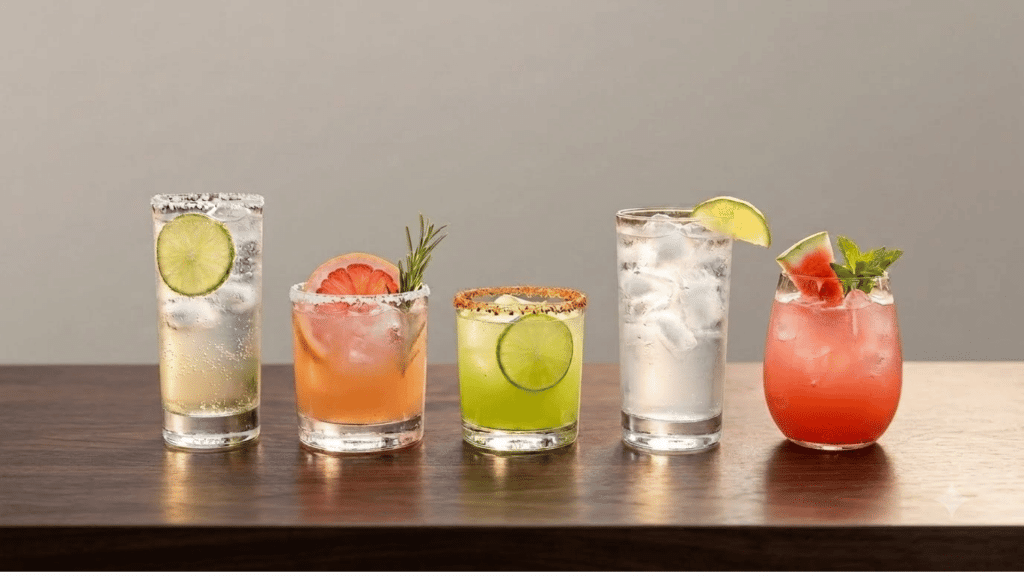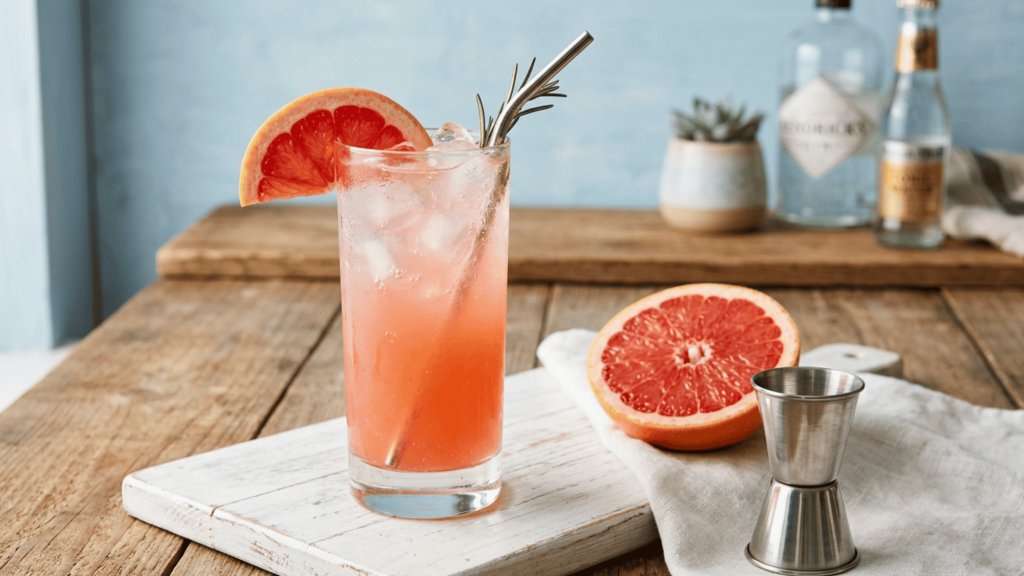


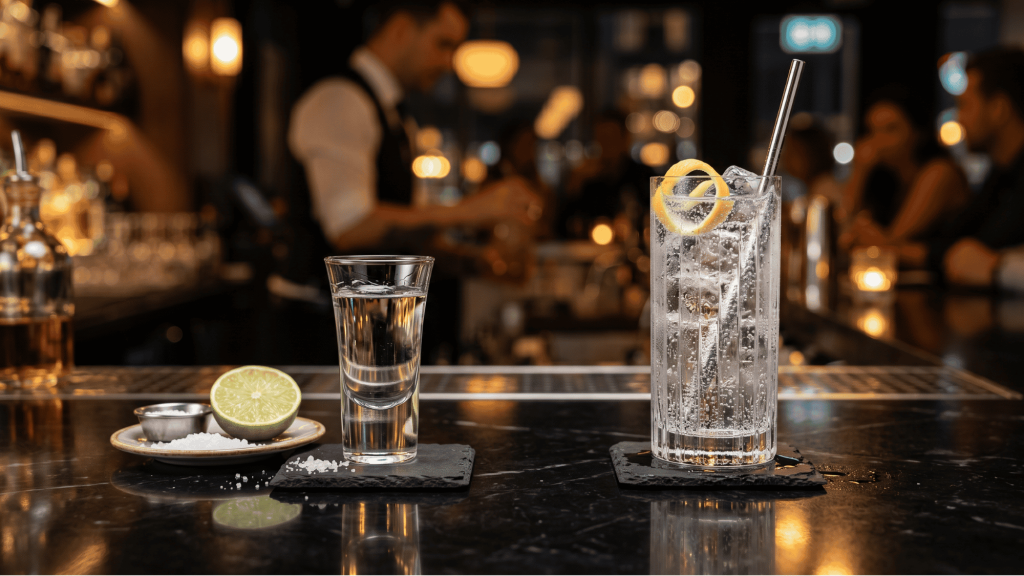
A single sip can easily spark the question. Tequila brings a sharp bite, while vodka often slips in quietly, leaving different impressions on the same night. That contrast is why one wonders if tequila is stronger than vodka.
In most cases, the answer is no. Both usually sit at similar alcohol levels, so strength comes down to the label, serving size, and drinking pace.
Yet tequila often feels more intense because of its bold flavor and quick shot culture. Want clarity before your next order?
Stay with us to get the answer to your question: Is tequila stronger than vodka? And make a more confident choice tonight.
What Stronger Really Means When Comparing Drinks
The word stronger does not always refer to alcohol content alone. Many factors influence how a drink feels after the first sip.
A beverage may seem more intense because it has a higher ABV, a larger serving size, a bolder flavor, fewer mixers, or is consumed quickly.
Personal tolerance and whether you have eaten recently also play a role.
When comparing tequila and vodka, alcohol by volume is the most reliable measure. If both are 40% ABV and served in equal amounts, they contain the same alcohol.
However, tequila’s richer flavor profile can make it feel more powerful than vodka’s smoother, more neutral taste.
Tequila vs Vodka: Alcohol Content Side by Side
Understanding alcohol content is essential when comparing tequila and vodka, as strength depends more on ABV than flavor alone.
| Factor | Tequila | Vodka |
|---|---|---|
| Common ABV | Around 35% to 50% | Around 35% to 40% |
| Common proof | Around 76 to 80 proof | Around 80 proof |
| Flavor | Earthy, peppery, herbal, sometimes sweet | Neutral, clean, mild |
| Common drinking style | Shots, margaritas, palomas | Mixed drinks, martinis, vodka soda |
| Why it may feel stronger | Bolder taste and faster drinking | Smooth taste can hide the alcohol |
What ABV and Proof Mean in Simple Terms
ABV, or alcohol by volume, shows the percentage of pure alcohol in a drink. It is one of the easiest ways to compare the strength of different alcoholic beverages.
For instance, a spirit labeled 40% ABV contains 40% alcohol, while 80 proof is another way of expressing the same strength. Likewise, 100 proof equals 50% ABV.
When comparing tequila, vodka, or any other liquor, the ABV is far more important than the type of drink.
A vodka with 45% ABV contains more alcohol than a tequila at 40% ABV, while a 40% tequila is stronger than a flavored vodka at 30% ABV.
Shot for Shot, Which One Has More Alcohol?
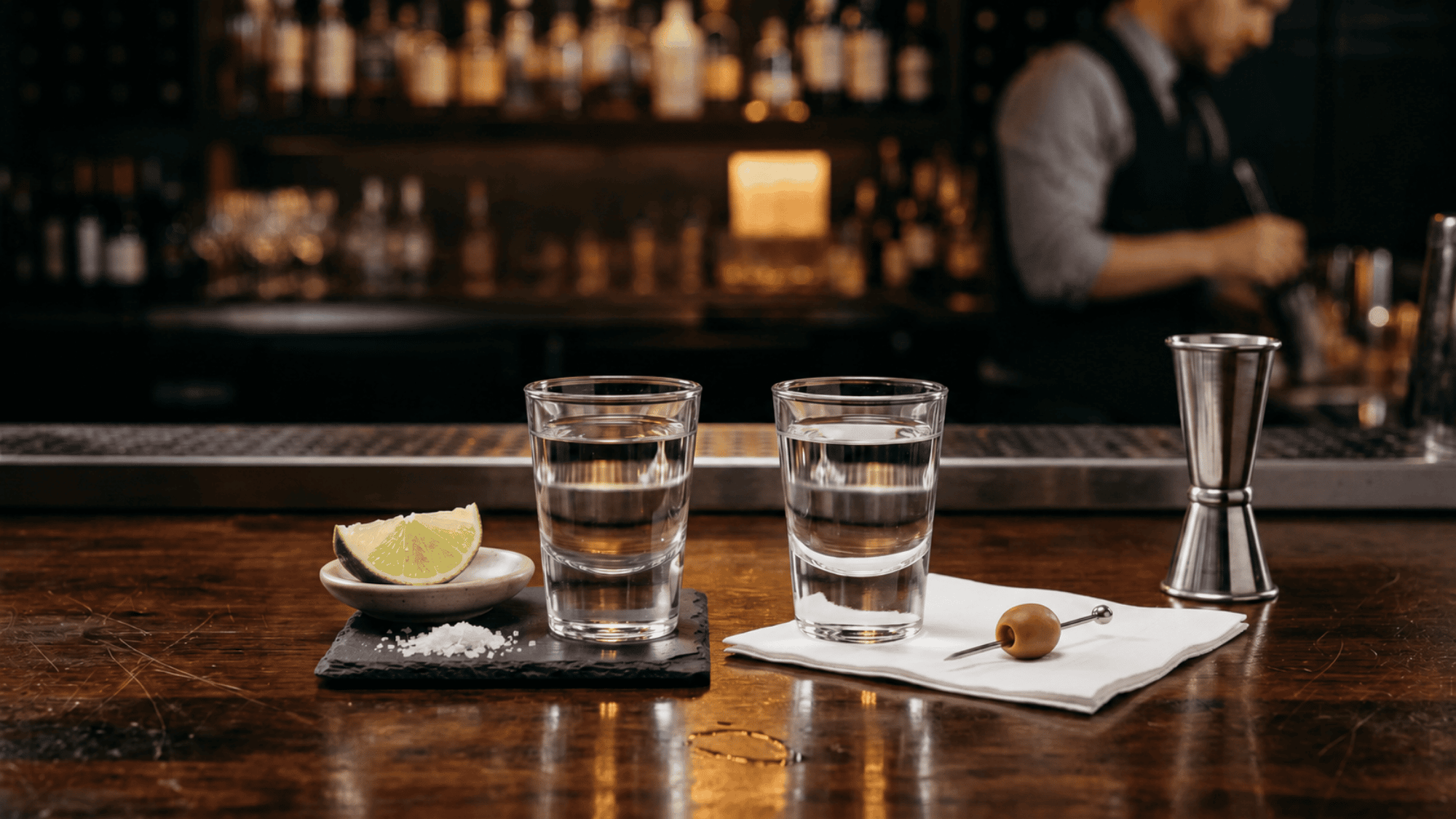
If the pour size and ABV are identical, neither drink contains more alcohol than the other.
For instance, a 1.5 oz shot of tequila at 40% ABV and a 1.5 oz shot of vodka at 40% ABV deliver the same amount of alcohol.
The comparison changes when serving sizes or recipes differ.
A generous tequila pour may contain more alcohol than a standard vodka shot, while a vodka martini can sometimes hold more alcohol than a single tequila shot. To make an accurate comparison, consider:
- The ABV of each drink
- The serving size
- The number of shots included
- The amount of ice or mixer used
- How quickly the drink is consumed
This helps explain why someone may feel fine after sipping a vodka soda yet feel intoxicated after several tequila shots; the difference is often the drinking pace rather than the spirit itself.
Why Tequila Often Feels Stronger Than Vodka
Tequila and vodka can contain similar amounts of alcohol, yet they often create very different drinking experiences. Many people perceive tequila as stronger for several reasons:
- Bold flavor profile: Earthy, peppery, and herbal notes make tequila stand out immediately.
- Noticeable burn: It often produces a sharper sensation in the throat when sipped.
- Commonly enjoyed neat: Drinking it without mixers makes its character more apparent.
- Frequently served as shots: Quick consumption can make the effects seem more immediate.
- Salt and lime tradition: These additions may encourage faster drinking in social settings.
- Strong social associations: Many connect tequila with celebrations and energetic gatherings.
Vodka, meanwhile, is often mixed with other ingredients, which can mask its strength despite having a similar alcohol content.
Does Tequila Get Someone Drunk Faster?
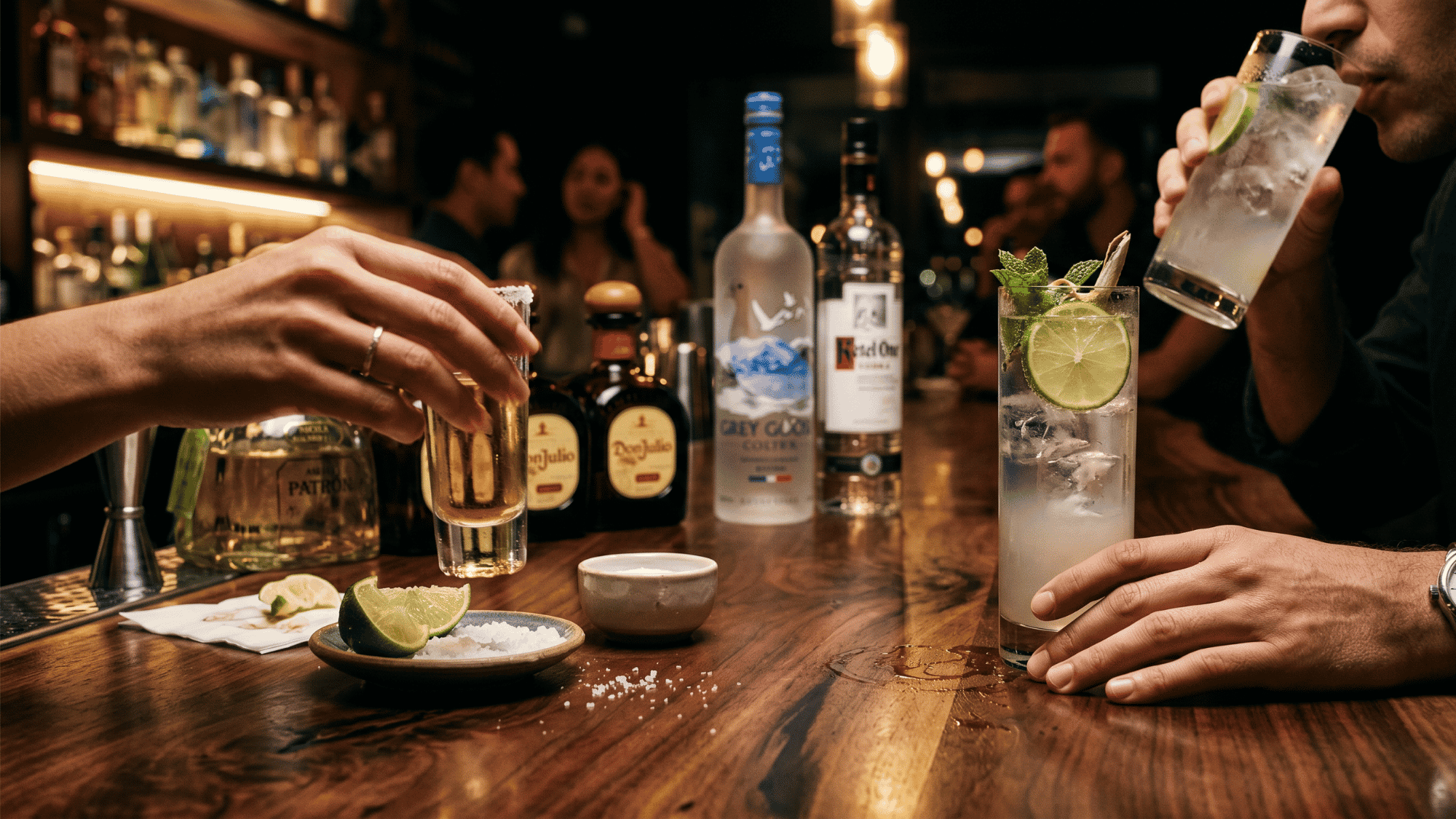
Tequila does not automatically cause faster intoxication than vodka when both drinks contain the same amount of alcohol.
The effects depend more on factors such as serving size, drinking pace, food consumption, hydration, sleep quality, and personal tolerance.
Many people associate tequila with stronger effects because it is often consumed as shots, which are typically taken quickly.
In contrast, vodka is frequently mixed into cocktails that are sipped over a longer period.
This difference in drinking style can create the impression that tequila hits harder. In reality, alcohol content and consumption habits matter far more than the type of spirit when it comes to intoxication and next-day effects.
Is Tequila Strong Compared to Other Alcohol?
Many drinkers compare tequila with beer, wine, and spirits to understand where it stands in terms of alcohol strength.
| Drink | Common ABV Range | How It Compares |
| Beer | Often around 4% to 8% | Much lower than tequila |
| Wine | Often around 11% to 15% | Lower than tequila |
| Tequila | Often around 38% to 40% | Similar to many spirits |
| Vodka | Often around 40% | Similar to tequila |
| Whiskey | Often around 40% or higher | Can be similar or higher |
| Rum | Often around 40% or higher | Some bottles are much higher |
Which One is Better for Cocktails?
When choosing between tequila and vodka for a cocktail, the better option often depends on the flavor experience you want rather than the alcohol content.
Both spirits can work beautifully in mixed drinks, but they create very different results in the glass.
Tequila:
- Flavor changes based on type.
- Blanco: sharper, more direct taste.
- Reposado & Añejo: smoother with oak-aged, mellow notes.
- Overall, it gives cocktails a stronger, more pronounced character.
Vodka:
- Smoothness depends on quality.
- Premium vodka: clean, soft, and neutral mouthfeel.
- Lower-quality vodka: slightly harsh or “burny” finish.
- Keeps cocktails lighter and lets other ingredients stand out.
Cocktail Strength (Perception):
- Glass type affects how strong a drink feels.
- Highball glasses dilute alcohol more, making drinks feel lighter.
- Short cocktail glasses concentrate flavors, making alcohol feel stronger and faster-acting.
Which One is Easier on The Stomach?
Whether tequila or vodka feels easier on the stomach varies from person to person. Vodka’s clean, neutral profile may seem gentler for some drinkers, while others may find tequila less bothersome.
In many cases, discomfort comes not from the spirit itself but from ingredients mixed with it, such as lime juice, sour mix, or sugary additives.
A few simple habits can help reduce irritation: eat a meal beforehand, choose lighter mixers, sip slowly rather than taking shots, stay hydrated throughout the evening, and pay attention to how your body responds.
If alcohol regularly causes stomach pain, nausea, flushing, or other strong reactions, consult a qualified healthcare professional.
How to Tell Which Drink is Actually Stronger
When comparing the strength of alcoholic drinks, taste alone can be misleading.
A smoother drink is not necessarily weaker, and a harsher flavor does not always indicate higher alcohol content. To make a fair comparison, focus on measurable factors rather than relying on perception.
- Check the alcohol by volume (ABV) on the bottle, as it provides the clearest and most accurate alcohol comparison.
- Review the proof when ABV is unavailable, since higher proof generally indicates a higher alcohol concentration.
- Compare equal serving sizes because larger pours naturally contain more alcohol, making direct strength comparisons less accurate.
- Count liquor servings in cocktails, as multiple shots can significantly increase alcohol content despite balanced flavors.
- Consider preparation methods, mixer ratios, and drinking speed, since these factors greatly influence overall alcohol intake.
Common Myths About Tequila and Vodka
Tequila and vodka are surrounded by countless misconceptions that often influence drinking choices.
Tequila always gets people drunk faster
Tequila does not have a special ability to cause intoxication faster than other spirits. When tequila and vodka contain the same alcohol content and are consumed in equal amounts, their effects are similar.
Vodka is weaker because it tastes smoother
A smoother taste does not mean vodka contains less alcohol. Most standard vodkas have an alcohol content similar to tequila, usually around 40% ABV.
Tequila changes personality more than vodka
No scientific evidence shows that tequila affects personality differently from vodka. Alcohol can influence emotions, judgment, and behavior regardless of the type consumed.
Clear liquor means fewer problems
Clear liquor is not automatically easier on the body or less likely to cause negative effects. Spirits like vodka and tequila can still lead to intoxication, dehydration, impaired judgment, and hangovers.
Final Verdict
So, is tequila stronger than vodka? Generally, no. Most standard versions of both spirits contain similar alcohol levels, so the actual strength depends on factors like ABV, proof, and how much is poured into the glass.
Tequila often seems more intense because of its bold agave flavor and the fact that it is commonly consumed as a shot.
Vodka, on the other hand, has a smoother and more neutral taste that can make its alcohol content less noticeable.
The best way to compare them is to check the label rather than rely on taste alone. Have a preference between tequila and vodka? Share your thoughts and experiences in the comments below.
Frequently Asked Questions
Does Drink Temperature Change How Strong It Feels?
Colder drinks often feel smoother and less intense, while warmer servings may highlight alcohol notes, slightly increasing perceived strength during sipping.
Why Do Fizzy Mixers Change the Drink’s Impact?
Carbonation can speed alcohol absorption and reduce perceived sweetness, making drinks feel stronger and encouraging faster consumption without noticing overall intake.
Why Does Drinking without Food Increase Intensity?
Without food, alcohol enters the bloodstream faster, leading to quicker effects, stronger sensations, and reduced tolerance during the early stages of consumption.