

If you’ve ever ordered an IPA and been surprised by how different two beers with the same label can taste, you’re not alone.
The IPA world is vast, and the West Coast IPA sits at the center of it all. Known for its bold bitterness, crystal-clear appearance, and hop-forward punch, this style shaped modern American craft beer.
This blog breaks down what makes the West Coast IPA unique, how it compares to New England and Hazy IPAs, and what to expect when you crack one open.
Ready to figure out which IPA is right for you? Keep reading.
The History of The West Coast IPA Style
The West Coast IPA emerged during the American craft beer boom of the 1980s and 1990s, as California brewers embraced bold hop flavors and bitterness.
Breweries like Sierra Nevada, Stone Brewing, and Firestone Walker helped define the style, while beers such as Sierra Nevada Celebration IPA, Pliny the Elder, and Union Jack became iconic examples.
Although its popularity dipped during the rise of hazy IPAs, the West Coast IPA has made a strong comeback thanks to its crisp, bitter, and hop-forward character.
West Coast IPA Characteristics Breakdown
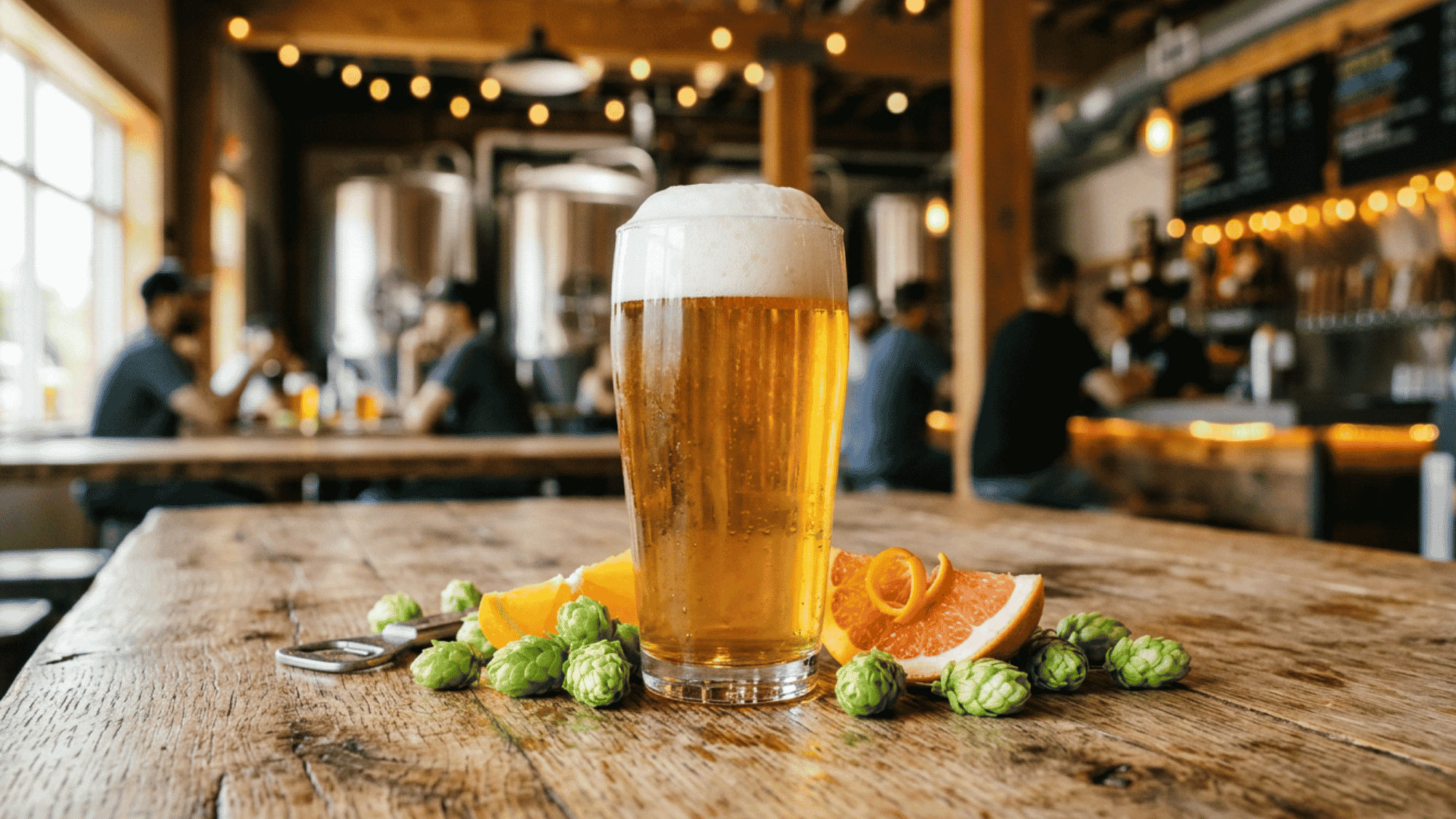
The West Coast IPA is defined by a set of very specific traits. Understanding them helps you know exactly what you’re getting before you take a sip and why it’s different from every other IPA on the shelf.
Appearance
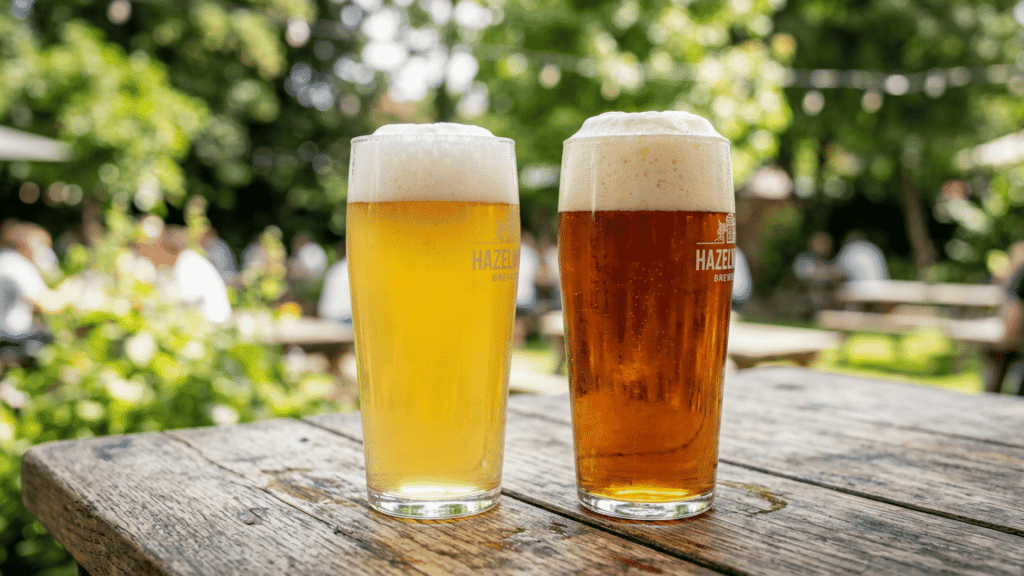
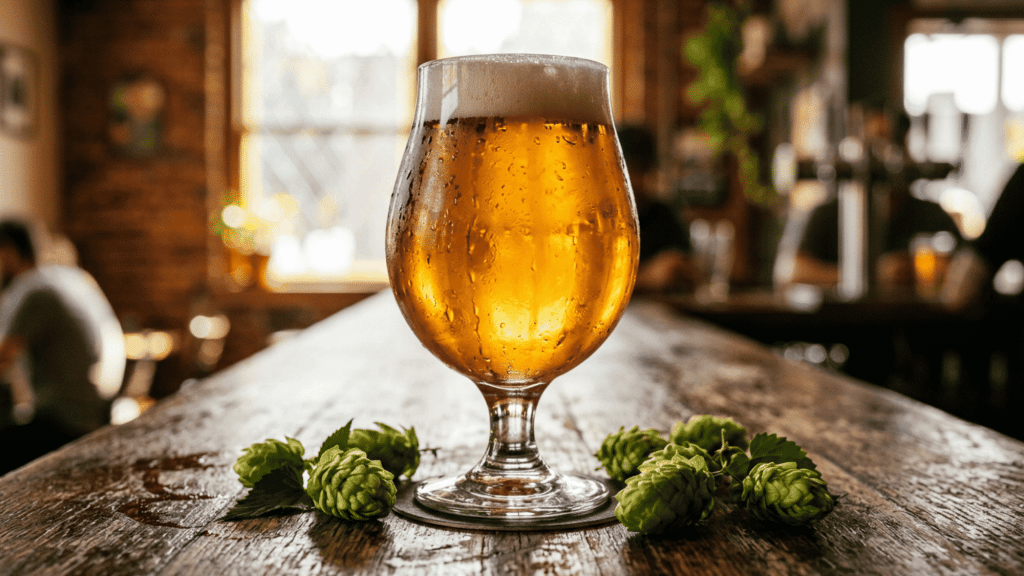
West Coast IPAs are visually striking for their clarity. Unlike hazy styles, they are brilliantly transparent, ranging from pale gold to deep amber.
Light passes through easily, giving the beer a clean, polished look. A firm white head usually sits on top, adding to its crisp presentation.
This clarity is not accidental; it reflects careful brewing, filtration, and hop management. The appearance signals a beer focused on precision, dryness, and structure rather than heavy proteins or unfiltered haze.
Bitterness and IBU Range
Bitterness is the core of a West Coast IPA. Most versions sit between 50 and 75 IBUs, while stronger Double IPAs can climb much higher, sometimes nearing 100 IBUs.
Despite the intensity, the bitterness is designed to feel clean rather than harsh. A restrained malt profile keeps sweetness low, allowing hops to take full control.
The result is a sharp, structured bite that fades quickly. This controlled bitterness defines the style and separates it from softer, less bitter IPA variations.
Hop Character and Flavor Profile
Hop character defines every West Coast IPA. Brewers use American varieties like Cascade, Citra, Centennial, Chinook, Simcoe, and Mosaic.
These hops create bold flavors of pine resin, grapefruit peel, citrus zest, and subtle tropical fruit. Some versions add a slight earthy or dank edge. Unlike hazy IPAs, hop additions often emphasize bitterness over aroma.
The result is a layered, assertive flavor profile that feels bright, resinous, and crisp, with hops driving both taste and structure from start to finish.
Mouthfeel and Finish
West Coast IPAs are intentionally light-bodied with a dry, crisp mouthfeel. There is no creaminess or softness; instead, the beer feels lean and snappy on the palate.
This structure enhances drinkability and keeps focus on hop bitterness and flavor. The finish is clean and quick, with minimal lingering sweetness.
Bitterness fades rather than coating the mouth, encouraging another sip. This dry, refreshing character is one of the defining reasons the style remains popular among hop-focused beer drinkers.
ABV Range
The ABV of West Coast IPAs typically ranges from 6% to 7.5%, offering enough strength to support bold hop character without overwhelming balance.
Session versions sit lower, around 3.5% to 5%, designed for easier drinking. On the other end, Double or Imperial West Coast IPAs rise above 8%, intensifying both alcohol and hop impact.
This range gives brewers flexibility while keeping the style’s core identity intact: a strong, hop-driven beer that still feels clean, crisp, and highly drinkable.
Quick Comparison: West Coast IPA vs Other IPA Styles
West Coast IPA stands out for its clarity, sharp bitterness, and dry finish, while other IPA styles lean toward juiciness, softness, or malt balance.
This table gives a quick side-by-side look at how each style differs in appearance, bitterness, flavor, and mouthfeel.
| Style | Appearance | IBU Range | Flavor Profile |
|---|---|---|---|
| West Coast IPA | Crystal clear | 50–75 | Pine, citrus, resin, grapefruit |
| New England IPA | Hazy, opaque | 25–60 | Tropical fruit, citrus, soft |
| Hazy IPA | Hazy, opaque | 25–55 | Juicy, fruity, low bitterness |
| English IPA | Clear | 40–60 | Earthy, floral, light citrus |
| Double IPA | Clear | 65–100+ | Intense hop, resin, tropical |
Best West Coast IPAs for You to Try
If you want to get a feel for the style, start with the beers that define it.
- Russian River Pliny the Elder (8% ABV, 100 IBU): Widely regarded as one of the greatest Double IPAs ever brewed, offering intense hop character with remarkably balanced bitterness.
- Stone IPA (6.9% ABV, 71 IBU): A classic introduction to the style, known for its bold bitterness, citrus notes, and crisp, dry finish.
- Firestone Walker Union Jack IPA (7% ABV, 70 IBU): Triple dry-hopped and packed with grapefruit, tangerine, and pine flavors while maintaining excellent balance.
- Green Flash West Coast IPA (7% ABV, 95 IBU): One of the original flagship West Coast IPAs, delivering assertive bitterness and a powerful hop profile.
- Sierra Nevada Torpedo Extra IPA (7.2% ABV, 65 IBU): A widely available favorite that combines pine-forward bitterness with bright citrus and tropical fruit notes.
Is West Coast IPA Right for You?
If you’re new to craft beer and bitterness, the West Coast IPA can be a bit of a shock. The brain naturally resists bitter flavors; it’s wired to associate them with risk.
But that changes with exposure. The more West Coast IPAs you drink, the more your palate adjusts and starts to read that bitterness as complexity rather than harshness.
If you prefer smoother, juicier beers, start with a NEIPA or Hazy IPA and work your way toward the West Coast style over time.
If you already love bold, hoppy beers and want something crisp and clean with a proper bite, the West Coast IPA is exactly where you should be.
Wrapping Up
The West Coast IPA is the style that put American craft beer on the map.
Its combination of bold bitterness, citrus and pine hop character, crystal-clear appearance, and dry finish sets it apart from every other IPA out there.
Compared to the juicy softness of a NEIPA, the cloudy fruitiness of a Hazy IPA, or the earthy restraint of an English IPA, the West Coast style holds its own every time.
Now that you know what to look for, pick up a six-pack and taste the difference for yourself. Have a favorite West Coast IPA? Drop it in the comments; we’d love to hear what’s in your fridge.
Frequently Asked Questions
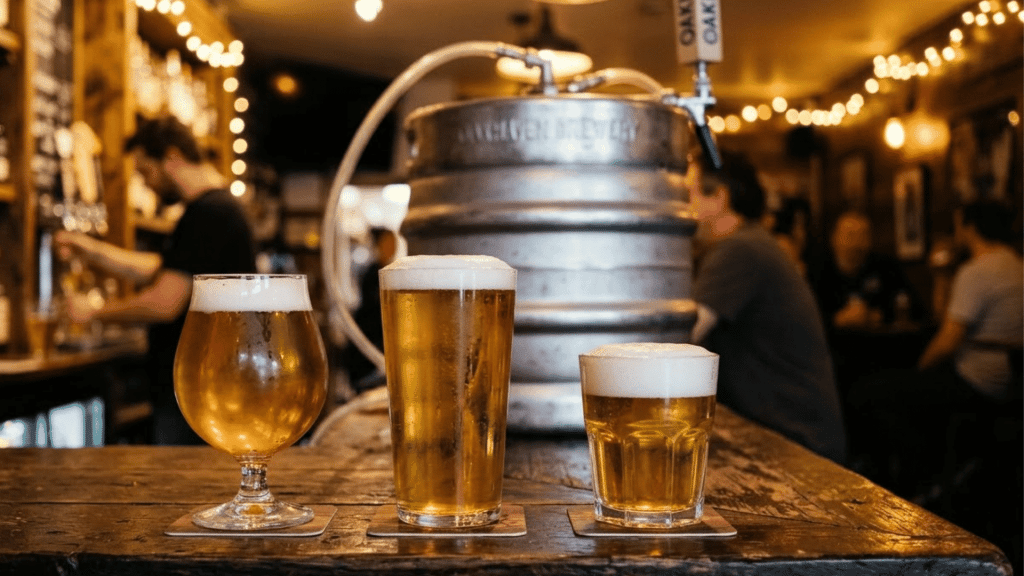
What Glass Should You Use for A West Coast IPA?
A tulip or shaker pint glass works best. The tulip’s wider bowl helps concentrate hop aromas, making each sip more aromatic before it even hits your lips.
Does the Water Used in Brewing Affect a West Coast IPA’s Flavor?
Yes, West Coast brewers typically use hard, sulfate-rich water, which sharpens hop bitterness and gives the beer that clean, dry bite the style is known for.
How Fresh Should a West Coast IPA Be when You Drink It?
West Coast IPAs are best within 90 days of the canning or bottling date. Hop compounds degrade over time, so older cans taste flatter and less bitter than fresh ones.