

That glass of wine with dinner may seem harmless, but when it becomes a regular habit, you might wonder what it means for your waistline.
So, does wine make you gain weight? Wine adds calories to your diet, but the answer involves more than simply counting what is in your glass.
Alcohol affects how your body uses energy, while serving size, drinking frequency and the food you eat alongside wine can also shape the outcome. Even your usual pour may contain more than you realize.
Read on to see how wine can affect metabolism, fat storage, and your weight over time.
Does Wine Make You Gain Weight?
Yes, wine can make you gain weight, but only when it regularly adds more calories than your body uses. A 5-ounce glass of red table wine has about 125 calories, and stronger wines or bigger pours add more.
One occasional glass will not cause weight gain on its own. Your weekly habit, pour size, alcohol strength, and the food you eat with wine matter more than the wine’s color.
The effect will not look the same for everyone. Someone who occasionally has a small glass with dinner has a very different drinking pattern from someone pouring two large glasses most nights.
Your usual diet, activity level, and other calorie sources also matter, which is why it helps to view wine as one part of your overall intake.
How Wine Can Affect Your Weight
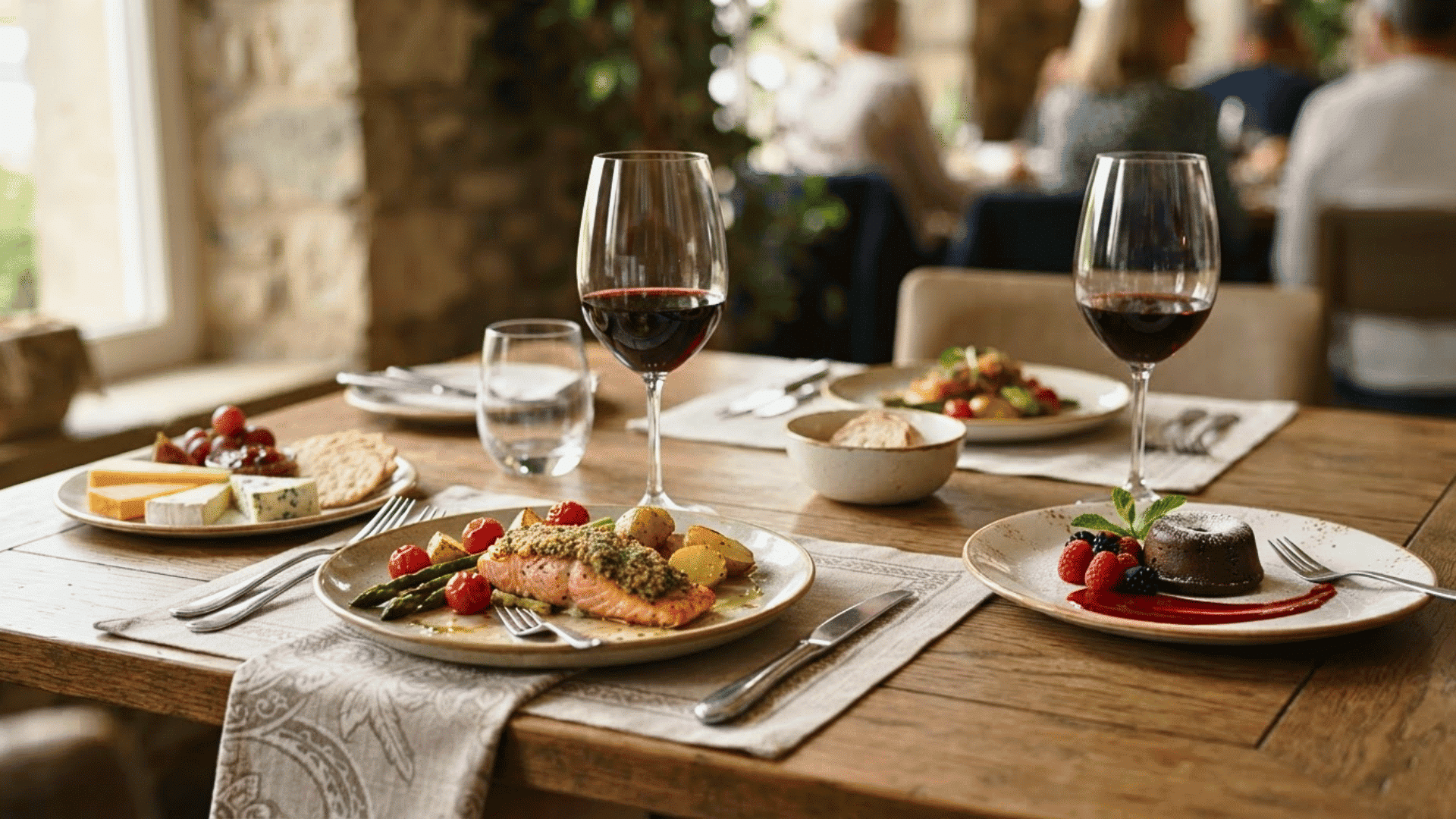
Wine affects your weight through more than its calories. Alcohol also changes what your body works on first after you drink, and it can influence the choices you make around food.
1. Wine Adds Calories Quickly
Wine calories can be easy to overlook, especially when drinking with a meal. Alcohol contains about 7 calories per gram, so even less-sweet wines still provide calories.
Calories vary based on ABV, residual sugar, and serving size. ABV, or alcohol by volume, is the percentage of alcohol in the wine. Residual sugar is the natural grape sugar left after fermentation, and it shapes a wine’s sweetness level.
Higher-alcohol wines and larger pours generally add more calories. In a 5-ounce pour, the alcohol alone adds about 98 calories at 12% ABV and about 118 calories at 14.5% ABV. Larger wine glasses can also encourage larger pours.
2. Your Body Processes Alcohol First
After drinking wine, alcohol enters the bloodstream and is broken down mainly by enzymes in the liver.
Because the body cannot store alcohol for later, processing it becomes a priority. This temporarily changes how the body uses other energy sources.
Alcohol does not instantly turn food into body fat. Long-term weight changes depend more on overall calorie intake, activity, and drinking patterns.
3. Wine May Make You Eat More
Wine often accompanies meals, snacks, or desserts. As a result, the calories consumed while drinking can extend beyond the wine itself.
Alcohol can affect judgment and decision-making. Alcohol can interfere with brain pathways involved in behavior and judgment.
This may make extra snacks or larger portions more tempting. If it happens regularly, those additional calories can make weight management harder.
4. Regular Drinking Can Add Up Over Time
How often you drink matters. One occasional glass contributes far fewer weekly calories than several glasses consumed regularly.
A 5-fluid-ounce serving of wine at 12% ABV is generally considered one standard drink in the United States.
Actual pours may be larger, and many wines exceed 12% ABV. Looking at your total wine intake across the week gives a clearer picture than focusing on one glass.
Calories in Common Types of Wine
The calories in different wines vary by type, alcohol content, and serving size, so there is no single number that fits every glass.
|
Wine |
Serving |
Approximate Calories |
|---|---|---|
|
Red Table Wine |
5 oz |
125 |
|
White Table Wine |
5 oz |
120 |
|
Champagne |
4 oz |
85 |
|
Sweet Dessert Wine |
3.5 oz |
165 |
|
Dry Dessert Wine |
3.5 oz |
157 |
Notice: The serving sizes are different. Comparing 85 calories in Champagne with 125 calories in red wine is misleading if you overlook the 4-ounce versus 5-ounce portions.
How Wine Relates to Belly Fat
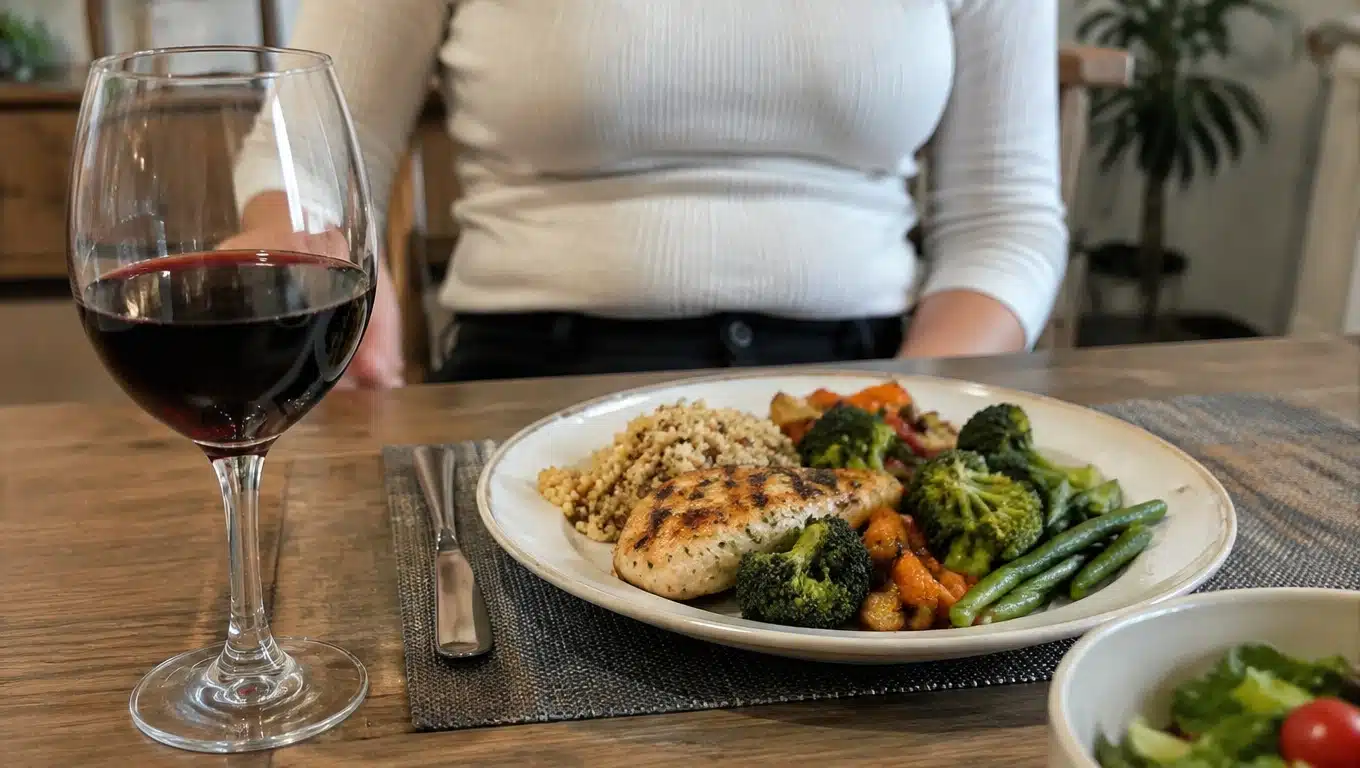
There is no special pathway that sends wine calories straight to your stomach.
Wine can add to your overall calorie intake, and regularly consuming more energy than you use can increase body fat.
Where that fat appears varies from person to person. This is why the phrase “wine belly” can be misleading. Seeing more fat around your waist does not prove that wine specifically caused it.
Your overall diet, activity, genetics, and other lifestyle factors can influence body composition.
Can You Drink Wine and Still Lose Weight?
Yes. If you enjoy wine, weight loss does not necessarily require giving it up completely. What helps more is knowing how much you are drinking and accounting for it realistically.
-
See What 5 Ounces Looks Like: Measure it in your usual glass once instead of relying on sight.
-
Read The ABV: Wines with a higher percentage contain more alcohol in the same volume.
-
Decide on Your Serving Beforehand: Constantly topping up a half-empty glass makes the total difficult to track.
-
Look Beyond The Drink: Restaurant dishes, cheese, desserts, and snacks may contribute substantially to the evening’s calorie intake.
-
Eat Before Drinking: Having food before drinking can slow alcohol absorption and may help reduce its immediate effects.
-
Look at The Week, Not One Night: Your usual pattern gives you more useful information than trying to compensate for one glass later.
Red and White Wine Calories Compared
The calorie gap between red and white wine is often smaller than people expect. A 5-ounce glass of white table wine has about 120 calories, just slightly fewer than red wine, which contains around 125 calories.
So switching from dry red wine to white purely for weight management may accomplish very little.
The alcohol content plays a major role in the calorie count, while residual sugar can add more calories depending on the wine. Instead, check the individual wine’s ABV, sugar content, and serving size.
These details give you a better idea of how many calories you are actually drinking than color alone.
Final Thoughts
Wine does not have to leave your diet just because you are watching your weight. Does wine make you gain weight? The more useful question is how your normal pour fits into the way you eat and drink across the week.
A small glass once in a while is not the same as several generous servings a week.
The same goes for a measured drink with dinner versus an evening of refills and snacks. Next time you pour a glass, check the ABV and measure the serving once.
Your own glass may give a clearer answer than the wine’s color.
Frequently Asked Questions
Does Red Wine Make You Gain Weight?
It can, the same way any wine can, through calories. Red wine’s resveratrol does not cancel those calories, so a glass of red counts like any other glass.
Does Drinking Wine Make You Gain Weight the Next Day?
A higher number on the scale the morning after drinking usually reflects food still being digested and fluid shifts, not new body fat, which builds up over time.
What Are Some Good Drinks for Weight Loss?
Water, sparkling water, and unsweetened tea add almost no calories. If you still want wine, pour less of a lower-ABV dry wine, or check an alcohol-free wine’s label for calories.
Who Should Not Drink Wine at All?
Federal guidelines say to skip alcohol if you are pregnant, recovering from alcohol use disorder, unable to control your drinking, or on medicines or with conditions that interact with it.