


Sparkling wine adds a special touch to celebrations, dinners and casual gatherings across the US.
Among the many varieties available, Prosecco and Champagne remain popular for their distinct styles and flavors.
Although both are sparkling wines, they differ in origin, grapes, production methods, flavor and typical pricing.
When I first compared these styles beyond their familiar celebration associations, the differences in production and regional identity stood out more than the names suggested.
Keep reading to understand these differences and find the sparkling wine style that suits your next occasion.
What is Prosecco?
Prosecco is an Italian sparkling wine known for fresh fruit flavors, lively acidity, and different levels of sweetness.
It is produced in northeastern Italy, particularly in Veneto and Friuli Venezia Giulia, and is made primarily from the Glera grape.
Glera commonly contributes fruit and floral characteristics such as pear, apple, citrus, and white flowers.
Prosecco is typically produced using the tank method, in which the secondary fermentation takes place in pressurized steel tanks before bottling.
It is commonly served at brunches, casual gatherings, and other occasions where a fresh, approachable sparkling wine fits the setting.
What is Champagne?
Champagne is a sparkling wine produced exclusively in France’s Champagne region under specific geographic and production regulations.
Strict regional rules govern its production, so sparkling wines made elsewhere cannot legally use the Champagne name.
The main grape varieties used in Champagne include Chardonnay, Pinot Noir, and Pinot Meunier.
Champagne is largely produced using the traditional method, with secondary fermentation taking place inside the bottle.
Depending on the wine and aging, Champagne can show notes of toast, citrus, cream, nuts, and other developed flavors.
Prosecco vs Champagne: Key Differences Explained
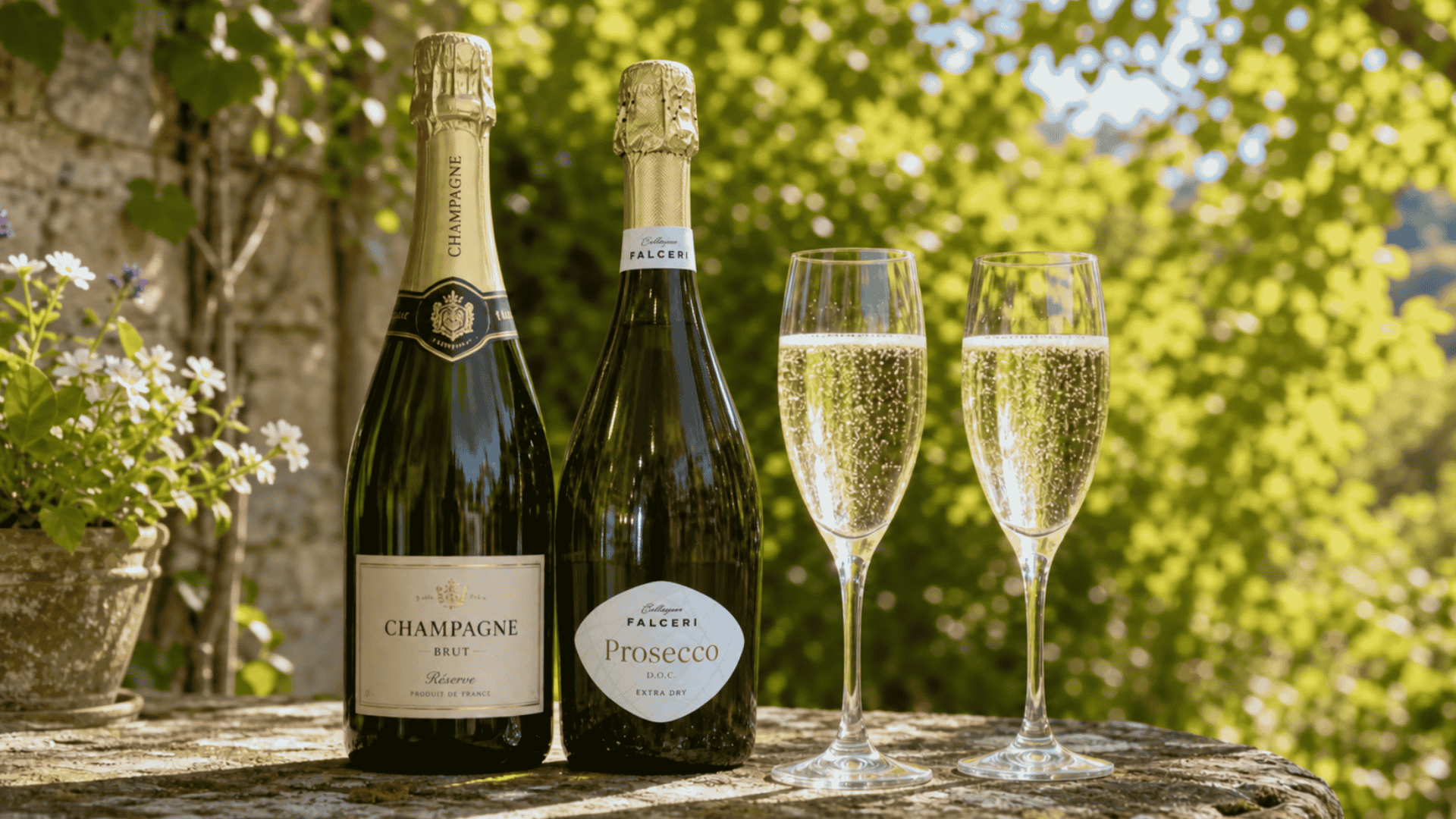
Alt text: champagne and Falciani Prosecco bottles with two sparkling wine glasses on a sunlit garden table
Both sparkling wines share similarities, but their origin, production process, taste and price create clear differences for wine lovers.
1. Origin and Region
Prosecco comes from northeastern Italy, principally Veneto and Friuli Venezia Giulia, while Champagne comes exclusively from France’s Champagne region.
These different regions shape each wine’s geographic identity, production rules, and traditional style.
Champagne has a long-established French winemaking tradition, while Prosecco is closely associated with northeastern Italy and its regional wine culture.
2. Production Method
The way bubbles are created is one of the main differences between Prosecco and Champagne.
Prosecco normally uses the tank method, where the secondary fermentation takes place in large steel tanks. Champagne follows the traditional method, where the secondary fermentation occurs inside the bottle.
Bottle fermentation and aging can contribute to Champagne’s characteristic complexity, while the tank method helps preserve Prosecco’s fresh fruit character.
3. Price and Occasion
Prosecco is often more affordable and is commonly served at brunches, casual gatherings, and celebrations.
Champagne generally costs more and is frequently associated with weddings, anniversaries, and other milestone occasions.
Both can suit different settings depending on personal preference, food pairing, bottle style, and budget.
4. Alcohol Content
Both Prosecco and Champagne commonly fall within a similar alcohol range, although the exact percentage varies by producer and bottle.
Check the alcohol-by-volume percentage on the label rather than assuming one style always contains more alcohol than the other.
The alcohol content listed on the bottle provides the most reliable information for a specific product.
Prosecco vs Champagne: Differences at a Glance
A simple comparison of Prosecco and Champagne highlights the differences in grapes, production, sweetness, aging, pairing, price, and typical occasions.
|
Feature |
Prosecco |
Champagne |
|
Main Grapes |
Primarily Glera |
Chardonnay, Pinot Noir, Pinot Meunier |
|
Production Method |
Tank method |
Traditional method |
|
Brut, Extra Dry, Dry, Demi-Sec and others |
Brut Nature, Extra Brut, Brut, Extra Dry, Demi-Sec and others |
|
|
Typical Flavor |
Apple, pear, citrus, floral notes |
Citrus, toast, biscuit, cream, nutty notes |
|
Aging |
Often enjoyed relatively young |
Some examples can develop with extended aging |
|
Food Pairings |
Seafood, appetizers, light dishes |
Seafood, creamy dishes, richer foods |
|
Price |
Often lower-priced, depending on bottle and market |
Often higher-priced, depending on producer and bottle |
|
Common Occasions |
Brunches, gatherings, celebrations |
Weddings, anniversaries, celebrations |
Disclaimer: Prices are general US estimates and can vary by brand, retailer, region and bottle. Check current pricing before purchasing.
Taste Comparison: Prosecco vs Champagne

Alt text: champagne poured into a flute beside another glass of sparkling wine
The flavor differences between Prosecco and Champagne reflect their grapes, production methods, and aging practices.
Prosecco Taste Profile
- Light, fresh and fruit-forward.
- Common flavors include apple, pear, peach and citrus.
- Floral aromas and lively acidity are common characteristics.
- This profile tends to appeal to drinkers who prefer fruity and refreshing sparkling wines.
Champagne Taste Profile
- Often more developed and complex.
- Common notes can include toast, biscuit, citrus, almond and cream.
- Extended aging can contribute additional depth and texture.
- This profile tends to appeal to drinkers who prefer richer and more developed sparkling wines.
Best Food Pairings for Prosecco and Champagne

Alt text: Prosecco and Champagne served with charcuterie, cheese, fruit, nuts, and breadsticks
Pairing sparkling wine with complementary foods can enhance the overall dining experience. Prosecco and Champagne both work with a variety of dishes, but their different flavor profiles can complement different meals.
Prosecco’s fresh fruit character works well with lighter foods, seafood, appetizers, and some spicy dishes.
Champagne can pair with seafood, creamy dishes, fried foods, and other richer preparations depending on its style.
The best pairing ultimately depends on the specific bottle, food, occasion, and personal preference.
Types of Prosecco and Champagne
Prosecco and Champagne come in different styles based on sweetness and flavor. The table below highlights common types to make choosing easier.
|
Type |
Prosecco |
Champagne |
|
Sweetness Scale |
Uses the same official terms: Brut, Extra Dry, Dry, Demi-Sec |
Uses the same official terms: Extra Brut, Brut, Extra Dry, Demi-Sec |
|
Grape-Based Style |
Made mainly from the Glera grape |
Made from Chardonnay, Pinot Noir, and Pinot Meunier |
|
Flavor Style |
Fruity notes of apple, pear, and citrus |
Notes of toast, cream, citrus, and nuts |
|
Best Use |
Suitable for brunches, casual events, and cocktails |
Popular for weddings, milestones, and formal celebrations |
How to Pick Between Prosecco and Champagne
Prosecco generally offers fresh fruit flavors such as apple, pear, and citrus and is often available at a lower price point.
Champagne can show more developed flavors such as toast, citrus, cream, and nuts depending on the wine and aging.
The production method also differs: Prosecco typically uses tank fermentation, while Champagne uses the traditional bottle-fermentation method.
Consider the occasion and food pairing, since both styles can work for casual gatherings, meals, and formal celebrations.
Production method, flavor profile, occasion, and budget can all help guide the choice between the two styles.
Prosecco or Champagne: Which Fits the Occasion?

Alt text: two hands raising glasses of sparkling wine for a sunset toast
Choosing between Prosecco and Champagne usually comes down to the setting, flavor preference and budget.
Prosecco works well for casual gatherings, brunches, light celebrations and relaxed meals because of its fresh, fruity character and generally approachable price.
Champagne is often chosen for formal dinners, milestone events, weddings, and special celebrations where people prefer a more traditional sparkling wine.
Both can suit different occasions, so the choice depends on the atmosphere, food pairing, and preferred sparkling wine style.
Comparing the bottle’s flavor profile, production method, and price can help narrow the options for a specific occasion.
Conclusion
Choosing between Prosecco and Champagne depends on flavor, production method, occasion, food pairing, and budget.
Prosecco is commonly associated with fresh fruit character and tank-method production, while Champagne uses the traditional method and can develop more complex flavors with aging.
Production method, flavor, occasion, and budget can provide useful decision points beyond the label alone, helping match the sparkling wine to the intended experience.
Understanding these differences makes it easier to select a bottle that fits the intended experience. Share which characteristics matter most when choosing between the two.
Frequently Asked Questions
Can Prosecco and Champagne Be Used Interchangeably in Cocktails?
Yes, but each creates a different taste experience due to differences in flavor, bubbles and overall style.
How Should Prosecco and Champagne be Stored Before Opening?
Store both in a cool, dark place away from heat, sunlight and temperature changes.
What is The Main Taste Difference Between Prosecco and Champagne?
Prosecco commonly emphasizes fresh fruit and floral notes, while Champagne can offer citrus, toast, biscuit, cream and other developed flavors depending on the wine.