


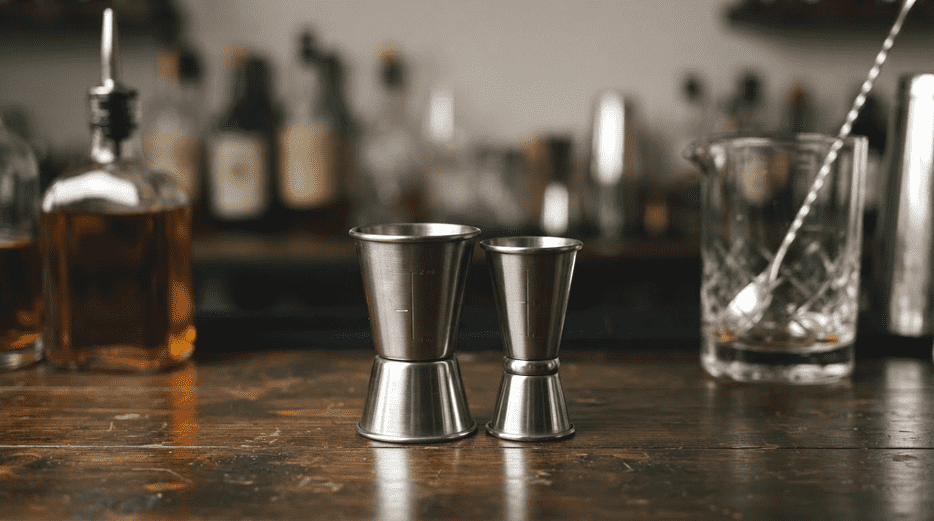
A small bar tool can make a surprisingly big difference when a cocktail depends on carefully balanced ingredients.
The term jigger goes beyond its familiar place behind the bar, since it can refer to measurement, while the tool itself comes in several shapes and capacities.
Knowing these distinctions can prevent confusing recipe instructions, inaccurate pours, and common assumptions about standard sizes.
This guide covers jigger meaning, sizes, designs, uses, and common measuring mistakes to help make every cocktail pour more accurate.
What Does Jigger Mean?
A jigger is a bartending tool used to measure precise amounts of alcohol and other cocktail ingredients. The term can refer to both the measuring device and a standard liquid quantity.
By the late 19th century, jiggers had become recognizable bar tools as bartending equipment grew more standardized. This distinction matters when following cocktail recipes, since not every jigger holds the same amount.
Most jiggers feature one or two measuring cups; double-sided versions offer different capacities in a single tool. The Smithsonian National Museum of American History (NMAH) catalogs a historical glass jigger in its collection.
In the U.S., a traditional jigger is commonly associated with 1.5 fluid ounces (about 44 mL), though actual sizes vary by brand and style.
The exact origin of “jigger” in bartending is uncertain, but several theories link it to sailors and historical liquor measures. Pronounced JIG-er, the word can describe either the bar tool or the quantity specified in a recipe.
5 Common Types of Jiggers
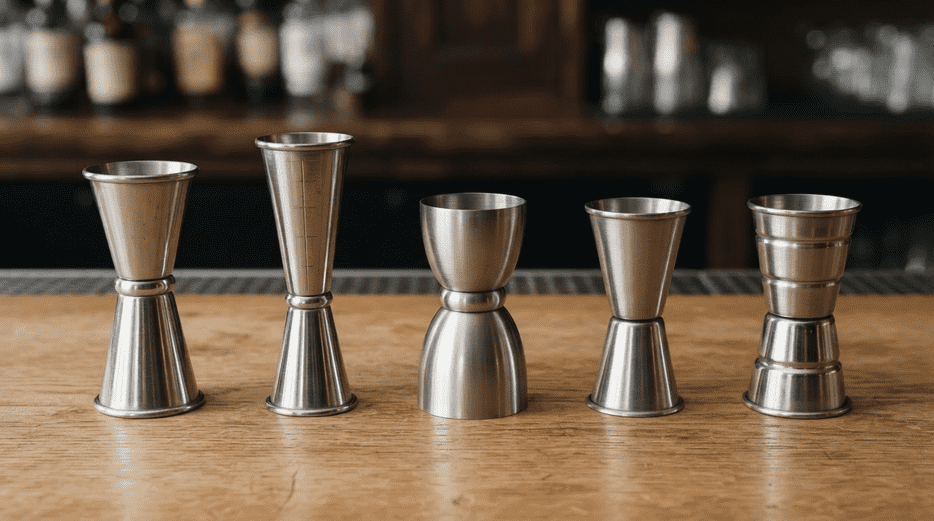
Alt text: Five jigger styles arranged in a row on a wooden bar counter
Jiggers come in several shapes and measurement combinations, but each serves the same basic purpose: creating accurate, repeatable cocktail pours.
1. Double Jigger
A double jigger features two measuring cups joined at their bases, creating the familiar hourglass-like shape used behind many bars.
Each end generally holds a different quantity, allowing two measurements within one compact tool. Common combinations include 0.75 and 1.5 ounces or 1 and 2 ounces, although capacities vary by product.
Its simple two-sided construction makes switching between commonly used measurements quick during cocktail preparation.
2. Japanese Jigger
A Japanese jigger has a taller, narrower profile with elongated cups and a noticeably slim waist between them.
The narrow center provides a defined gripping point, while the deeper cups help create a controlled pour. Many models also include interior markings for fractional measurements.
This combination makes Japanese jiggers useful for recipes requiring several precise quantities of spirits, syrups, juices, or liqueurs.
3. Bell Jigger
A bell jigger uses wider, rounded measuring cups and typically has a shorter, broader profile than a Japanese-style jigger.
The curved ends create its distinctive bell-like appearance while providing different measurements on opposite sides.
Its wider openings make filling and viewing the liquid level straightforward for professional bartending and home cocktail preparation.
4. Single Jigger
A single jigger uses one measuring cup rather than the two opposing cups found on double-ended designs.
Its simple construction can be convenient when one primary measurement is used regularly during cocktail preparation.
Some versions include several marked levels inside the cup, allowing fractional measurements without requiring multiple measuring tools.
5. Multi-Level Measuring Jigger
A multi-level measuring jigger has several measurement lines inside its cup, allowing different quantities to be measured without filling the tool completely.
Depending on the model, these markings may show common fractional-ounce or milliliter measurements for greater flexibility.
This design is useful for recipes that call for smaller amounts, while clear markings help maintain consistent ingredient proportions across multiple drinks.
How Much is a Jigger?
Jigger capacities vary by design, so the measurement marked on the tool is more reliable than assuming a standard size.
|
Jigger Measurement |
Approximate Milliliters |
Typical Use |
|---|---|---|
|
½ oz |
15 ml |
Small cocktail ingredients |
|
¾ oz |
22 ml |
Citrus, syrups, or liqueurs |
|
1 oz |
30 ml |
Common spirit measurement |
|
1½ oz |
44 ml |
Traditional U.S. jigger amount |
|
2 oz |
59 ml |
Larger cocktail pours |
How to Use a Jigger Correctly
Using a jigger is straightforward, but checking its markings and filling it consistently can make cocktail measurements considerably more reliable from one drink to another.
1. Check The Measurement: Read the stamped capacity or interior measurement lines before pouring because different jiggers can use different capacity combinations.
2. Hold It Steadily: Grip the narrow center securely and keep the measuring cup upright to prevent spilling while adding the required ingredient.
3. Pour to The Correct Level: Fill the cup to the required measurement line or rim rather than estimating the quantity by sight.
4. Transfer The Liquid: Carefully tip the measured ingredient into the cocktail shaker, mixing glass, or serving glass immediately after measuring it.
5. Repeat for Other Ingredients: Measure ingredients individually when precise proportions are necessary for maintaining the intended flavor and balance of the cocktail.
Jigger vs Shot Glass: What is The Difference?
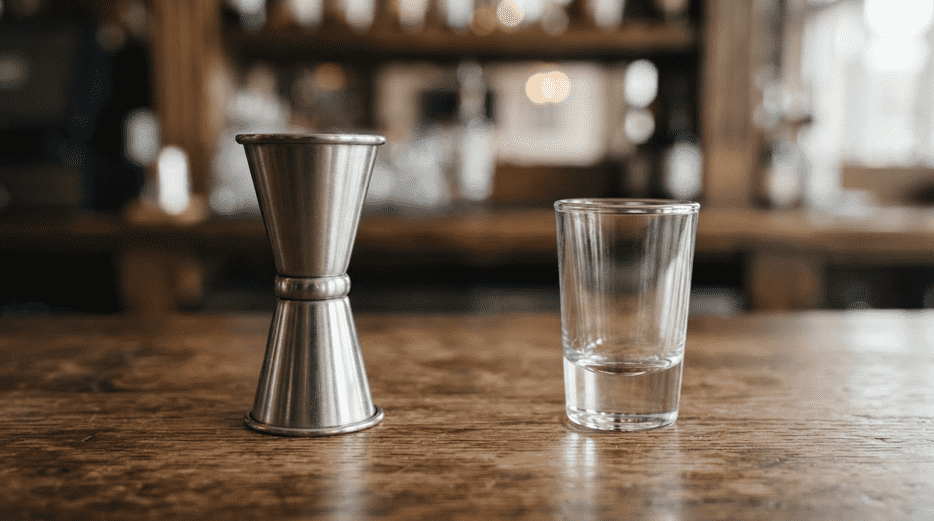
Alt text: Stainless steel double jigger beside a plain shot glass on a wooden bar counter
Jiggers and shot glasses may look similar in size, but they serve different purposes. A jigger measures cocktail ingredients, while a shot glass primarily serves drinks.
|
Feature |
Jigger |
Shot Glass |
|---|---|---|
|
Main purpose |
Measuring ingredients |
Serving drinks |
|
Typical design |
Single or double-sided |
Small drinking glass |
|
Often clearly marked |
May not be precisely marked |
|
|
Cocktail use |
Measures recipe ingredients |
Sometimes used as a substitute |
|
Best suited for |
Accurate cocktail mixing |
Serving straight spirits |
Why Do Bartenders Use Jiggers?
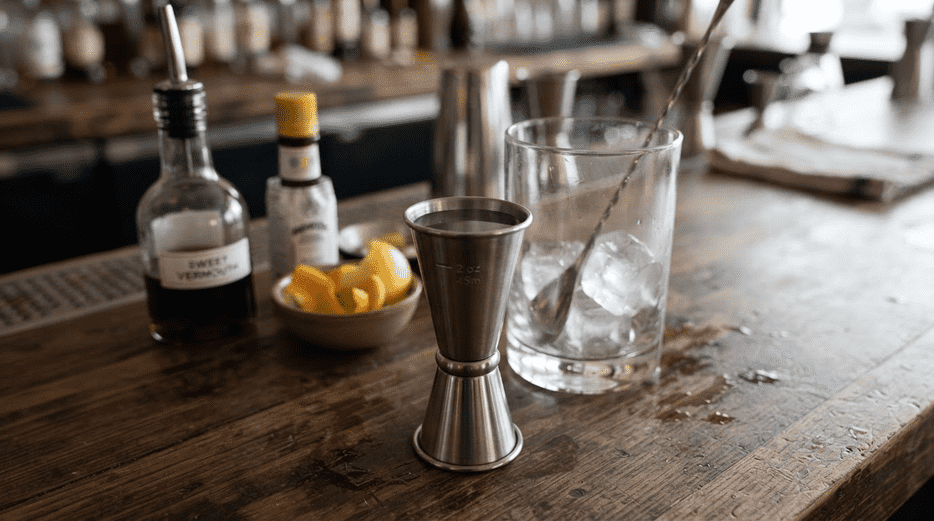
Alt text: Measured liquor in a stainless steel jigger beside cocktail ingredients and a mixing glass
Accurate measuring matters because cocktails depend on ingredient ratios, making a jigger useful for professional bartenders and people preparing mixed drinks at home.
- Consistency: Precise measurements help bartenders reproduce similar ingredient proportions whenever the same cocktail is prepared for different customers.
- Balance: Controlled portions prevent spirits, juices, syrups, or liqueurs from unintentionally overpowering other ingredients within a carefully proportioned cocktail.
- Accuracy: Clearly marked measurements make cocktail recipes easier to follow, especially when they require smaller or fractional quantities of ingredients.
- Portion control: Measured pours help bars monitor the amount of spirits and other ingredients being used throughout regular service.
- Beginner-friendly: Home bartenders can follow measured cocktail recipes confidently without first developing the timing and consistency required for free pouring.
Common Jigger Measuring Mistakes
1. Assuming Every Jigger Holds 1.5 Ounces: The traditional measurement does not represent every modern jigger, which may use several different capacity combinations.
2. Confusing The Two Sides: Check the stated capacities before pouring instead of identifying measurements entirely by the apparent size of each cup.
3. Estimating Unmarked Fractions: Guessing half or quarter fills can produce different quantities from those specified by the original cocktail recipe.
4. Overfilling The Rim: Pouring beyond the intended capacity can alter ingredient proportions while also creating unnecessary spills during preparation.
5. Ignoring Interior Markings: Measurement lines often identify smaller quantities, allowing one jigger to measure several amounts without relying on visual estimates.
Final Thoughts
Knowing the jigger meaning turns a small piece of barware into something far more useful when preparing cocktails at home.
Different shapes, capacities, and measurement markings can suit different recipes, making it worth checking the tool instead of relying on assumptions.
A well-chosen jigger also makes it easier to work with small quantities and maintain dependable proportions as recipes become more detailed.
With a little familiarity, measuring can quickly become a natural part of cocktail preparation rather than something that slows the process down.
So, pick up a jigger, choose a favorite cocktail recipe, and put every pour to the test behind the home bar.
Frequently Asked Questions
What is The Best Material for A Jigger?
Stainless steel is a popular choice because it is durable, easy to clean, and resistant to rust and everyday wear.
Can a Jigger Go in The Dishwasher?
Many stainless steel jiggers are dishwasher-safe, although users should always check the manufacturer’s cleaning instructions before washing.
Can a Measuring Spoon Be Used Instead of a Jigger?
Yes. Home bartenders can use measuring spoons for small quantities, although a marked jigger is generally more convenient for measuring cocktail ingredients.


