

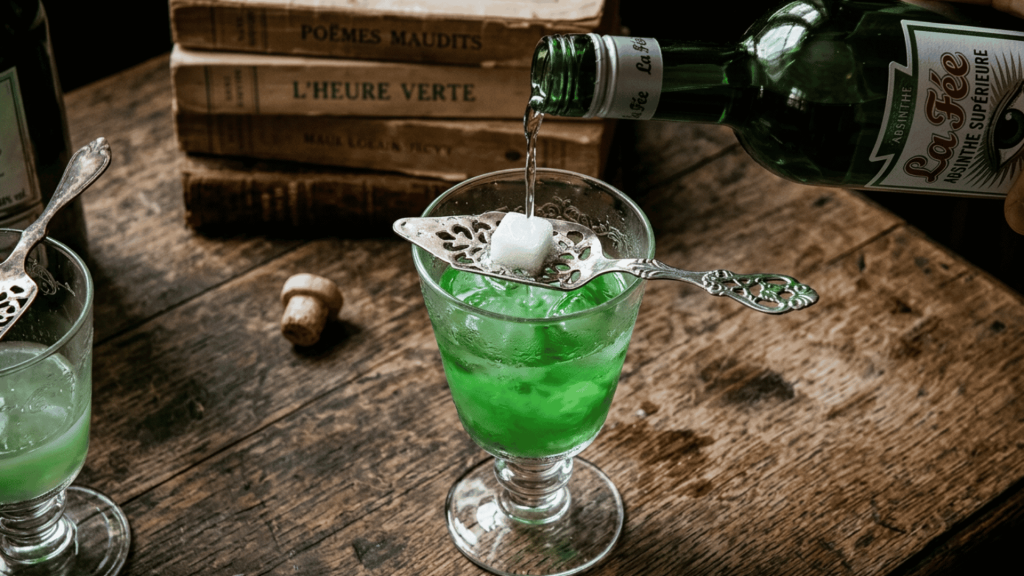
Absinthe ranks among the strongest spirits, although its exact alcohol content varies considerably between products and traditional styles.
Some bottles resemble whiskey or rum, while others contain substantially higher alcohol by volume (ABV).
Understanding these percentages explains absinthe’s serving method, concentrated flavor, and position among other widely consumed alcoholic beverages.
Continue reading to compare strength ranges, understand American regulations, and recognize important information displayed on absinthe bottle labels.
What is Absinthe and Why is it Strong?
Absinthe is a distilled herbal spirit traditionally produced with wormwood, anise, fennel, and complementary botanicals.
Its powerful reputation comes mainly from high alcohol concentration, rather than historical claims involving unusual or hallucinogenic effects.
The spirit gained popularity across Europe before legal restrictions and public controversy reduced its commercial availability.
Regulated versions now appear across markets, including compliant products produced or imported within the United States.
High alcohol levels extract botanical oils effectively and preserve their character throughout production, bottling, storage, and eventual preparation.
How Much Alcohol Does Absinthe Contain?
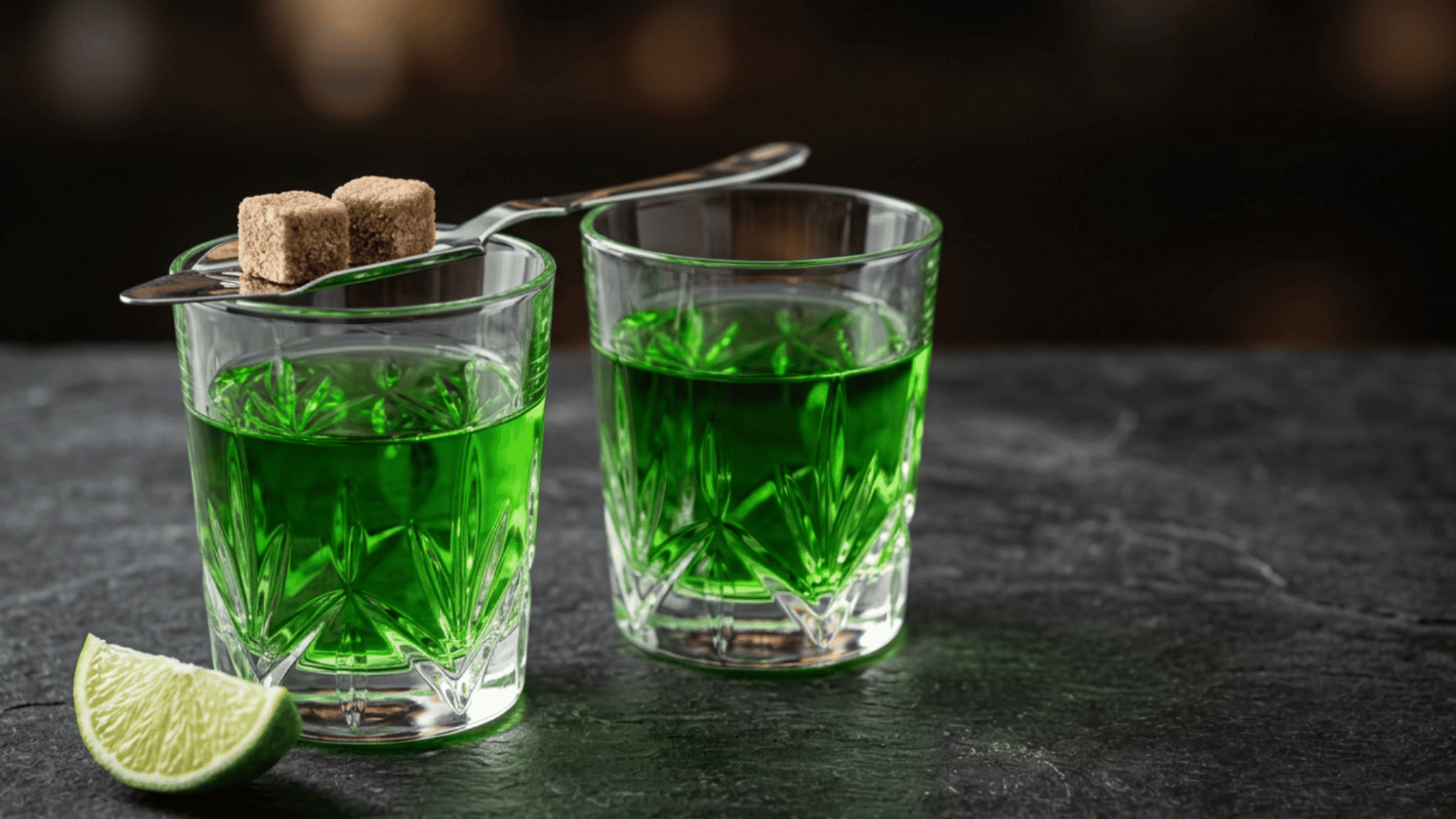
Absinthe commonly contains 45% to 74% ABV, with commercial bottles generally divided into two recognizable strength ranges for easier comparison.
Standard Absinthe Strength
Standard absinthe generally contains between 55% and 65% ABV, representing the range found across many commercial products.
These bottles remain stronger than familiar spirits, which commonly contain approximately 40% ABV throughout most American markets.
Their concentration supports botanical flavors while allowing traditional dilution to create a balanced aroma and smoother drinking experience.
High-Proof Absinthe Strength
High-proof absinthe usually contains between 65% and 74% ABV, placing these varieties among the most concentrated commercially available distilled spirits.
These products require accurate measurement because smaller portions contain substantial alcohol before any chilled water is added during traditional preparation.
Higher strength does not automatically indicate better quality, stronger flavor, careful production, or superior botanical ingredients within the finished product.
Disclaimer: American absinthe must satisfy federal thujone requirements, while purchasing, importing, selling, and serving may face additional state or local restrictions.
Absinthe Alcohol Content Compared with Other Drinks
The table compares alcohol percentages across popular beverages, clarifying why absinthe requires smaller portions and careful preparation during responsible consumption.
| Beverage | Typical ABV | Relative Strength |
|---|---|---|
| Beer | 4%–6% | Low |
| Wine | 12%–15% | Moderate |
| Vodka, whiskey, or rum | Around 40% | Strong |
| Lower-strength absinthe | 45%–55% | Stronger |
| Standard absinthe | 55%–65% | Very strong |
| High-proof absinthe | 65%–74% | Exceptionally strong |
What Affects Absinthe Alcohol Content?
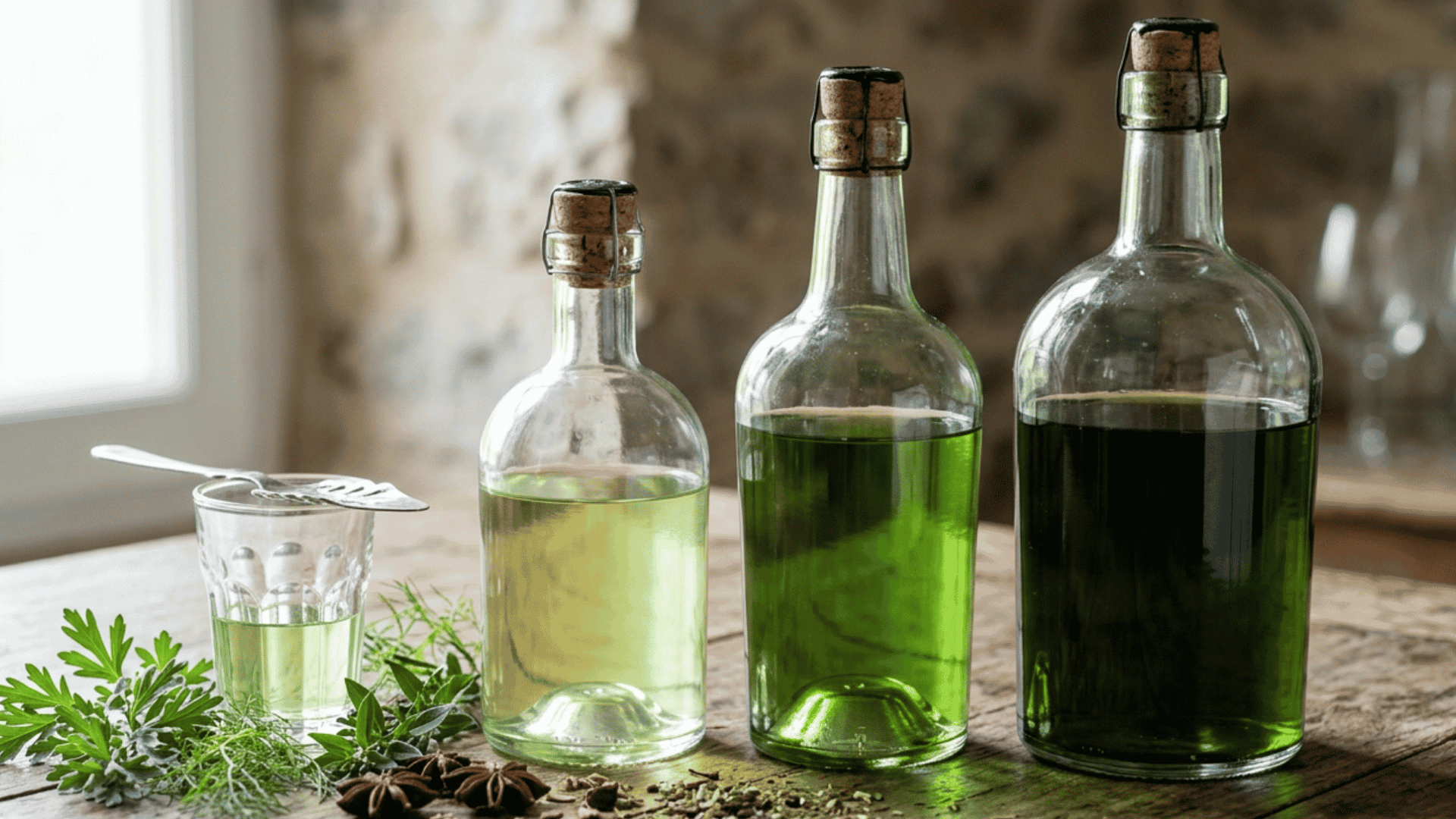
Final alcohol content depends primarily upon distillation, recipe design, and water added before the spirit reaches bottling.
Distillation concentrates alcohol while capturing volatile compounds responsible for absinthe’s herbal aroma and flavor profile.
Producers then add measured quantities of water until the spirit reaches its intended commercial strength and preferred botanical balance.
Traditional ingredients influence aroma, bitterness, taste, and color, although these botanicals never determine the final ABV independently.
Consequently, similar ingredients can produce different strengths, flavors, and dilution requirements across commercial absinthe products.
Understanding Absinthe ABV and Proof
ABV identifies the percentage of pure alcohol within a beverage’s total volume, excluding water and flavoring compounds.
A bottle labeled 60% ABV therefore contains sixty percent alcohol by volume throughout its complete contents.
In the United States, proof equals twice the displayed ABV, making 60% ABV equal 120 proof.
Similarly, 70% ABV equals 140 proof, although neither measurement considers serving size or the quantity poured.
Bottle labels provide exact percentages for evaluating strength and planning an appropriate, carefully measured serving.
Is Absinthe Legal in the United States?
Absinthe is legally available when products comply with federal formulation, labeling, and advertising requirements.
Federal rules require wormwood-based products to meet established thujone limits before receiving approval.
The TTB considers finished products thujone-free when they contain less than ten parts per million.
Labels and advertisements cannot suggest hallucinogenic, psychotropic, or mind-altering effects connected with absinthe consumption.
Disclaimer: This article is for general informational purposes only and does not constitute legal, medical, or alcohol-consumption advice. Always verify current requirements with the appropriate authorities and consume alcohol responsibly.
Why is Absinthe Served with Water?
Traditional service combines one portion of absinthe with approximately three to five portions of chilled water.
Water reduces alcohol concentration within each sip while releasing botanical oils that create absinthe’s distinctive aroma.
This reaction produces a cloudy appearance called the louche, making delicate herbal aromas easier to detect during preparation.
Adding water never removes alcohol because the original quantity remains distributed throughout a larger volume inside the glass.
Recommended ratios vary among products, so producer instructions provide the most appropriate preparation starting point for each bottle.
How to Select Absinthe Based on Alcohol Content
Consider alcohol strength, botanical character, preparation requirements, and label information before selecting an absinthe bottle for responsible consumption.
- Check Alcohol Concentration: Compare the listed ABV with personal tolerance and the intended serving method before selecting any product.
- Consider Botanical Character: Ingredients, recipe balance, distillation methods, and storage conditions influence aroma, flavor, and overall product quality.
- Measure High-Proof Absinthe: High-proof expressions require careful measurement because their concentration can quickly increase the total alcohol consumed.
- Read Producer Instructions: Follow label directions concerning preparation, dilution ratios, serving quantities, storage, and responsible consumption.
- Confirm Legal Compliance: Check federal, state, and local requirements before purchasing, importing, possessing, or serving any absinthe product.
Conclusion
Absinthe’s 45% to 74% ABV range makes it considerably stronger than many familiar alcoholic beverages.
Its concentrated character explains both its powerful reputation and traditional preparation using slowly added chilled water.
Production methods, recipes, and bottling decisions create noticeable strength differences across many commercially available absinthe products.
American buyers should review bottle labels and applicable regulations before purchasing, importing, preparing, or serving absinthe.
Have questions or experiences concerning absinthe strength? Share them below and help other readers join the conversation.
Frequently Asked Questions
Does Absinthe Contain Added Sugar?
Traditionally distilled absinthe contains little sugar, although flavored or premixed products may include additional sweeteners.
What Glass is Commonly Used for Absinthe?
Traditional absinthe glasses feature a lower reservoir that helps measure the spirit before chilled water is added.
Should Opened Absinthe be Refrigerated?
Refrigeration is unnecessary because tightly sealed bottles remain stable when stored upright somewhere cool and dark.