

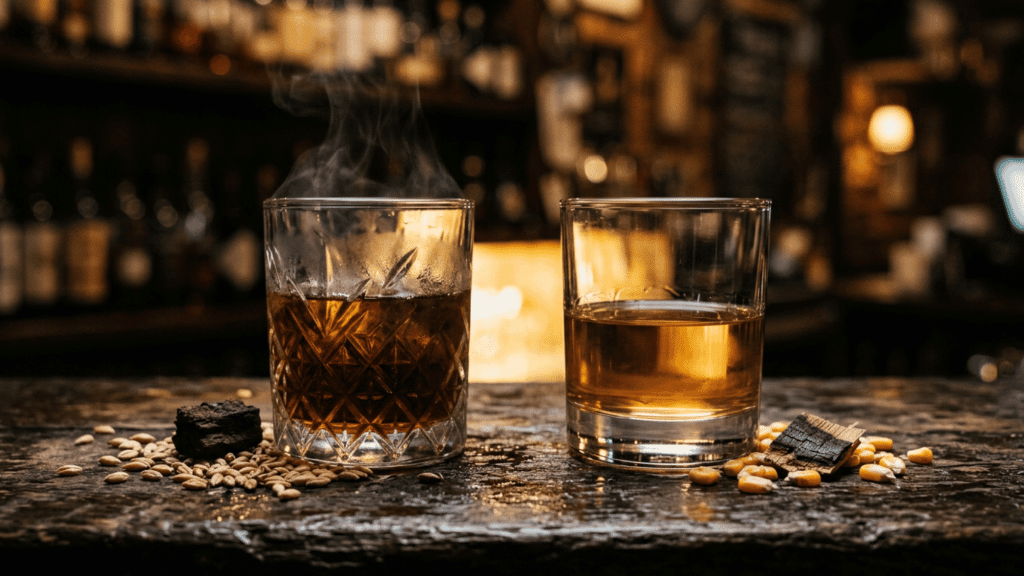
Most people use “scotch” and “whiskey” interchangeably, and bartenders quietly cringe every time.
These two terms are not rivals; one is simply a member of the other’s family, but with a very specific bloodline, a strict upbringing, and a Scottish passport to prove it.
Knowing the difference changes how you order, shop, and sip forever. From regional naming rules to production secrets that shape every drop, it all matters more than you think.
The scotch vs whiskey distinction is simpler than you imagine, and far more interesting than you expect. Read on; your next pour depends on it.
What is Whiskey?
Whiskey is a distilled spirit made from fermented grain and aged in wooden barrels.
It is produced around the world using different grains, methods, and regulations, resulting in a wide range of styles and flavors.
The spirit is spelled “whiskey” in the United States and Ireland, and “whisky” in Scotland, Canada, and Japan.
Scotch, bourbon, rye, and Irish whiskey are all part of the broader whiskey family, each with its own distinct character and production rules.
What is Scotch?
Scotch is a type of whisky made exclusively in Scotland under strict legal regulations.
To be labeled Scotch, it must be distilled and matured in Scotland and aged in oak casks for at least three years.
There are five official categories: Single Malt, Single Grain, Blended Malt, Blended Grain, and Blended Scotch Whisky.
While styles vary, every Scotch reflects Scotland’s long-standing whisky-making tradition and protected production standards.
Is Scotch the Same as Whiskey?
The short answer is yes, and no. Scotch is whiskey, but whiskey is not always scotch, and that single distinction changes everything about how these spirits are defined, produced, and protected.
- Scotch Is a Subset, Not a Synonym: Whiskey is the broad parent category; scotch is one strictly governed member of that family with rules that no other whiskey must follow.
- Every Scotch is a Whiskey, but Not Every Whiskey Is Scotch: Bourbon, Irish whiskey, and Japanese whisky are all whiskeys; none of them can legally claim the Scotch name.
- The Name Scotch Is Geographically Locked: It can only be produced in Scotland, making its identity inseparable from its birthplace in a way most spirits are not.
- Scotch Carries Standards that No Other Whiskey Is Required to Meet: Minimum aging, cask type, distillation location, and bottling strength are all legally enforced under Scottish and UK law.
- Think of It Like Silk and Fabric: All silk is fabric, but not all fabric is silk; the same logic applies perfectly to scotch and whiskey.
Scotch vs Whiskey: The Differences That Actually Matter
The table covers the basics, but some differences run deeper than a side-by-side comparison can capture. These are the distinctions that shape identity, flavor, and everything you taste in the glass.
Regional Naming Rules
Scotch is one of the most geographically protected spirits in the world. It cannot be produced anywhere outside Scotland, not even a drop.
Whiskey, by contrast, is made across dozens of countries, each with its own naming rules.
Bourbon must come from the USA, Irish whiskey from Ireland, and Japanese whisky from Japan. The name is never just a label; it is a legally enforced address.
Ingredients
Scotch leans heavily on malted barley, which gives it a distinctive depth and earthy richness.
Other whiskeys cast a wider net; bourbon is built on a corn-dominant mash, rye whiskey on spicy rye grain, and Irish whiskey often blends malted and unmalted barley for a lighter character.
The grain is not just an ingredient; it is the personality of the spirit before a single drop is distilled.
The Role of Peat
Peat is what gives many scotches their unmistakable smoky character, and it is almost exclusive to scotch production.
During malting, barley is dried over burning peat, infusing the grain with earthy, medicinal, and smoky notes before distillation even begins.
Most other whiskeys skip this step entirely, making peat one of the clearest sensory dividing lines between scotch and the rest of the whiskey world.
Maturation Requirements
Scotch must age for a minimum of three years by law, but most premium expressions spend 10, 18, or even 25 years in cask.
American bourbon requires only two years for a “straight” designation, and some whiskey categories carry no minimum at all.
The longer and stricter the aging requirement, the more the spirit costs, and the more complexity ends up in the bottle. Production methods influence flavor, while factors like alcohol content can affect the calories in whiskey.
Barrel Selection
Scotch is aged exclusively in used oak casks, most commonly ex-bourbon barrels from America or ex-sherry casks from Spain.
Bourbon, on the other hand, must use brand-new charred oak barrels by law, which delivers its signature vanilla and caramel sweetness.
This single difference in barrel policy is responsible for some of the most dramatic flavor contrasts between scotch and American whiskey.
Scotch vs Whiskey: Production Methods
Every spirit tells the story of how it was made, and nowhere is that more true than with scotch and whiskey. The steps in between vary significantly depending on origin, tradition, and law.
| Production Step | Scotch | Other Whiskeys |
|---|---|---|
| Base Ingredient | Mainly malted barley | Corn, rye, wheat, or barley |
| Distillation | Pot stills or column stills | Usually, column stills; some use pot stills |
| Aging | Minimum 3 years by law | Varies by style and country |
| Barrels | Mostly used oak casks | New charred oak (bourbon) or used oak |
| Peat Flavor | Common in some styles | Rare |
| ABV | Minimum 40% | Usually 40% or higher |
| Regulations | Must follow Scotch Whisky Regulations | Governed by country-specific laws |
Alcohol content varies significantly across whiskey styles, influencing everything from flavor intensity to the overall drinking experience.
How to Choose Between Scotch and Other Whiskeys?
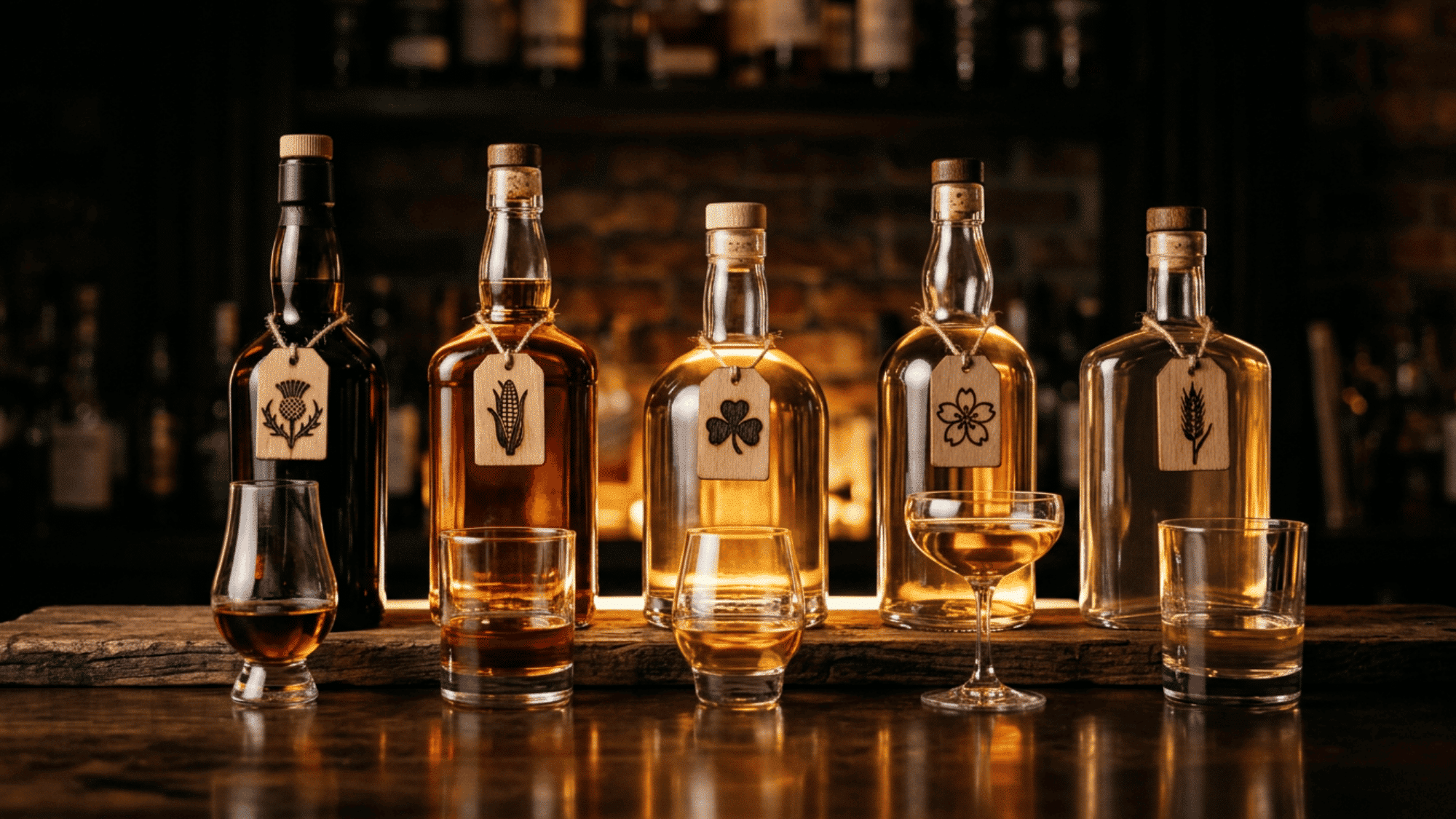
Choosing between scotch and other whiskeys comes down to one thing: what you want in your glass. Here is a straightforward breakdown to match your preference to the right pour.
- Choose Scotch if You Enjoy Complexity and Depth: Scotch delivers smoky, peaty, and oak-driven flavors built over years of careful aging, ideal for sippers who want a spirit with serious character.
- Choose Bourbon if You Prefer Something Sweeter: Made from a corn-dominant mash and aged in new charred oak, bourbon offers rich vanilla, caramel, and honey notes that are approachable for most palates.
- Choose Japanese Whisky for Balance and Refinement: Modeled after Scotch but crafted with Japanese precision, it sits between smoky and smooth, a great middle ground for those still finding their preference.
- Choose Rye Whiskey if You Like Bold and Spicy: With a peppery, sharp character that cuts through cocktails and stands up neat, rye is the pick for drinkers who want something with an edge.
- Consider Your Budget, Too: Scotch tends to be priced higher due to strict regulations and long aging requirements, while bourbon and Irish whiskey offer excellent quality across a wider range of budgets.
Conclusion
Scotch and whiskey were never rivals; one simply earned a stricter set of rules, a protected homeland, and a reputation built over centuries.
The difference is not just geography or grain; it is a standard of identity that few spirits in the world can match.
Next time a bottle catches your eye, you will know exactly what is inside before the first sip.
Share this with someone who still uses the terms interchangeably; consider it a public service.
Frequently Asked Questions
Can Scotch Be Made Outside Scotland?
No. Scotch produced outside Scotland cannot legally be called scotch, not even if the recipe and process are identical.
What Does “Single Malt” Actually Mean?
It means the scotch was produced at a single distillery using only malted barley, not that it came from a single barrel or a single batch.
What Food Pairs Well with Scotch?
Dark chocolate, smoked salmon, aged cheese, and charcuterie complement Scotch particularly well, enhancing its smoky, complex flavor profile.