

Bourbon and whiskey are used as if they mean the same thing. At bars, in recipes, across online communities, the two terms get mixed up, and that confusion costs drinkers real money at the shelf.
The truth is that bourbon is a type of whiskey, but not every whiskey is a bourbon.
The gap comes down to specific production rules, grain choices, and barrel laws that shape flavor, price, and what ends up in the glass.
This blog breaks down those differences in plain terms, from what legally defines bourbon to how it compares to Scotch, rye, and Irish whiskey in terms of taste, price, and production!
What Exactly is Whiskey?
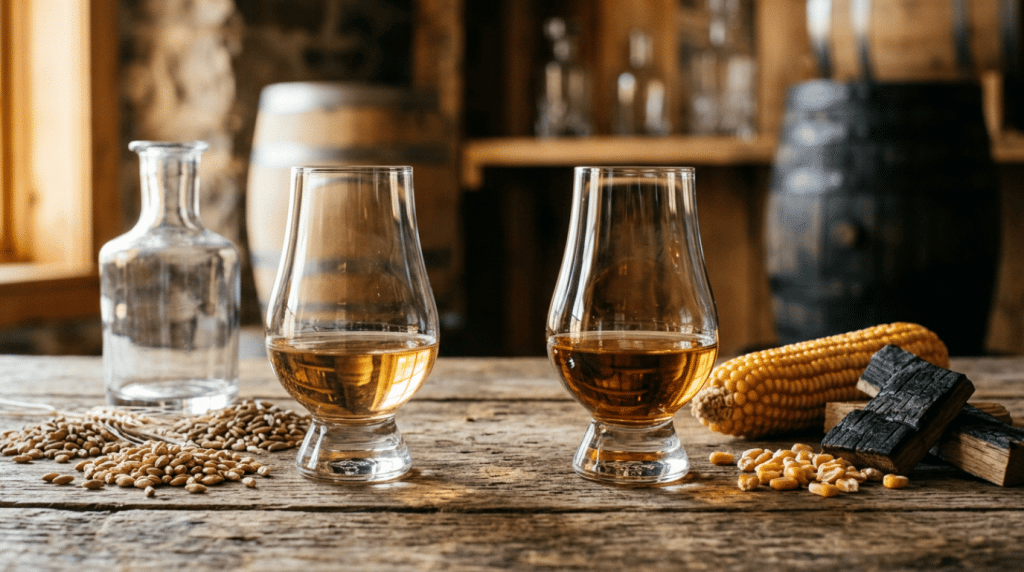
Whiskey is a distilled spirit made from fermented grain mash, such as corn, barley, rye, wheat, or a blend of grains. Production details depend on where it’s made and the style the distiller is aiming for.
After distillation, many whiskeys are aged in wooden casks to mature. That time in the barrel accounts for much of the color and flavor in the final bottle.
The word is spelled differently by country: “whiskey” in the United States and Ireland, and “whisky” without the “e” in Scotland, Canada, and Japan.
Whiskey is the broad category. Bourbon, Scotch, rye, and Irish whiskey are all distinct styles within it, each with its own flavor profile, production methods, and legal rules.
Because those rules vary by style and country, the differences between them matter when choosing a bottle, and that’s exactly what the rest of this post gets into.
What Makes Bourbon Bourbon?
Bourbon is not just “American whiskey.” It has a specific legal definition under U.S. regulations, and a spirit must meet those requirements to be labeled bourbon.
- The mash bill must contain at least 51% corn: This generally contributes to bourbon’s sweeter profile. The remaining grain bill typically consists of rye, wheat, or malted barley. That secondary grain has more influence on the final flavor than most people expect.
- Bourbon must be aged in new, charred oak containers: That charred wood contributes much of the spirit’s color, flavor, and barrel character, the vanilla, caramel, and oak notes that make bourbon so recognizable.
- On geography: bourbon can be made anywhere in the United States, not just Kentucky, though Kentucky is its best-known home.
- On proof: it must be distilled to no more than 160 proof, entered into the barrel at no more than 125 proof, and bottled at a minimum of 80 proof.
Bourbon vs Whiskey: Key Differences to Know
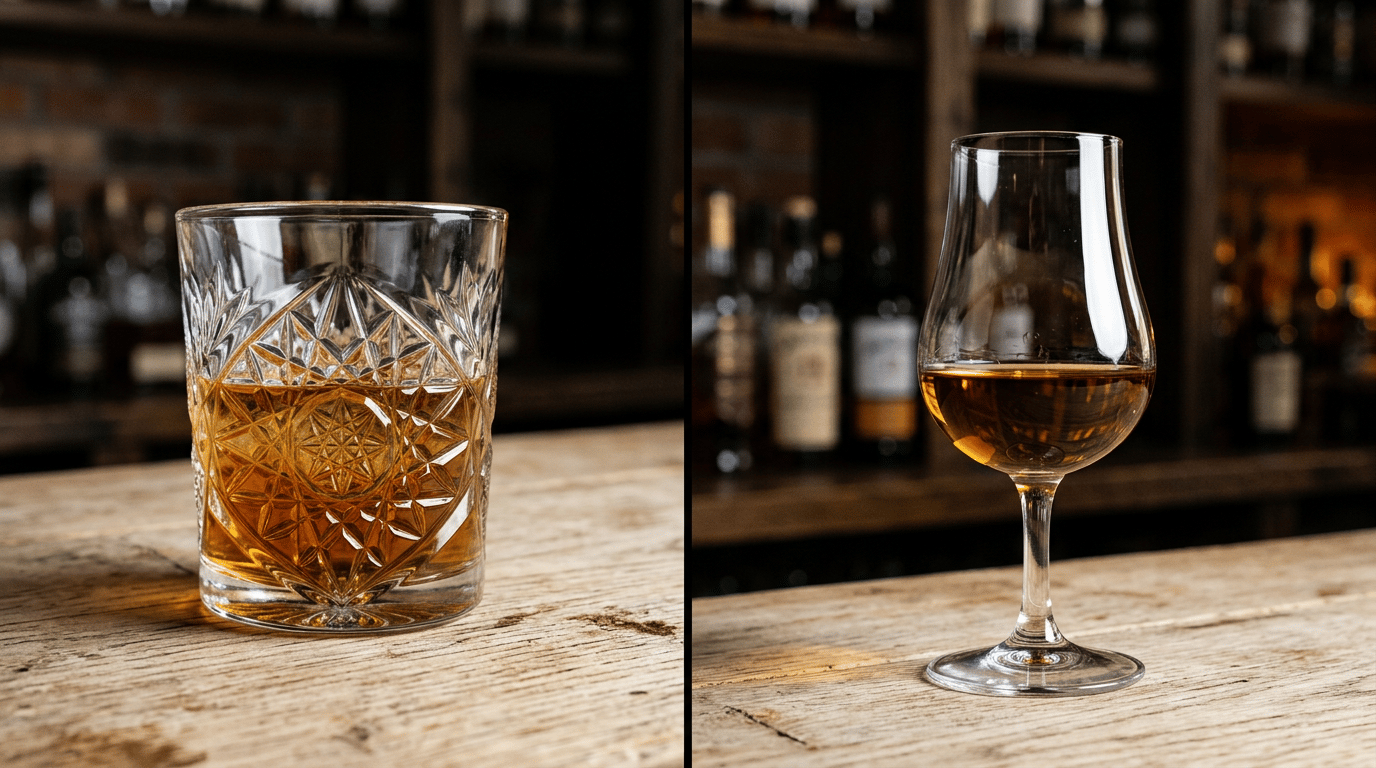
This is where Bourbon and Whiskey Actually Part Ways.
1. Grain Bill
Most whiskeys, scotch single malts, Irish whiskies, and Japanese whiskies use malted barley as the dominant grain. Rye whiskey requires at least 51% rye. Bourbon requires at least 51% corn.
Corn’s high starch content converts to more fermentable sugars, which is why bourbon tends to taste sweeter, and that Extra Sugar is Exactly Why Bourbon Sits on The Sweeter End of The Whiskey Spectrum.
2. Barrel Rules
Bourbon must age in new, charred oak every production cycle; no reused barrels.
Scotch typically uses previously used oak, often the same ex-bourbon barrels sold off after their single American use.
Irish whiskey uses new or used oak, frequently ex-sherry or ex-bourbon casks. Because bourbon producers must buy new barrels every time, those used barrels flow directly to scotch distilleries.
3. Flavor Profile
Bourbon leads with vanilla, caramel, brown sugar, and oak, occasionally with dried fruit or baking spice. It’s almost never smoky, since new charred oak doesn’t produce peat-like compounds.
Scotch ranges from light and floral in Speyside to heavily peated in Islay, and it finishes considerably drier than bourbon.
Irish whiskey is clean and slightly sweet, and is often smooth and triple-distilled.
4. Geographic Origin
Bourbon must be made in the United States. Scotch whisky must be produced and aged in Scotland for a minimum of three years. Irish whiskey follows the same three-year rule but must be made in Ireland.
Rye whiskey in the U.S. uses the same distillation and barreling rules as bourbon, with a rye-dominant mash bill swapped in for corn.
Geography isn’t just a label; it determines the legal standards every bottle has to meet.
5. Price and Value
Entry-level bourbon in the roughly $15–$30 range, such as Buffalo Trace, Wild Turkey 101, or Evan Williams Black Label, often offers strong value because bourbon is held to clear legal production standards, and straight bourbon cannot include added color or flavor.
The $30–$60 range often brings more depth, better balance, or a longer finish, though that varies by bottle and brand.
Bourbon vs Scotch, Rye, and Irish Whiskey: The Honest Comparison
Same category, very different glasses- here’s how bourbon stacks up against the other major whiskey styles.
| Feature | Bourbon | Scotch | Rye Whiskey | Irish Whiskey |
|---|---|---|---|---|
| Primary Grain | Corn (minimum 51%) | Malted barley | Rye (minimum 51%) | Malted barley |
| Barrel Type | New charred oak | Used oak (often ex-bourbon barrels) | New charred oak | New or used oak |
| Flavor Profile | Sweet, vanilla, caramel, oak | Dry, floral to smoky (varies by region) | Spicy, peppery, dry | Light, clean, slightly sweet |
| Distillation | Double | Double | Double | Typically triple |
| Origin | United States | Scotland | United States | Ireland |
| Finish | Long, warm, barrel-forward | Dry, mineral, or smoky | Dry, sharp, spicy | Short, smooth, clean |
| Best in Cocktails | Old Fashioned, Mint Julep | Rob Roy, Rusty Nail | Manhattan, Sazerac | Irish Coffee, Whiskey Sour |
How to Taste the Difference
No formal training needed, just a glass, a little patience, and knowing what to pay attention to.
- Nose First: Add a few drops of room-temperature water to each glass; the water releases aromatic compounds that alcohol suppresses. For bourbon, look for vanilla, caramel, and oak. For rye, expect pepper and dried herbs.
- Then Palate: Take a small sip and let it rest on the tongue for a few seconds before swallowing. Bourbon coats the mouth more heavily than most Scotch. Irish whiskey feels noticeably lighter and softer.
- Then Finish: The finish is how long the flavor lingers and what it develops into after swallowing. Long, warm, vanilla, and oak, classic bourbon.
- On Serving: ice suppresses aroma and slows your perception of flavor. A few drops of still water are a better addition to high-proof spirits; they slightly lower the ABV, open the grain character, and make the nose more accessible without the temperature loss that ice brings.
Wrapping Up
Picking the right bottle gets easier once the language makes sense.
Bourbon, scotch, rye, and Irish whiskey each carry a distinct personality, shaped by the mash, the barrel, and the country they come from. That’s not trivia.
It’s practical information that changes how a label reads and what ends up in the glass.
The whiskey category rewards curiosity. Every style has something to offer, and moving between them builds a sharper palate over time.
Start with one bottle, pay attention, and let the next choice follow from what stood out.
Frequently Asked Questions
What is the Smoothest Bourbon to Drink Straight?
Wheated bourbons like Maker’s Mark and W.L. Weller are widely considered the smoothest, since wheat, as the secondary grain, softens the spirit considerably.
What Not to Eat with Whiskey?
Heavily spiced or acidic foods tend to clash with whiskey. Strong citrus, vinegar-based dishes, and overly sweet desserts can dull the spirit’s natural flavor.
Does Ice Ruin a Good Bourbon?
Ice numbs aroma and flavor compounds. A few drops of still water open the spirit up far better than ice, especially with higher-proof bottles.