

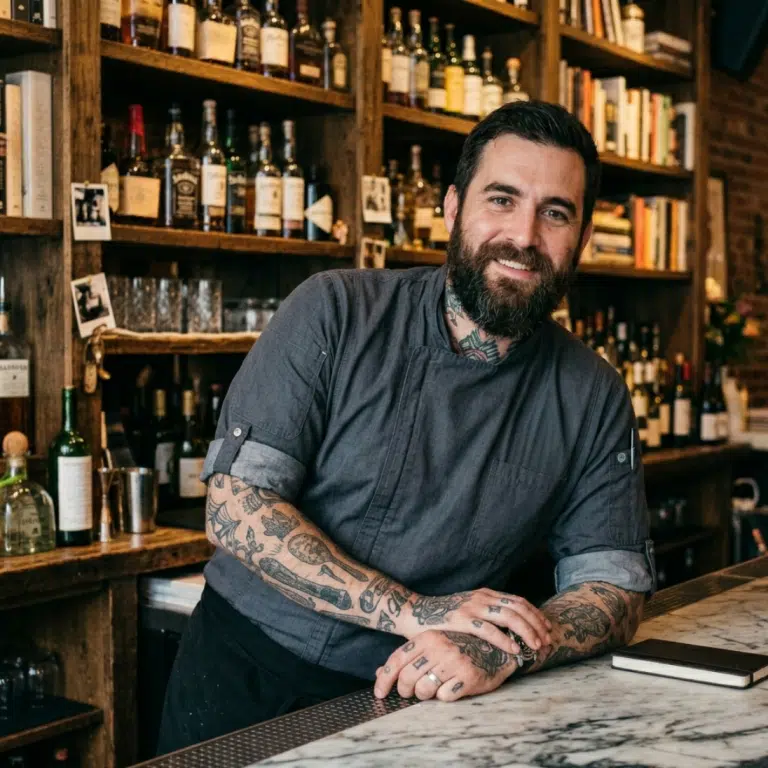

Do you order the same drink every time you go to a bar? Many people do, and that can mean missing drinks they might enjoy more.
The problem is simple. Bar menus can feel too broad, and some cocktails are hard to understand by name alone.
This blog makes it easier. It covers classic bar cocktails, popular drinks people order often today, and bar-style recipes worth knowing at home.
Each entry explains what the drink is, how it tastes, and how to make it. Use this list to order better and mix with more confidence.
What Makes a Great Bar Cocktail?
A great bar cocktail does three things well: balance, build, and finish.
Balance means the drink is not too sweet, too sour, too bitter, or too boozy. Every ingredient earns its place.
Build refers to how the drink is constructed, shaken, stirred, built in the glass, or layered. Technique directly affects texture and temperature.
Finish is what lingers after the last sip. A well-made cocktail should leave a clean, pleasant aftertaste that makes you want another round.
The International Bartenders Association (IBA) classifies cocktails into three categories: The Unforgettables, Contemporary Classics, and New Era Drinks.
Best Bar Cocktails: Classic, Popular, and Bar-Style
These bar cocktails are grouped by the role they play on a menu: the ones that built cocktail history, the ones that dominate order counts today, and the ones that belong squarely behind the bar.
1. Old Fashioned

The Old Fashioned dates back to the early 1800s and remains one of the most-ordered whiskey drinks at bars.
It combines rye or bourbon with a sugar cube, Angostura bitters, and an orange peel.
Muddle the sugar with bitters, add ice and whiskey, stir gently, and garnish. Bourbon runs sweeter; rye runs spicier.
2. Negroni

Created in Florence around 1919, the Negroni is equal parts gin, Campari, and sweet vermouth, stirred over ice and served with an orange peel.
It is bitter, herbal, and surprisingly well-balanced for such a short ingredient list.
The Campari is not something to cut back on; that bitterness is exactly what makes the drink work.
3. Daiquiri

The classic Daiquiri is white rum, fresh lime juice, and simple syrup shaken hard and double-strained into a chilled coupe. Cuban in origin, it dates to the late 1800s.
The ratio matters more than most people expect. Too much lime and it reads sour, too much syrup and it tips sweet.
4. Manhattan

Rye whiskey, sweet vermouth, and Angostura bitters stirred for about 25 seconds; that is all a Manhattan needs.
It is a spirit-forward drink, smooth and herbal, and it always gets stirred rather than shaken.
Shaking introduces air and chips the ice, which muddies the texture. Strain into a coupe and garnish with a Luxardo cherry.
5. Sidecar

Cognac, Cointreau, and fresh lemon juice shaken with ice and strained into a sugar-rimmed coupe: the Sidecar is a Prohibition-era Parisian classic.
It is citrusy, spirit-forward, and finishes with a warm, lingering note of brandy.
The sugar rim is optional, but it softens the edge of the lemon and adds a nice contrast on the first sip.
6. French 75

The French 75 is tied to World War I-era Paris, but its exact origin is debated. The gin, lemon, sugar, and Champagne version later became the standard.
Shake the gin, lemon, and syrup with ice, strain into a Champagne flute, and top with sparkling wine.
It is effervescent and citrusy, and it works equally well with cognac as the base instead of gin.
7. Tom Collins

London dry gin, fresh lemon juice, simple syrup, and soda water make up this British gin sour from the 1870s.
Shake the gin, lemon, and syrup with ice, strain into a Collins glass over fresh ice, and top with soda.
It is crisp, citrusy, and clean, a good entry point for anyone still getting acquainted with gin-forward drinks.
8. Clover Club

A pre-Prohibition American cocktail of gin, lemon juice, raspberry syrup, and egg white.
Dry shake the ingredients first to build the foam, then add ice and shake again before double-straining into a coupe.
The result is light, fruity, and frothy with a tart finish. It fell out of fashion for decades but has returned to most serious cocktail menus.
9. Gimlet

London dry gin, fresh lime juice, and simple syrup shaken with ice and strained into a chilled coupe.
The original Gimlet used preserved lime cordial, which gave it a sweeter, slightly medicinal character.
The fresh lime version is sharper and cleaner. A lime wheel on the rim works as a garnish, but the drink does not need much decoration.
10. Singapore Sling

Created by bartender Ngiam Tong Boon at Raffles Hotel in Singapore around 1915, this is one of the more complex drinks on any classic cocktail list.
Gin, Cherry Heering, Cointreau, Benedictine, pineapple juice, lime juice, grenadine, and Angostura bitters are shaken together, then strained over ice.
The result is fruity, herbal, and layered in a way few cocktails are.
11. Margarita

Tequila, fresh lime juice, and orange liqueur shaken over ice, the Margarita is one of the most widely ordered bar cocktails.
A salt rim is optional, but fresh lime juice is not. Bottled lime juice produces a noticeably flat result. Serve over ice in a rocks glass or straight up in a coupe, depending on preference.
12. Mojito

White rum, fresh lime juice, simple syrup, mint leaves, and soda water build this Cuban highball.
The mint should be pressed into the lime and syrup, not pulverized.
Shredding the leaves releases bitter compounds that throw off the whole drink. Strain over fresh ice in a highball, top with soda, and garnish with a mint sprig.
13. Espresso Martini

Bartender Dick Bradsell created this drink in London in 1983, and it has barely left bar menus since.
Vodka, fresh hot espresso, and coffee liqueur get shaken hard; the heat and vigorous agitation produce the signature foam on top.
Cold-brew concentrate does not produce the same result. Always use a fresh espresso shot for the best outcome.
14. Whiskey Sour

Bourbon, fresh lemon juice, and simple syrup form the base, but the egg white version is worth trying.
A dry shake first, without ice, creates a stable, silky foam. Then add ice and shake again before straining into a glass.
Dot the foam with Angostura bitters, then drag a toothpick through to achieve a clean presentation.
15. Aperol Spritz

Aperol, Prosecco, and soda water, built over ice in a large wine glass. The classic ratio is 3:2:1.
It is light, slightly bitter, and orange-forward, with good effervescence.
Pour the Prosecco first, then Aperol, then a splash of soda. Garnish with an orange slice. It is one of the most approachable drinks on any bar menu.
16. Gin & Tonic

Two oz of gin over ice with four to five oz of tonic water and a citrus garnish. Simple, but the gin choice shapes the whole drink.
London Dry gins pair well with lime. Citrus-forward gins do better with grapefruit. Floral gins work with cucumber.
Avoid stirring vigorously; the carbonation in the tonic is best left intact.
17. Moscow Mule

Vodka, fresh lime juice, and ginger beer served in a copper mug over crushed ice.
The copper keeps the drink cold longer than a standard glass and adds a faint metallic chill to each sip.
Fill the mug with ice first, add vodka and lime, then top with ginger beer. A lime wheel and mint sprig finish it off.
18. Cosmopolitan

Citrus vodka, Cointreau, fresh lime juice, and cranberry juice shaken hard and double-strained into a chilled coupe.
The Cosmopolitan defined the cocktail bar scene of the 1990s and still holds up.
The cranberry is there for color and a touch of tartness, not to make it sweet. A lime wheel or orange peel works as the garnish.
19. Paloma

Blanco tequila, fresh lime juice, a pinch of salt, and grapefruit soda, built over ice, the Paloma is lighter and more bitter than a Margarita and is more widely drunk in Mexico than its more famous counterpart.
No shaking needed; it goes straight into a highball glass. Jarritos grapefruit or Squirt both work well as the mixer.
20. Tequila Sunrise

Tequila and fresh orange juice over ice, with grenadine poured slowly down the inside of the glass, it sinks, creating the red-to-orange gradient the drink is known for. Do not stir once the grenadine is in.
The Tequila Sunrise became a California bar staple in the 1970s and remains one of the most recognizable drinks on any menu.
21. Dark ‘n’ Stormy

Gosling’s Black Seal rum floated over ginger beer with a squeeze of lime; this is the national drink of Bermuda.
The rum goes in last, resting on top of the ginger beer rather than mixing through.
It is warming, spiced, and gingery. “Dark ‘n’ Stormy” is technically a registered trademark, so Gosling’s rum is the only official version.
22. Bramble

Dick Bradsell created this drink in London in 1984 at Fred’s Club.
Gin, lemon juice, and simple syrup are shaken and strained over crushed ice, then crème de mûre, blackberry liqueur, is floated over the top.
The liqueur sinks slowly through the drink as it is sipped, creating a gradient of flavor from tart at the top to sweet berry at the bottom.
23. Last Word

Equal parts gin, green Chartreuse, maraschino liqueur, and fresh lime juice, shaken and strained into a coupe.
The Last Word is a Prohibition-era Detroit cocktail that was largely forgotten until bartender Murray Stenson brought it back at Zig Zag Café in Seattle in the early 2000s.
The equal-parts format sounds unruly but produces a surprisingly well-integrated result.
24. Paper Plane

Sam Ross created the Paper Plane for The Violet Hour in Chicago around 2007–2008. Equal parts bourbon, Aperol, Amaro Nonino, and fresh lemon juice, shaken and strained into a coupe.
It is bittersweet, herbal, and citrusy, and it sits closer to the Negroni family than most people expect.
The Amaro Nonino gives it a softer, more floral bitter note than Campari would.
25. Amaretto Sour

Disaronno Amaretto, fresh lemon juice, a small pour of cask-strength bourbon, and egg white, dry-shake first, then shake with ice.
The bourbon is not optional; it cuts through the almond sweetness and gives the drink structural depth it would otherwise lack.
Strain over ice, dot the foam with bitters, and garnish with a cherry.
26. Rum Old Fashioned

Aged rum swapped in for whiskey makes a strong case for this variation on the Old Fashioned. Jamaican or Barbadian rums both work well; Jamaican adds funk and fruit, Barbadian adds cleaner vanilla and oak.
Demerara syrup works better than white sugar here, and a dash of orange bitters alongside the Angostura adds another layer of depth.
27. Jungle Bird

Created at the former Kuala Lumpur Hilton in the 1970s, the Jungle Bird pairs rum with Campari, pineapple juice, lime juice, and simple syrup.
Most people do not expect Campari and pineapple to work together, but the bitter-tropical combination is one of the most cohesive flavor pairings in the tiki canon.
Cocktail Techniques You Should Know
The method used to make a cocktail affects its texture, temperature, and clarity just as much as the ingredients do.
- Stirring: Used for spirit-forward cocktails (Manhattan, Martini, Negroni) where you want dilution and temperature without aeration. Stir 25–30 times with ice in a mixing glass.
- Shaking: Used for cocktails with citrus, dairy, or egg white. Shaking aerates the drink and fully integrates ingredients that would not blend by stirring alone.
- Dry shake: Shaking without ice first, used when egg white is involved. The heat of the shake creates a more stable foam than cold shaking does.
- Building: Assembling a drink directly in the serving glass. Used for Gin & Tonic, Aperol Spritz, and Mule-style drinks.
- Double straining: Pouring through both a Hawthorne strainer and a fine mesh strainer simultaneously to remove small ice chips and citrus pulp.
Wrapping Up
Great bar cocktails are built on balance, method, and good ingredients.
Classics like the Negroni prove why simple ratios work, while newer drinks like the Paper Plane show how those ideas can take a fresh shape.
Making a few of these at home teaches more than memorizing recipes. The methods are easy, and the results get better with practice.
Pick one drink, follow the steps, and start mixing with more confidence.
Frequently Asked Questions
What are the 5 P’s of Bartending?
Preparation, Presentation, Professionalism, Personality, and Pace: the five pillars that separate a competent bartender from a great one behind any bar.
What is the 50% Rule in Bartending?
The 50% rule is an informal service idea, not a fixed bartending rule. In some bars, it means checking on a guest when their glass is about half full.
What is Taylor Swift’s Signature Cocktail?
Taylor Swift has publicly named vodka and Diet Coke as her favorite drinks in the past. More recent reports have also linked her to the French Blonde cocktail.


