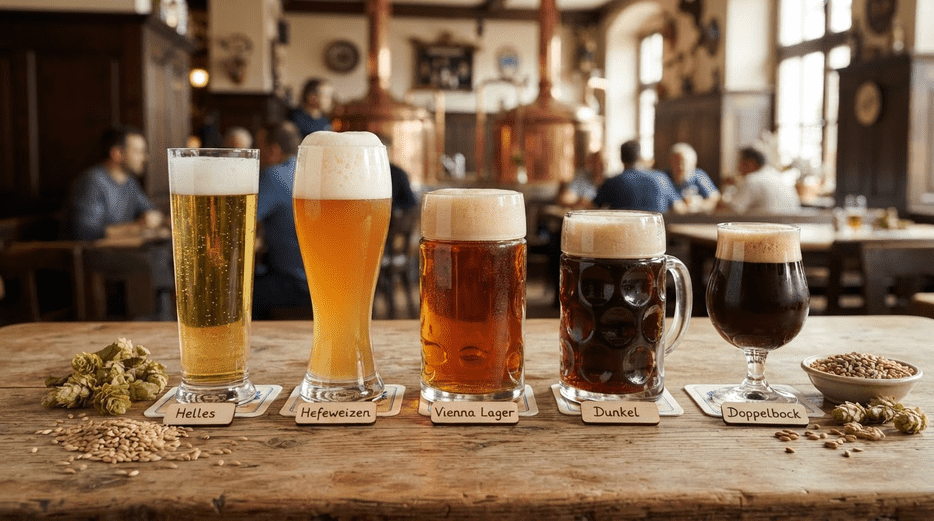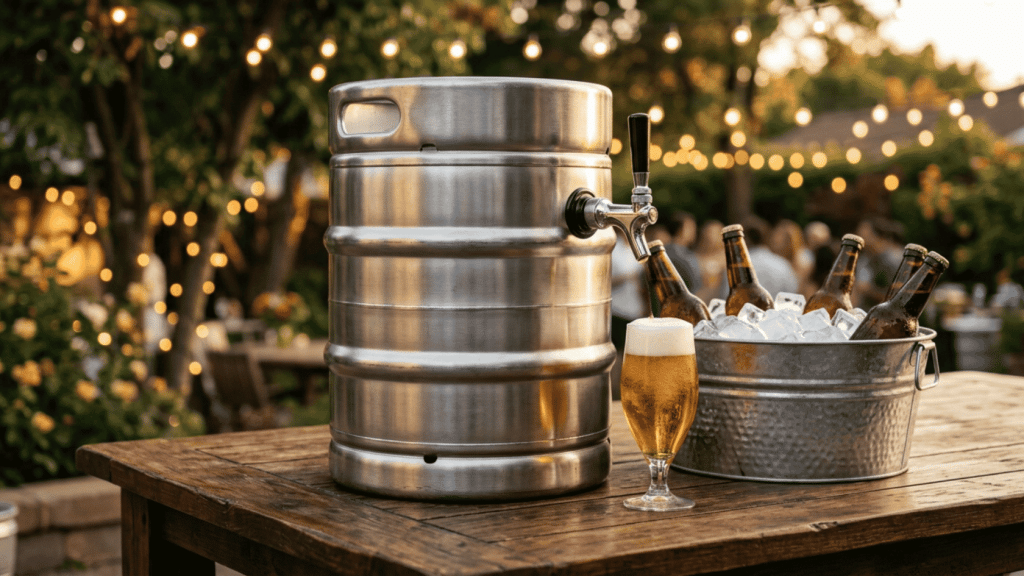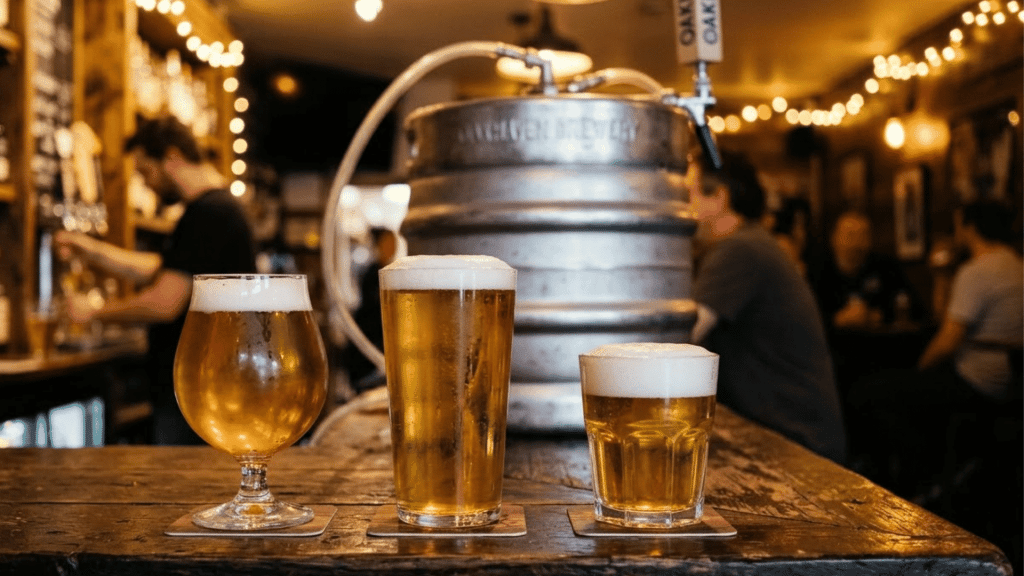


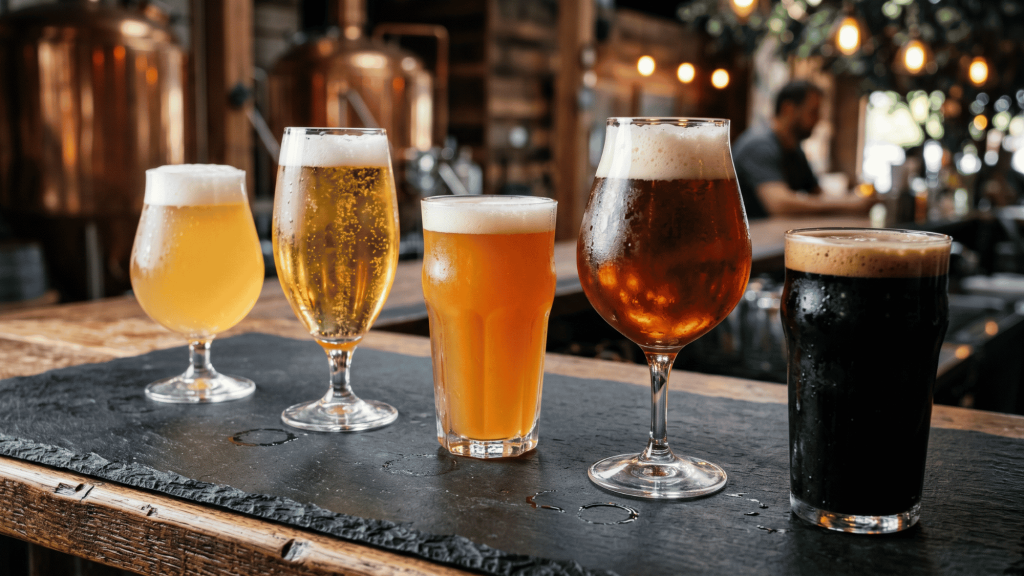
Ever thought why the same beer tastes different depending on the glass it is poured into?
The shape controls how much aroma reaches your nose, how fast carbonation escapes, and how long the beer stays cold.
Most people grab whatever glass is closest without thinking twice. But the right glass makes a noticeable difference in every sip.
This article covers the most common types of beer glasses, what makes each one work, and which beers belong in them.
Why Glass Shape Changes How Beer Tastes
The glass you drink from does more than hold your beer; it shapes the experience.
Glass shape controls how much aroma reaches your nose, how fast carbonation releases, and how long the foam head holds.
A narrow rim traps scent compounds close to your face, while a wide-open rim lets them go. Tall, slim glasses keep your beer fizzy longer. Shorter, wider ones release carbonation faster, which suits quick-drinking styles.
A flared rim builds and holds a better head, which also slows oxidation. Get the shape right, and every pour performs better.
The Core Types of Beer Glasses
Each glass influences aroma, foam, and drinking experience, helping people easily select the right option for specific beer varieties and everyday serving needs at home.
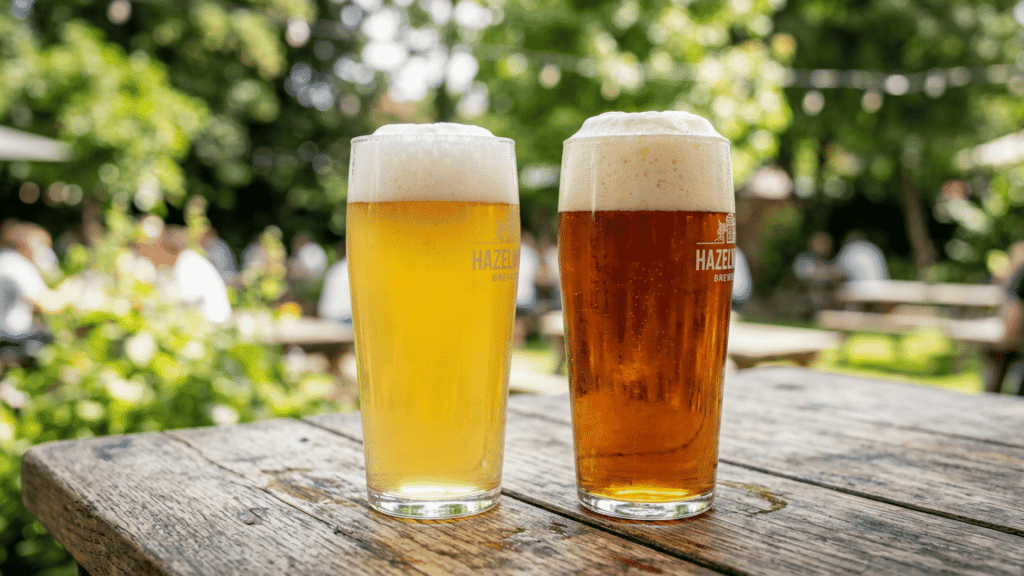
1. American Pint Glass (Shaker Pint)
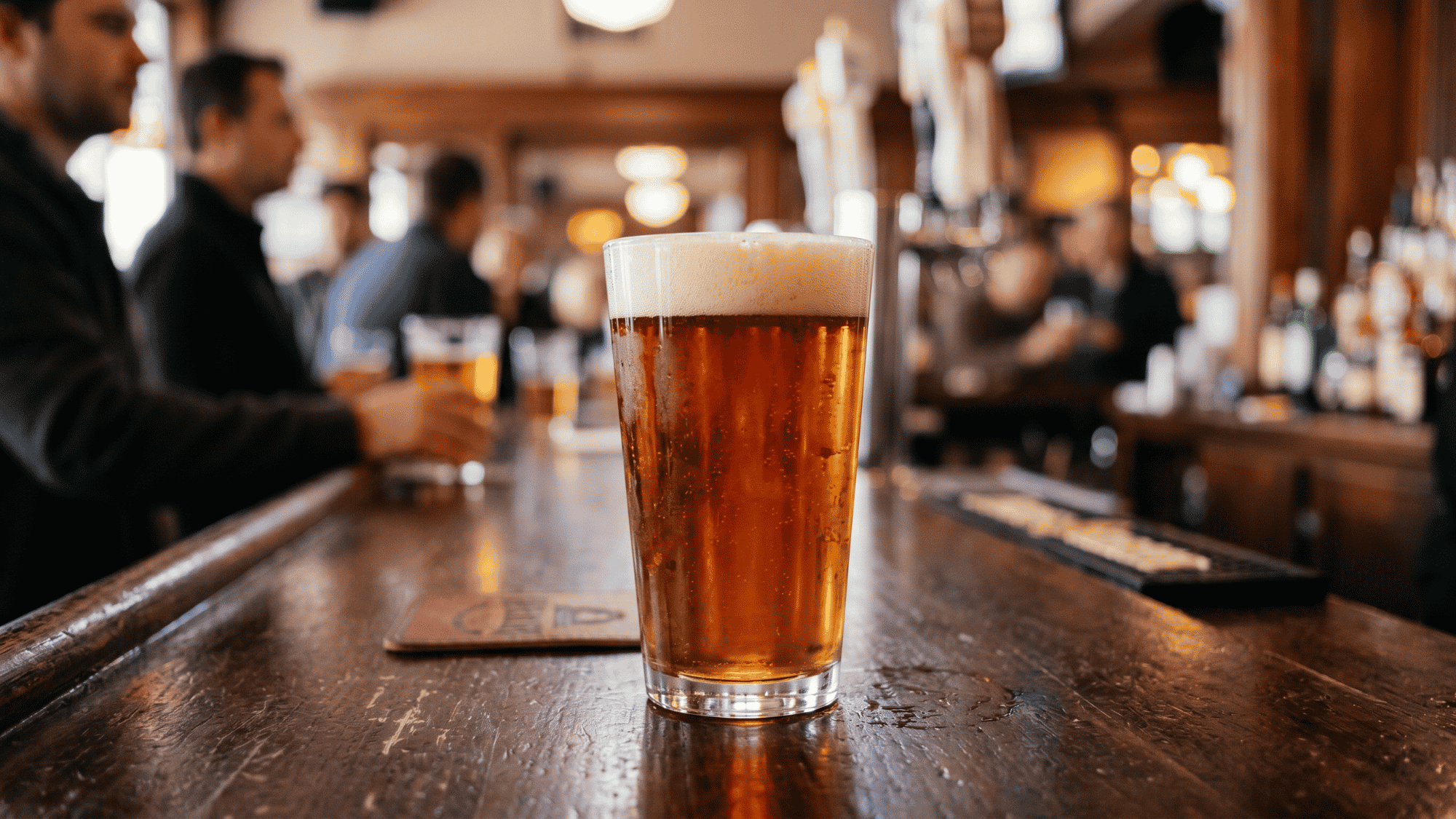
The American pint glass is the most common bar glass in the US. Simple, stackable, and versatile enough to work with most beer styles.
- Size: Holds 16 oz
- Design: Wide open top with straight, tapered sides
- Best For:American ales, lagers, session IPAs, stouts
- Why It Works: Fits almost any beer style and stacks easily behind the bar
- Drawback: The wide top lets the aroma escape quickly, which dulls the overall drinking experience
2. Imperial Pint Glass (Nonic Pint)
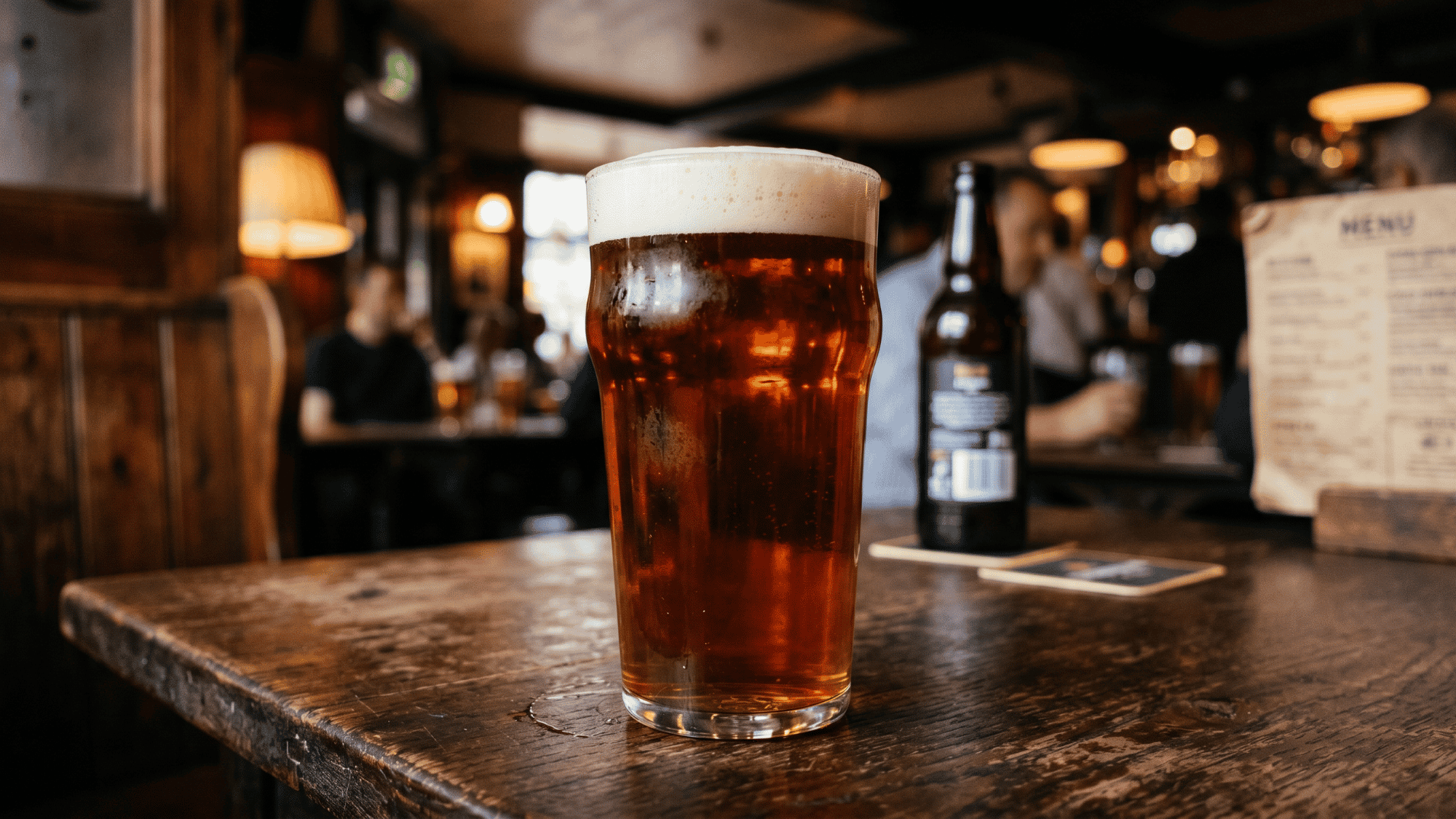
Britain’s go-to bar glass, slightly larger than the American version, has one key design difference that makes it more practical.
- Size: Holds 20 imperial fl oz
- Design: Nearly identical to the shaker pint but with a slight ridge near the top
- Best For: English ales, bitters, stouts, ciders
- Why It Works: The ridge prevents chipping when stacked and gives a natural grip point
- Drawback: Like the shaker pint, the open top does little to concentrate aroma
3. Pilsner Glass
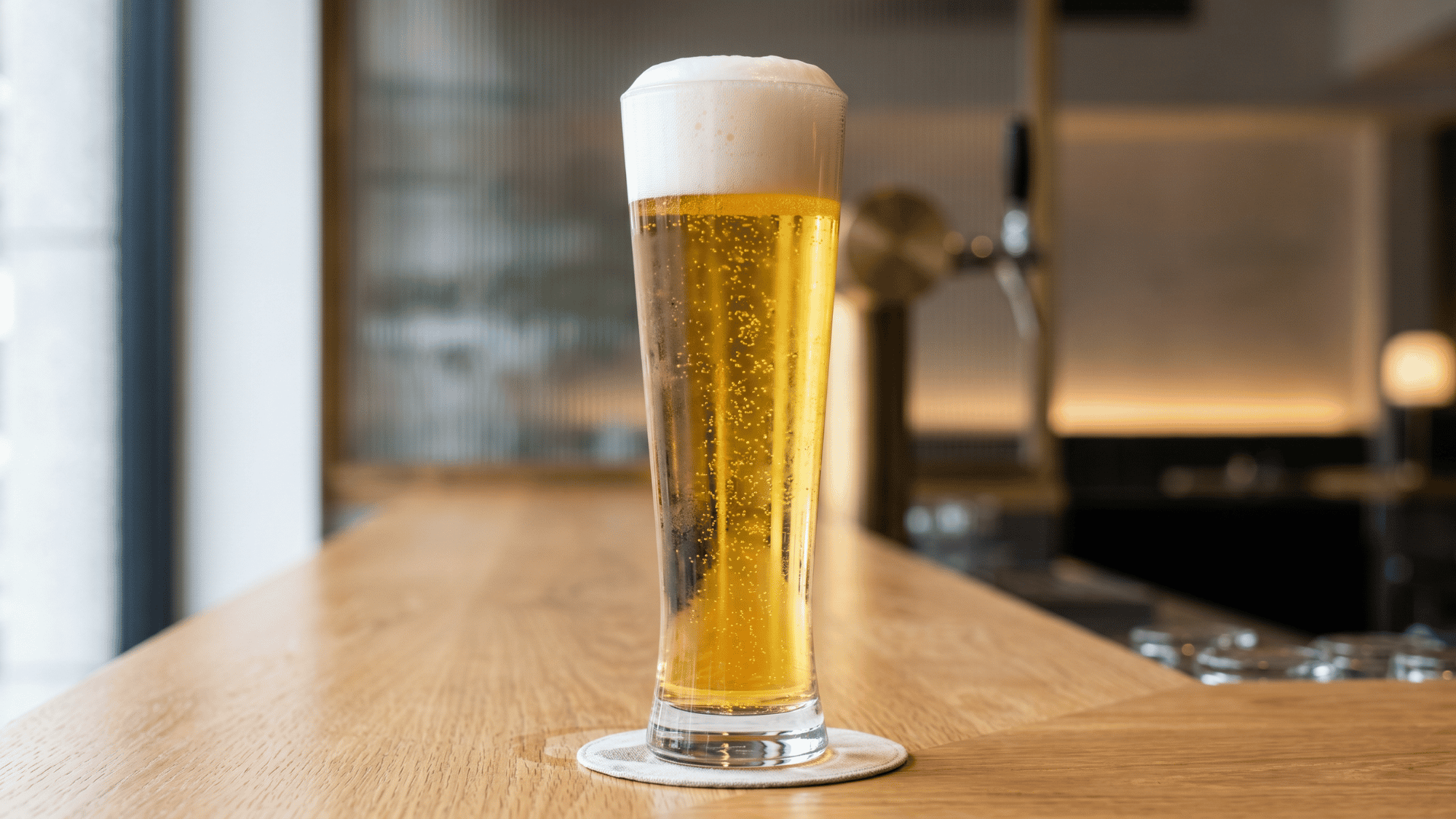
Built to show off light, crisp beers, the pilsner glass is all about clarity, carbonation, and visual appeal.
- Size: Typically holds 12 to 14 oz
- Design: Tall, narrow, and tapered from bottom to top with no handle or stem
- Best For: Pilsners, lagers, Kölsch, light ales, blonde ales
- Why It Works: Slim shape holds carbonation longer and puts color and clarity on full display
- Drawback: Not suited for aromatic or high-ABV beers that need more breathing room
4. Weizen Glass (Wheat Beer Glass)
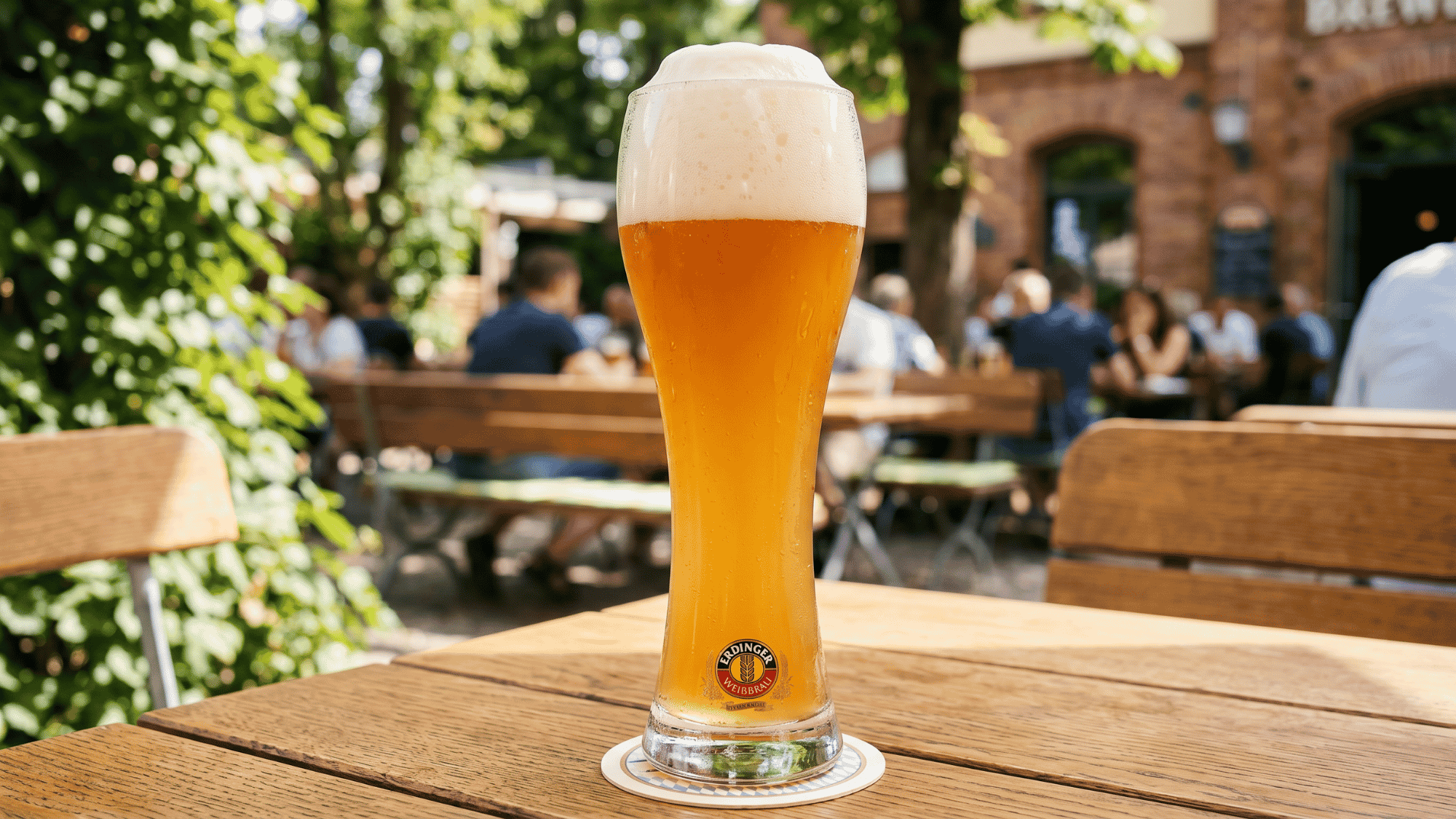
Designed specifically for wheat beers, this tall curved glass gives both the beer and the head plenty of space to settle properly.
- Size: Holds 0.5L
- Design: Tall with a narrow base that widens toward the top
- Best For: Hefeweizen, Witbier, Dunkelweizen, Berliner Weisse
- Why It Works: The narrow lower section keeps yeast sediment settled at the bottom for a cleaner pour
- Drawback: Too large and specialized for most other beer styles
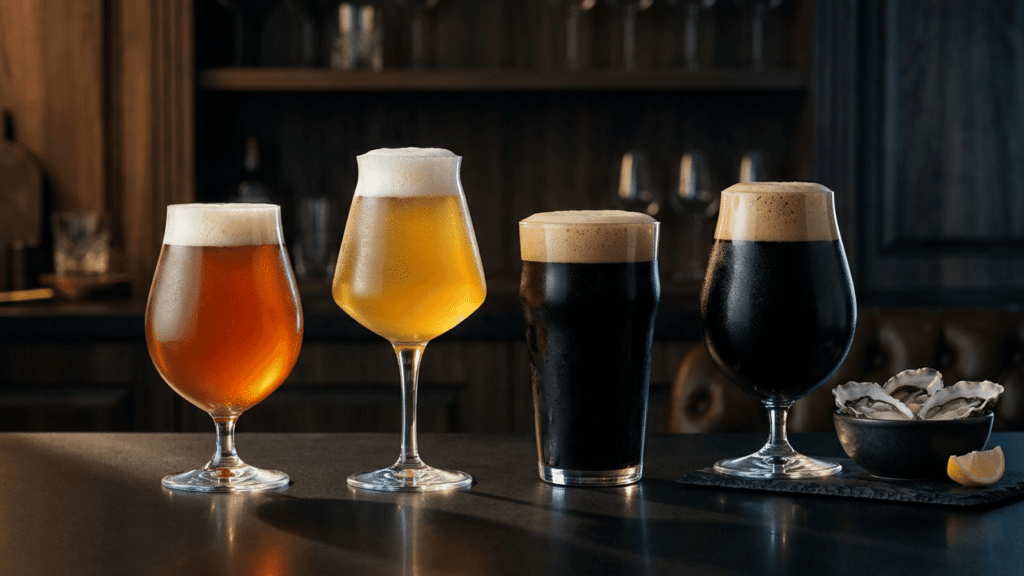
5. Tulip Glass
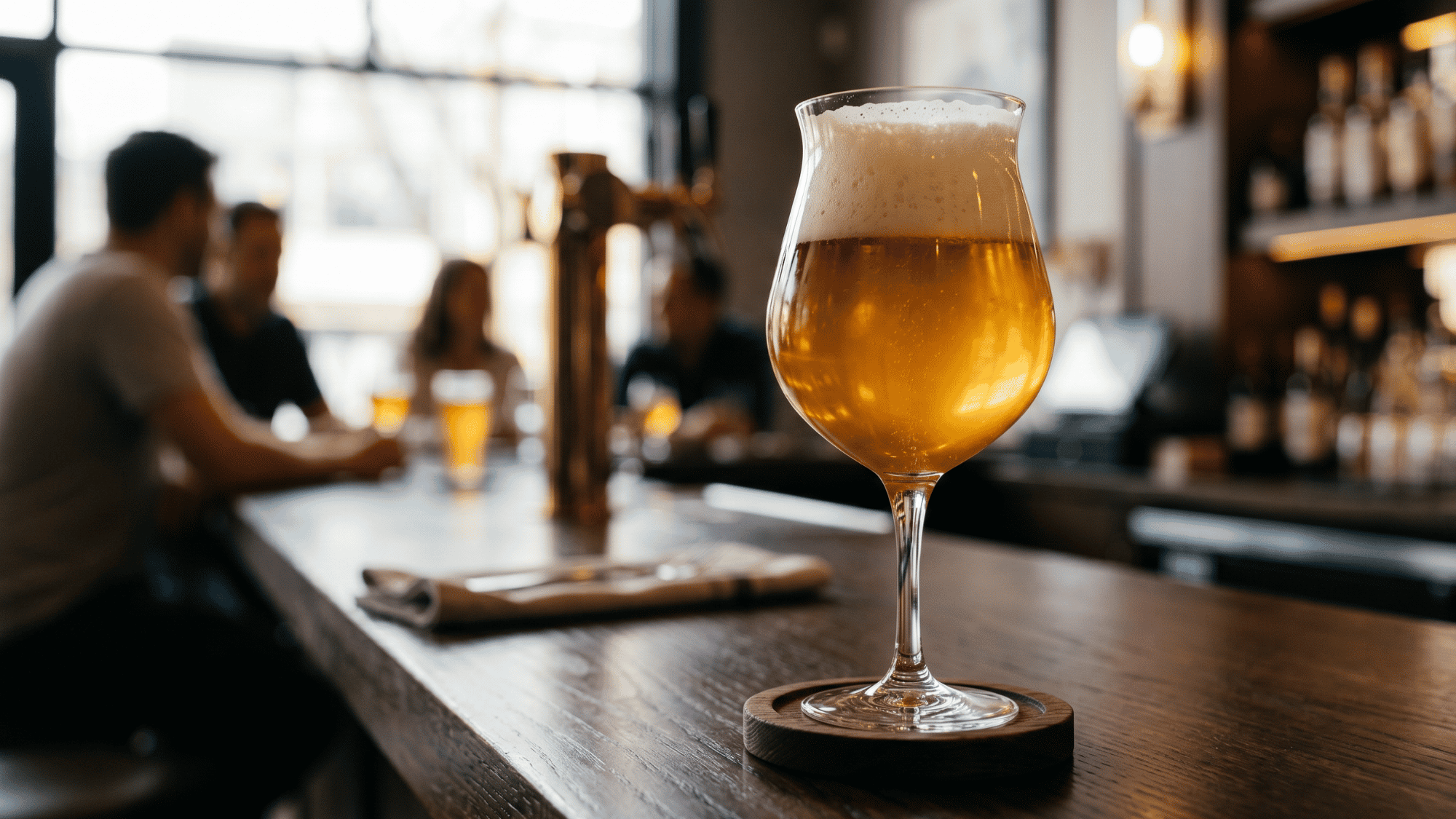
One of the most well-regarded beer glasses available, the tulip is built to concentrate aroma and make every sip more flavorful.
- Size: Typically holds 13 to 16 oz
- Design: Wide, rounded body that curves inward at the rim, with a short stem
- Best For: Belgian ales, IPAs, double IPAs, saisons, sour beers, farmhouse ales
- Why It Works: The inward rim traps aroma right where your nose sits as you drink
- Drawback: Not ideal for very carbonated or delicate styles that need a more open top
6. Snifter
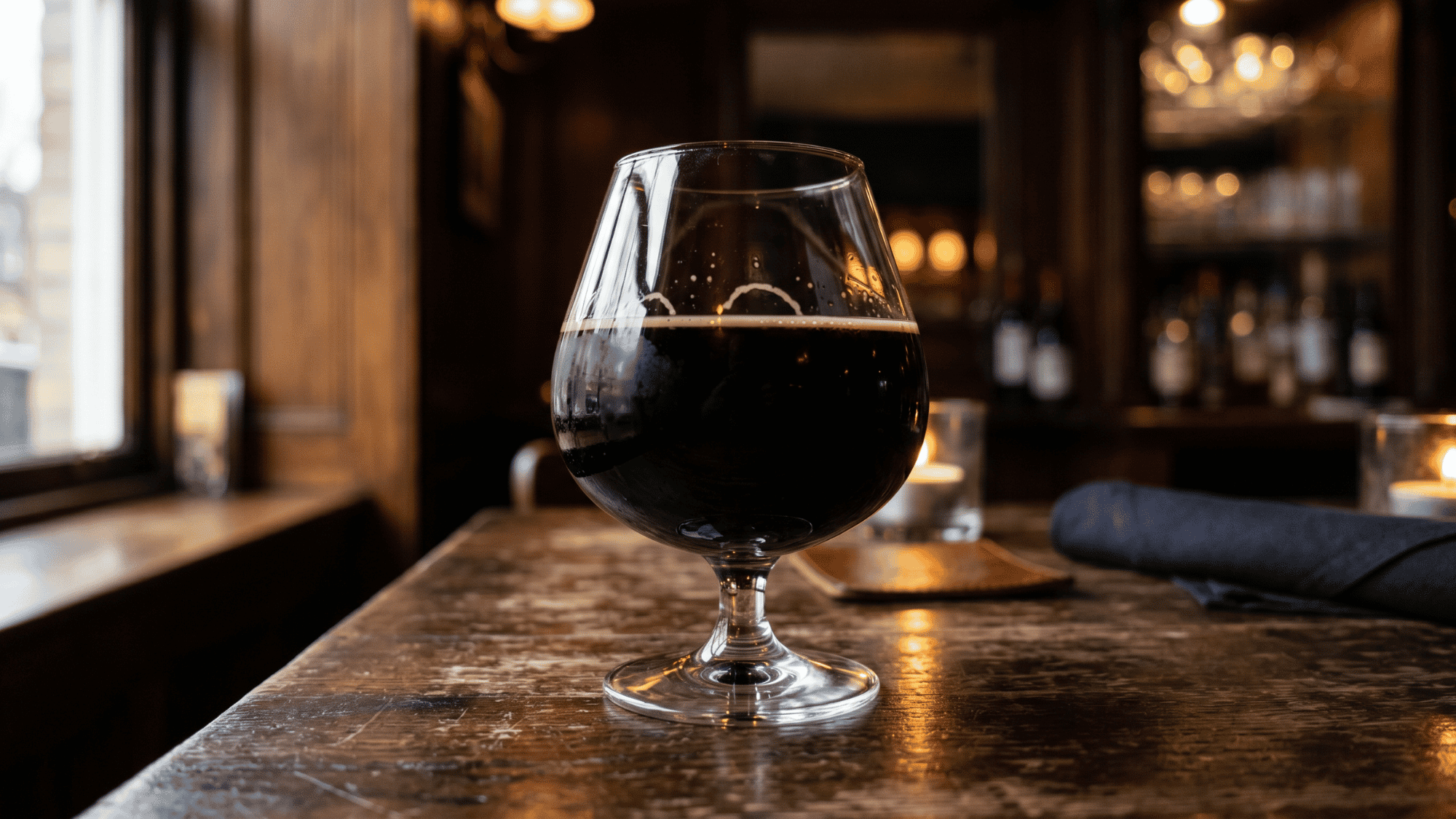
Borrowed from the world of whiskey and brandy, the snifter works surprisingly well for big, bold, high-ABV beers.
- Size: Typically holds 6 to 10 oz
- Design: Wide bowl, narrow opening, and a short stem
- Best For: Barleywines, imperial stouts, barrel-aged beers, Belgian quads, doppelbocks
- Why It Works: Holding the bowl warms the beer slightly, helping rich aromas open up
- Drawback: Too small and intense for everyday drinking or lower-ABV styles
7. Beer Mug
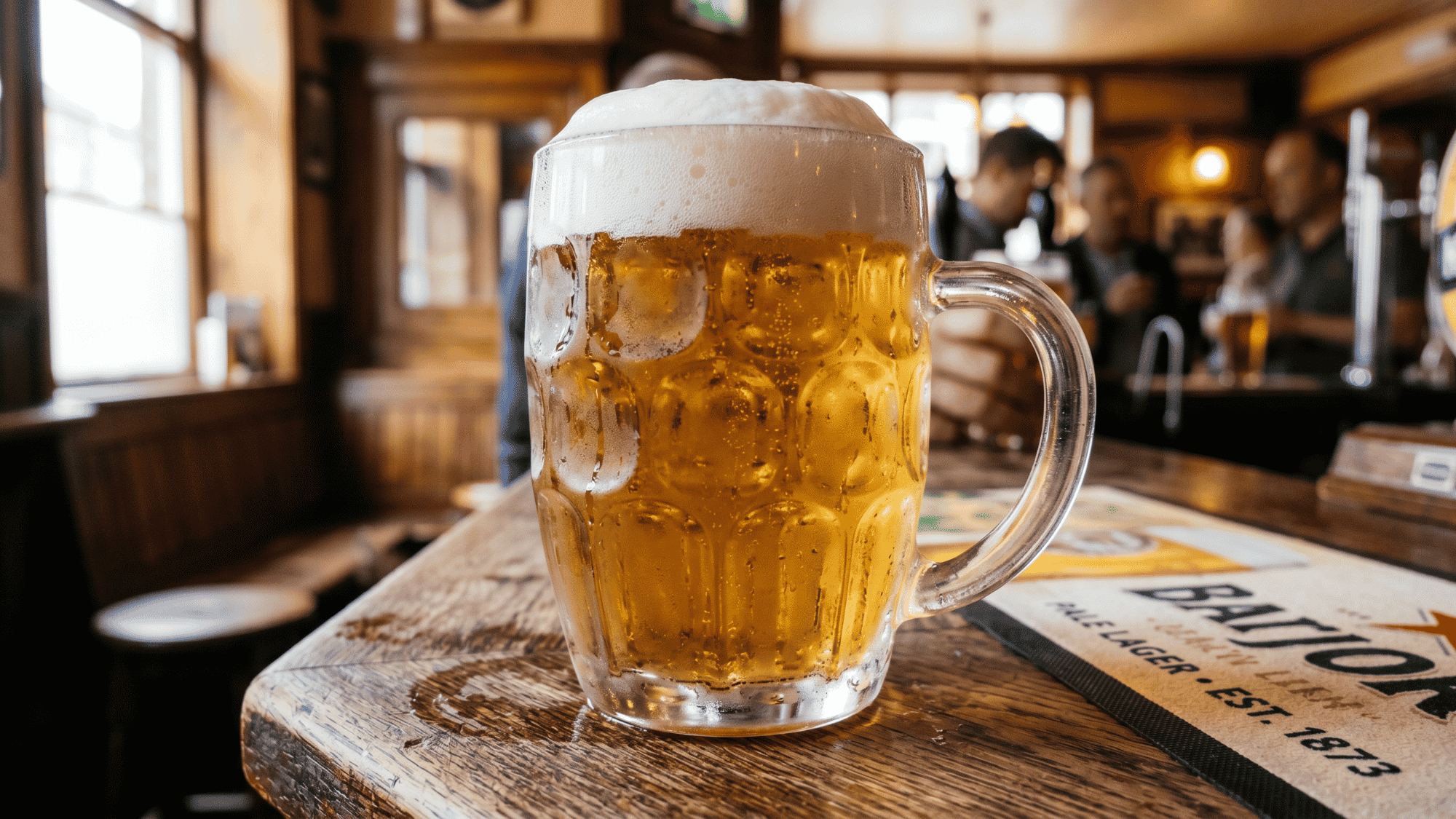
Thick, sturdy, and built for no-nonsense drinking, the beer mug is made to keep cold beer cold for as long as possible.
- Size: Holds anywhere from 12 to 24 oz (most common: 12–16 oz)
- Design: Thick walls with a solid handle
- Best For: Märzen, lagers, American ales, Oktoberfest beers
- Why It Works: The handle keeps hand heat away from the beer, maintaining temperature longer
- Drawback: Not designed for tasting or aroma appreciation, purely a drinking glass
8. Beer Stein
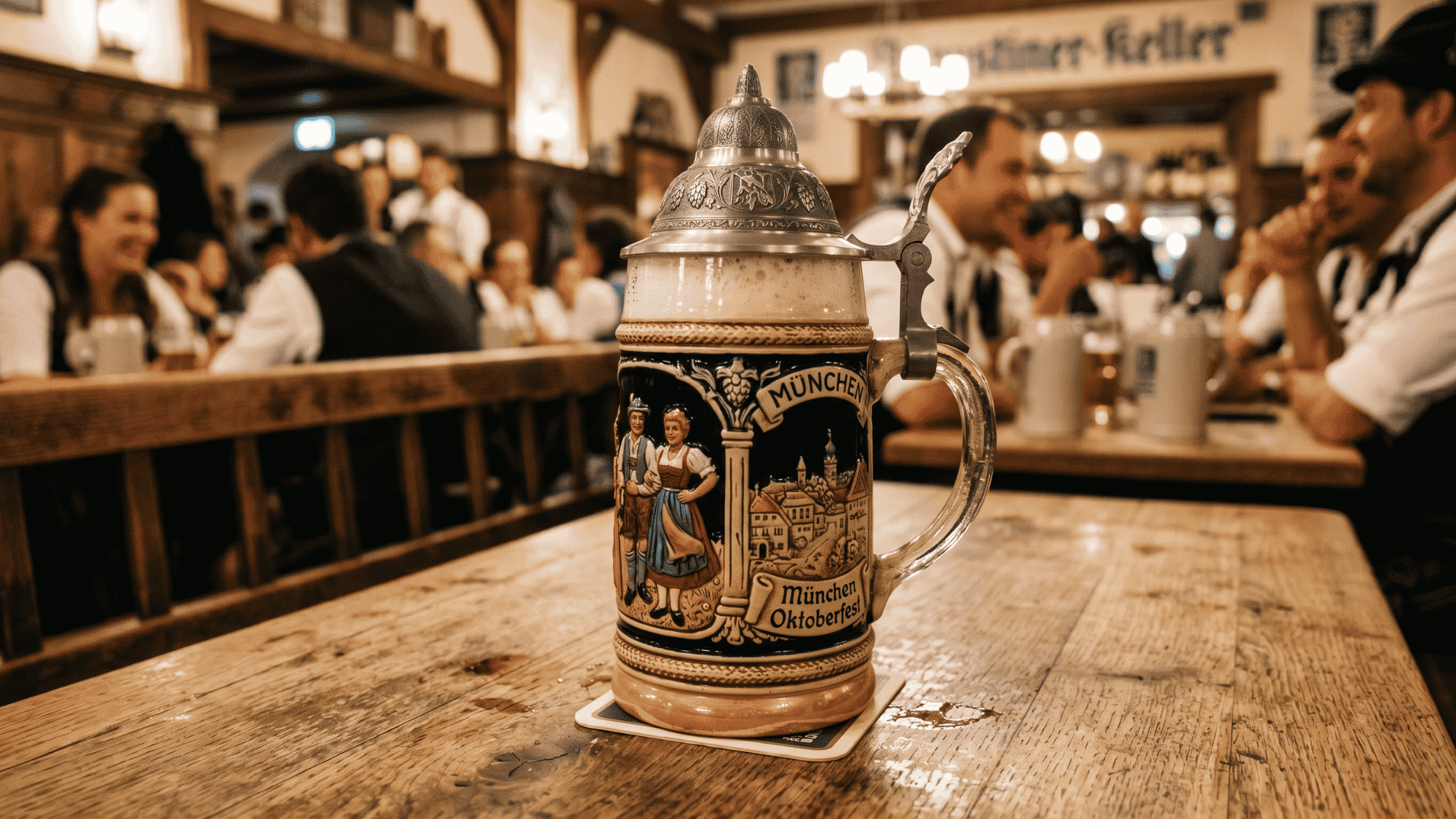
A traditional German mug with a hinged lid, originally designed to keep insects out during outdoor festivals centuries ago.
- Size: Standard festival size is 1L
- Design: Thick stoneware or pewter walls with a hinged lid and handle
- Best For: German lagers, Märzenbier, Dunkel, Bock
- Why It Works: Thick walls keep beer at temperature longer, even in outdoor settings
- Drawback: Modern steins are often decorative and may not be practical for everyday use
9. Goblet / Chalice
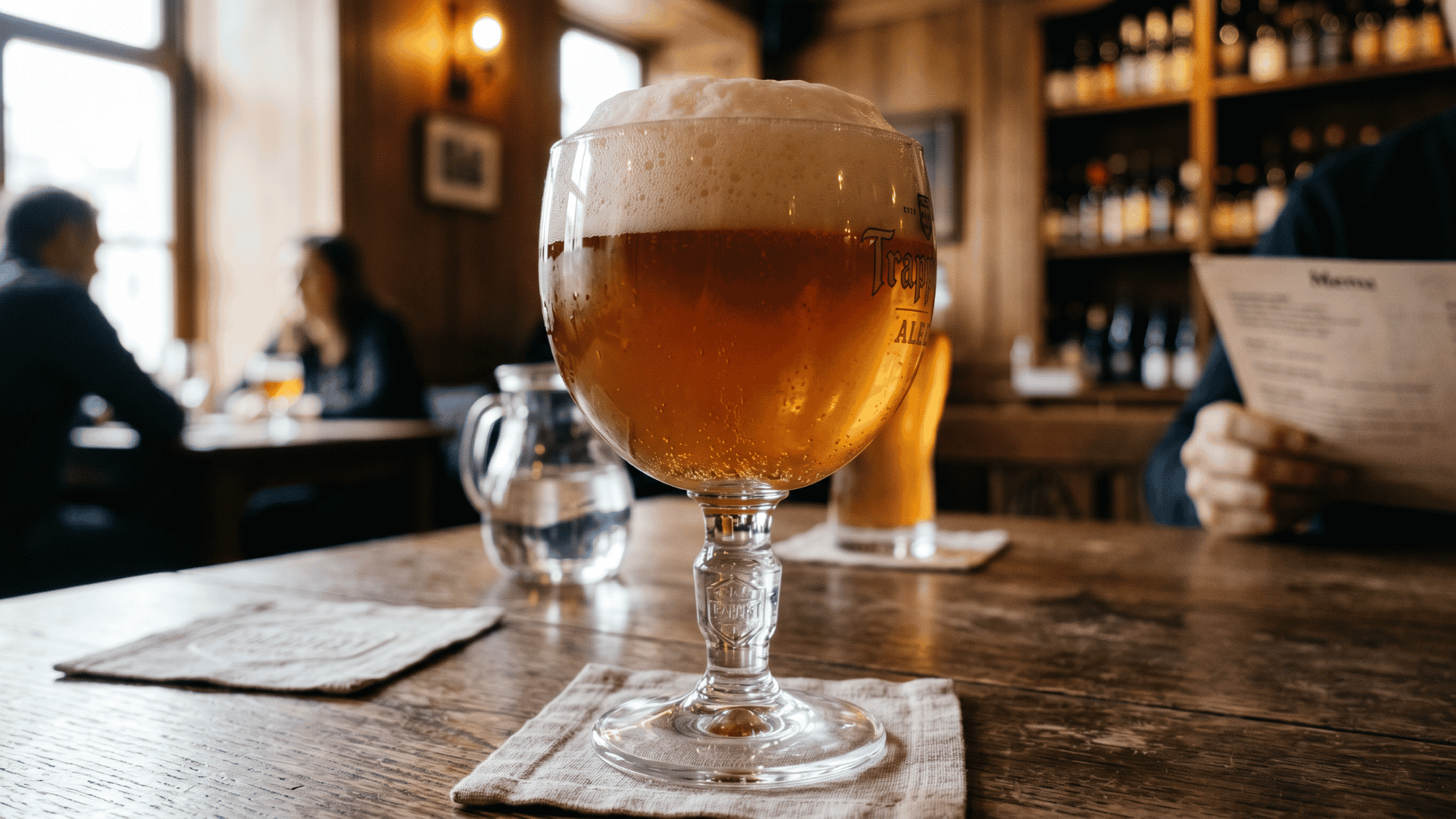
Two similar glasses built around the same idea: a wide, open bowl that lets complex aromas rise freely before each sip.
- Size: Typically holds 10 to 20 oz
- Design: Wide bowl on a short stem, often branded or etched for specific beer labels
- Best For: Belgian strong ales, dubbels, tripels, quads, abbey ales
- Why It Works: Wide opening gives full access to the nose and lets layered aromas develop
- Drawback: The chalice has thicker, more ornate walls while the goblet is often larger/wider, so the two are not always interchangeable
10. Stange Glass
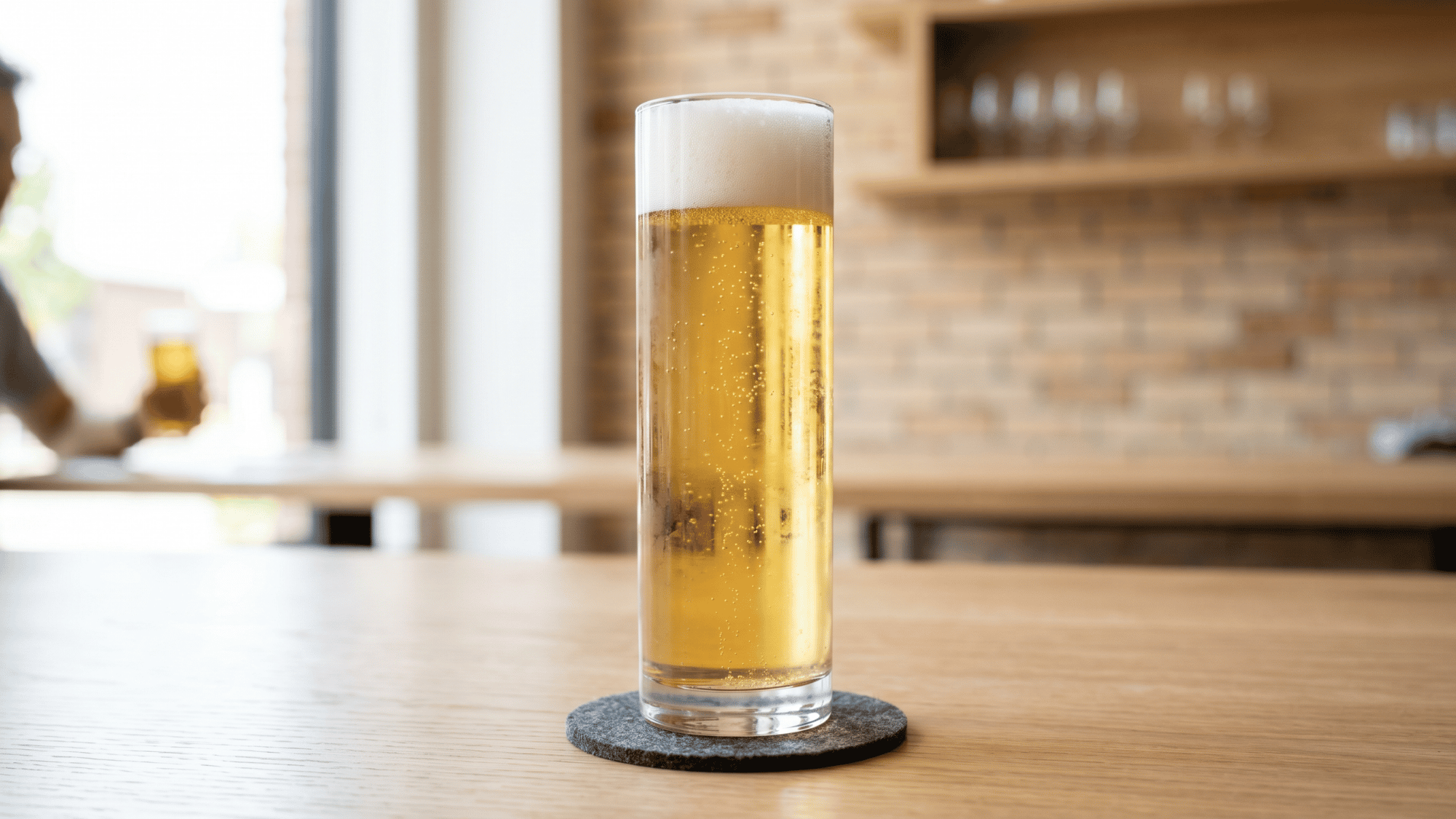
A small, straight, cylindrical glass from Cologne, Germany, designed to keep delicate beers cold and fresh in every pour.
- Size: Holds just 6 to 7 oz
- Design: Narrow, straight, and cylindrical with no taper or curve
- Best For: Kölsch, altbier, light lagers, gose
- Why It Works: Small pour size means the beer stays cold and fresh before it has a chance to warm
- Drawback: Too small and subtle for bold, aromatic, or high-ABV beer styles
11. Thistle Glass
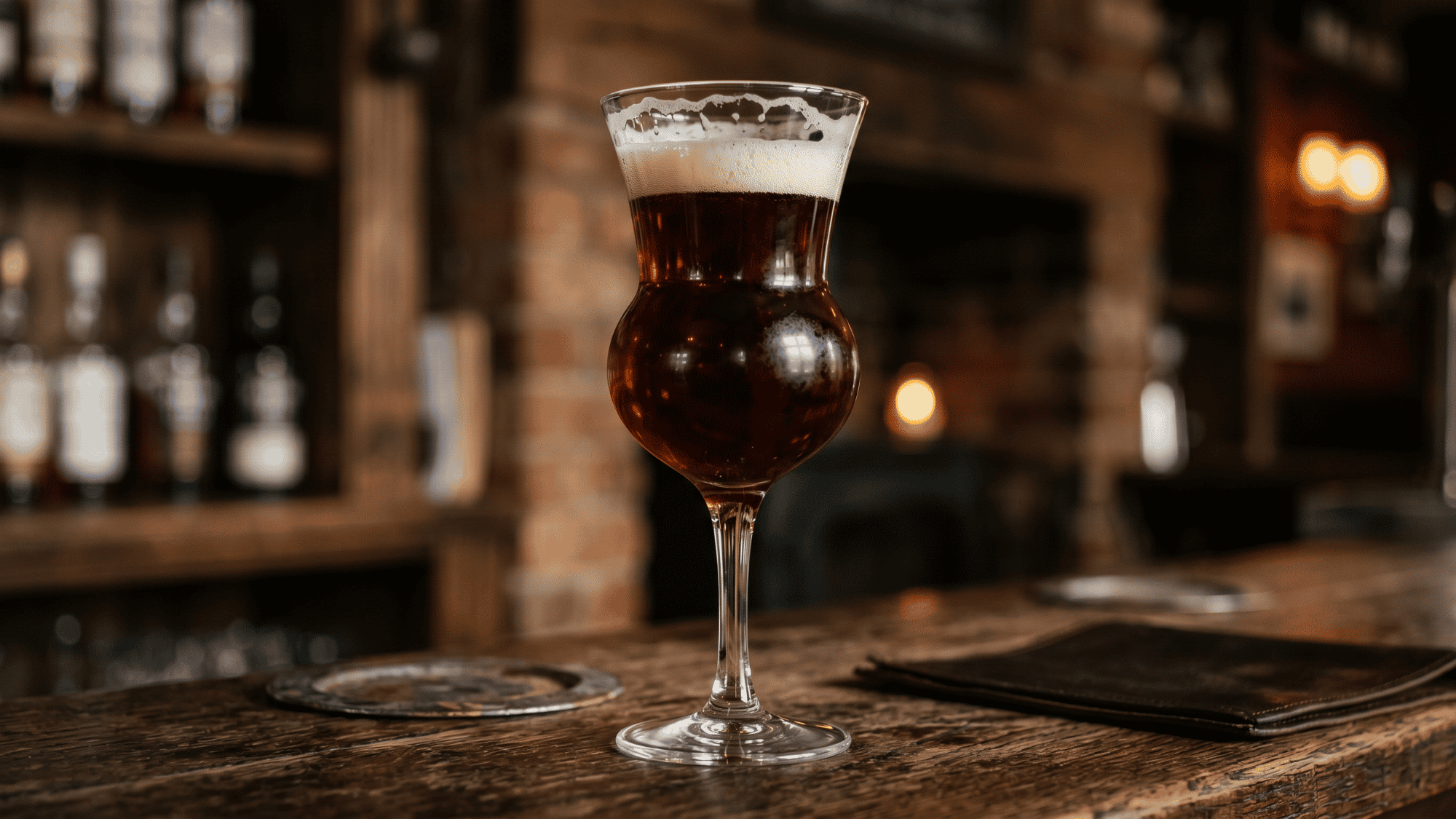
Scotland’s answer to the tulip glass, shaped to reflect the country’s national flower and suit the bold character of Scottish ales.
- Size: Typically holds 14 to 16 oz
- Design: Slender stem with a rounded lower body that flares outward at the top
- Best For: Scottish ales, wee heavies, Scotch ales
- Why It Works: A wider mouth gives big, malty beers more breathing room than a standard tulip
- Drawback: Less versatile than the tulip and suited mainly to Scottish and malty styles
12. IPA Glass
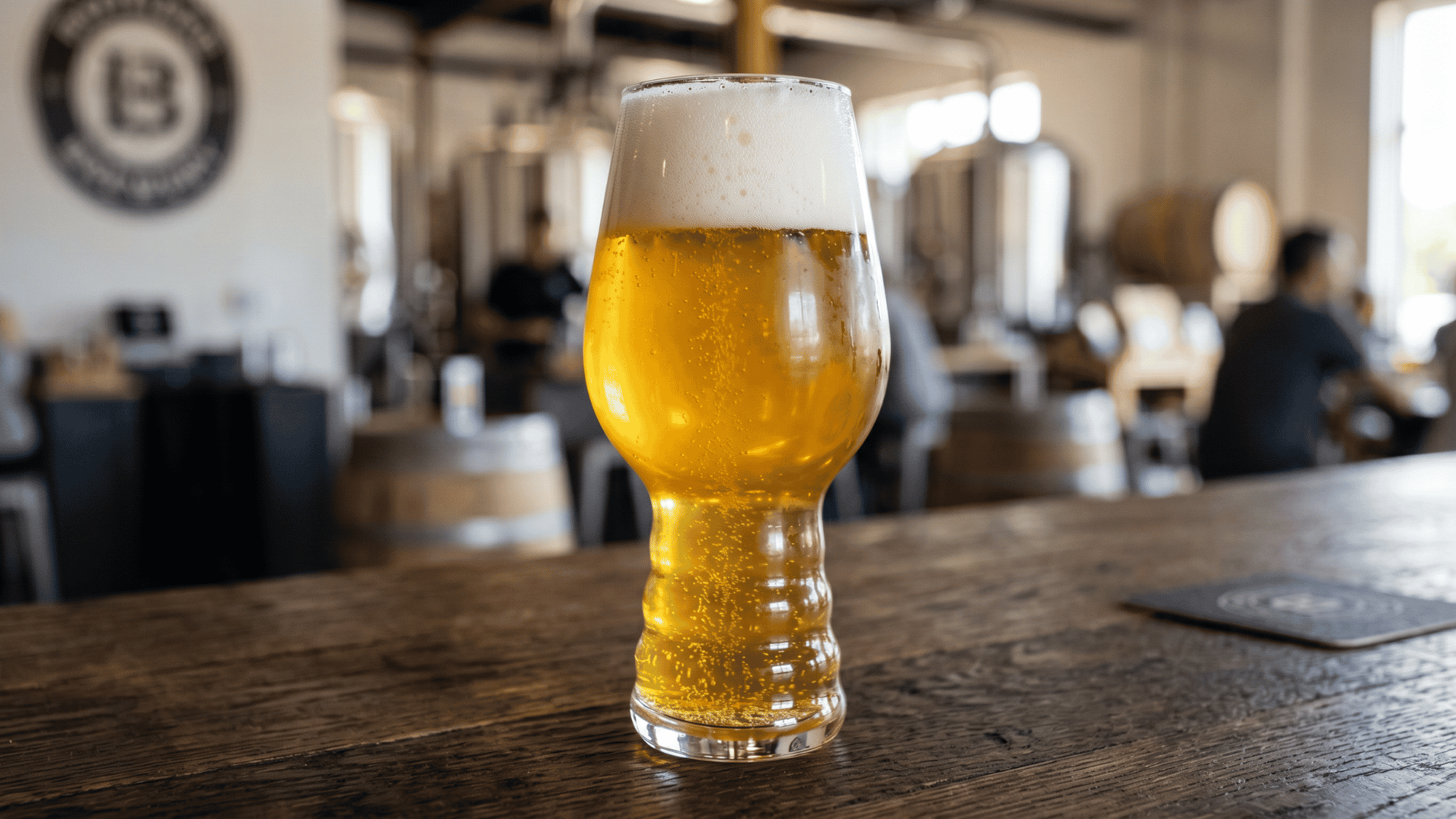
Designed from scratch in collaboration with Dogfish Head and Sierra Nevada, this glass was built specifically to make IPAs taste better.
- Size: Typically holds 19 oz
- Design: Ridged bottom with a flared rim that directs aroma toward the nose
- Best For: IPAs, double IPAs, session IPAs, pale ales
- Why It Works: Ridged base creates nucleation sites that release CO₂ bubbles, helping maintain carbonation and release hop aroma
- Drawback: Too specialized for styles outside the IPA and pale ale category
13. Oversized Wine Glass
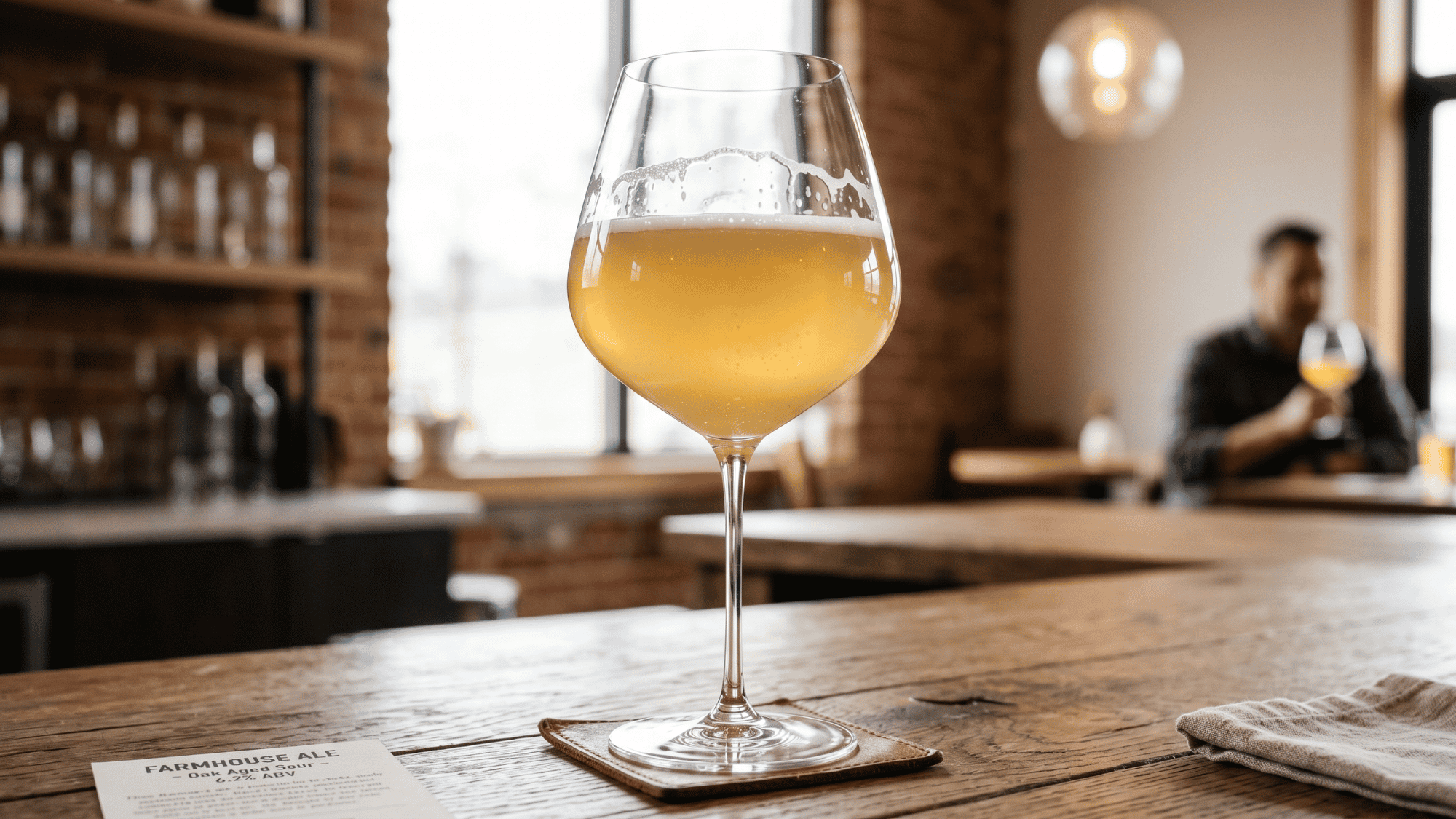
Craft beer bars have been reaching for oversized wine glasses more often, and for complex, aromatic styles, it makes a lot of sense.
- Size: Typically holds 12 to 20 oz (large craft beer wine glasses up to 22 oz)
- Design: Wide bowl with a long stem, identical to a standard large wine glass
- Best For: Sours, wild ales, lambics, gueuze, farmhouse ales
- Why It Works: The wide bowl gives layered, aromatic beers room to open up while the stem keeps hand heat away
- Drawback: Fragile, harder to store, and too large for casual everyday drinking
What to Look for When Buying Beer Glasses
If you are building a home bar setup or just upgrading from the mismatched glasses in your cabinet, here is what actually matters:
1. Material: Standard glass is durable and affordable. Crystal is thinner and has a smoother rim, which slightly enhances drinking but makes it chip more easily. For everyday use, go with standard borosilicate glass.
2. Wall thickness: Thin-walled glasses allow more aroma to reach your nose. Thick-walled glasses (mugs, steins) retain cold longer and survive daily use better. Match the glass to how you plan to use it.
3. Nucleated base: Some glasses have a small etched mark or ring on the inside bottom that continuously releases CO₂ bubbles, keeping carbonation active. Look for this in pilsner and IPA glasses.
4. Dishwasher safety: Not all specialty glasses are dishwasher-safe. Check before buying; handwashing significantly extends the lifespan of thin glasses.
5. Start small: You do not need 13 different types of glass. A tulip, a pint, and a snifter cover most styles well. Add specialty glasses as your interests grow
International Glass Styles Worth Knowing
Beyond the common types, a few regional glasses from Europe have made their way into American craft beer culture:
- Masskrug: The festival mug of choice at Oktoberfest. It holds a full liter, has thick walls, and is built to survive crowded beer halls without missing a beat.
- Willibecher: A staple in German pubs, this 0.5L glass curves slightly inward at the top. It resembles the nonic pint but has a more tapered profile toward the rim.
- Duvel Glass: Designed specifically for Duvel Golden Ale, this tulip-style glass features an etched base that continuously generates bubbles, keeping the trademark thick head intact throughout your pour.
- Kwak Glass: Hard to miss. The Kwak glass has a round, bulb-shaped bottom that sits in a wooden stand. It was made for the Belgian amber ale of the same name.
- Dimple Mug: A classic British pub glass with a handled grip and dimpled sides for a secure hold. Traditionally paired with cask ales and still common in pubs across the UK.
How to Keep Beer Glasses Clean
A beer-clean glass affects more than hygiene. Soap residue, oils, and leftover pour remnants kill the foam head and flatten carbonation faster than most people expect.
Always rinse with cold water before pouring to remove dust and chill the glass slightly. Hand wash with unscented soap and a clean brush, since fragrance transfers directly into the beer.
Skip the towel entirely as lint and oils coat the inside and ruin carbonation. Air dry on a rack instead.
Run the water break test before use. Water should sheet off cleanly with no beading. High heat from dishwashers warps thin specialty glasses over time.
Wrapping Up
You do not need a full glassware collection to enjoy great beer at home.
But knowing the difference between your options changes what you notice in the glass, from the way a tulip holds hop aroma on an IPA to how a snifter opens up a barrel-aged stout.
The types of beer glasses each solve a real problem, and once you understand that, choosing the right one becomes second nature.
Your next beer will taste better for it. Ready to upgrade your setup? Browse our picks for the best beer glasses by style to find the right fit for what you drink most.
Frequently Asked Questions
Why Do Some Beer Glasses Have a Stem?
Stems keep your hand away from the bowl, preventing body heat from warming the beer too quickly while you drink.
Are Frosted Beer Glasses Actually Good?
No. Frosted glasses cause excess foaming and can mute aroma. A chilled but not frozen glass is always the better option.
Do Beer Glass Sizes Affect How Fast Beer Goes Flat?
Yes. A larger surface area means faster carbonation loss. Smaller, narrower glasses can reduce beer’s direct exposure to air.